Product List
Gangsteel Material Solution
Email: admin@gangsteel.com
Sales: jack@gangsteel.com
ASTM A514/A514M is the standard specification for high-yield-strength, quenched and tempered alloy steel plates, primarily intended for use in welded bridges and other structures. Hardness testing is a critical aspect of this standard, ensuring the plates meet the required durability and strength for demanding applications. The Brinell hardness test is specified, with acceptance criteria tied to plate thickness and grade.
As a leading manufacturer and exporter, Gangsteel offers premium ASTM A514/A514M steel plate that complies with these hardness requirements, available in grades such as astm a514 grade b and astm a514 grade q, with mill test reports verifying conformance.
In ASTM A514/A514M, hardness testing verifies the effectiveness of the quenching and tempering heat treatment, which is mandatory for all plates to achieve the specified mechanical properties. The standard allows Brinell hardness testing as an alternative to tension testing for thinner plates (3/8 in. [10 mm] and under), emphasizing its role in quality control. Hardness ensures resistance to wear and deformation, crucial for structural integrity. Gangsteel's ASTM A514/A514M steel plate undergoes rigorous testing to meet these standards across all grades, including astm a514 grade e and astm a514 grade f.
The table below lists common ASTM A514 grades with their maximum thickness and general hardness considerations:
|
Grade |
Maximum Thickness (in. [mm]) |
Hardness Test Applicability |
|---|---|---|
|
1-1/4 [32] |
Brinell alternative for thin plates |
|
|
1-1/4 [32] |
Standard Brinell range applies |
|
|
1-1/4 [32] |
Similar to Grade B |
|
|
6 [150] |
Hardness for thicker sections |
|
|
2-1/2 [65] |
Enhanced for abrasion resistance |
|
|
2 [50] |
Balanced for structural uses |
|
|
2-1/2 [65] |
Varies by application |
|
|
2-1/2 [65] |
Formable with hardness compliance |
|
|
2-1/2 [65] |
High-load requirements |
|
|
6 [150] |
Corrosion-resistant variants |
|
|
6 [150] |
Thick-plate hardness testing |
|
|
2-1/2 [65] |
Heat-resistant |
|
|
2-1/2 [65] |
Versatile structural |
|
|
2-1/2 [65] |
Maximum tempered strength |
The standard mandates a Brinell hardness test (HBW) on each plate not subjected to tension testing, with acceptance criteria outlined in Table 2 of the specification. For plates 3/8 in. [10 mm] and under, hardness testing can substitute for tension testing, provided the results meet the specified range. The test is conducted per ASTM A370 Test Methods and Definitions for Mechanical Testing of Steel Products.
The table below reproduces the hardness requirements from Table 2 (Tensile and Hardness Requirements):
|
Thickness (in. [mm]) |
Brinell Hardness Number (HBW) |
Notes |
|---|---|---|
|
To 3/4 [20], incl |
235 to 293 |
Measured on Fig. 3 specimen (1-1/2 in. [40 mm] wide) |
|
Over 3/4 to 2-1/2 [20 to 65], incl |
235 to 293 |
Measured on Fig. 3 specimen; reduction of area on Fig. 4 (1/2 in. [12.5 mm] round) for some grades |
|
Over 2-1/2 to 6 [65 to 150], incl |
... (No requirement) |
Tension testing preferred; hardness optional if specified |
Notes: Where "..." appears, there is no requirement. Hardness is not required for thicker plates but may be performed if tension tests are waived. For plates failing hardness, the manufacturer may opt for tension testing or reheat treatment.
Gangsteel's testing protocols for grades like astm a514 grade h and astm a514 grade p ensure full compliance, with reports provided.
Plates must be heat-treated by heating to at least 1650°F [900°C], quenching in water or oil, and tempering at no less than 1150°F [620°C] to meet hardness and tensile requirements. This process is reported on certificates, directly influencing hardness outcomes.
Hardness testing confirms A514's suitability for high-stress environments, such as mining equipment and structural bridges. Gangsteel's ASTM A514/A514M steel plate supports these with verified hardness for reliable performance.
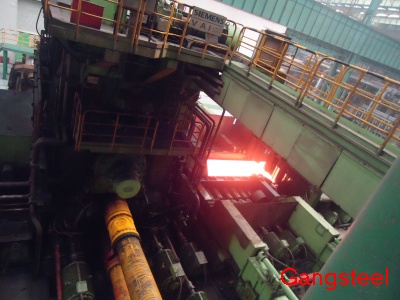
ASTM A537 Class 3 equivalents from Gangsteel, including ASME SA 537 Class 3, provide versatile, high-performanc
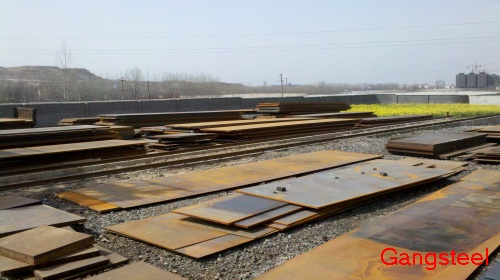
ASTM A537 Class 1 equivalents from Gangsteel, including ASME SA 537 Class 1, offer reliable options for global
At Gangsteel, we specialize in supplying both A516 Gr 60 plate and A516 Gr 70 plate with NACE and HIC complianc
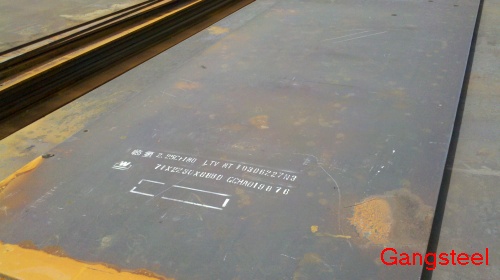
Gangsteel is specialized in supplying EN10028-6 steel plate in P355QH Pressure Vessel Steel,P355 QH STEEL PLATE


