Product List
Gangsteel Material Solution
Email: admin@gangsteel.com
Sales: jack@gangsteel.com
For industries requiring materials that withstand extreme heat without compromising structural integrity or corrosion resistance, 316Ti stainless steel is a top choice. Its exceptional high-temperature resistance, combined with excellent corrosion resistance and weldability, makes it ideal for applications in power generation, chemical processing, and petrochemical industries.
As a leading supplier, Gangsteel offers high-quality 316Ti stainless steel in forms like sheets, plates, bars, and pipes, compliant with standards such as ASME SA240 and ASTM A240 316Ti. This guide explores what makes 316Ti stainless steel resistant to high temperatures, detailing its properties, mechanisms, and applications.
316Ti stainless steel is an austenitic stainless steel alloy, a variant of 316 stainless steel, enhanced with titanium (0.4–0.7%) to prevent intergranular corrosion during welding or prolonged exposure to high temperatures (425–815°C). This titanium stabilization, along with its robust chemical composition, enables 316Ti stainless steel to maintain mechanical strength and corrosion resistance in extreme heat. Gangsteel’s 316Ti products meet standards like ISO TR15510, ensuring performance in high-temperature environments.
Gangsteel’s 316Ti stainless steel complies with international standards to ensure quality in high-temperature applications:
These standards ensure Gangsteel’s 316Ti stainless steel performs reliably in high-temperature environments.
316Ti stainless steel owes its high-temperature resistance to several key mechanisms:
These mechanisms, compliant with JIS G4304 SUS316Ti and ISO TR15510, ensure 316Ti’s superior performance in high-temperature applications.
The chemical composition of 316Ti stainless steel, as per ASME SA240, is optimized for high-temperature resistance:
|
Element |
Percentage (%) |
Role |
|---|---|---|
|
Carbon (C) |
≤0.08 |
Enhances strength, controlled for weldability. |
|
Chromium (Cr) |
16.0–18.0 |
Forms a protective oxide layer to resist scaling at high temperatures. |
|
Nickel (Ni) |
10.0–14.0 |
Improves toughness and maintains austenitic structure at high temperatures. |
|
Molybdenum (Mo) |
2.0–3.0 |
Enhances pitting resistance in high-temperature corrosive environments. |
|
Titanium (Ti) |
≥5xC, ≤0.70 |
Stabilizes against intergranular corrosion at high temperatures. |
|
Manganese (Mn) |
≤2.0 |
Supports strength and formability. |
|
Silicon (Si) |
≤1.0 |
Improves oxidation resistance in high-temperature conditions. |
|
Phosphorus (P) |
≤0.045 |
Ensures weldability and toughness. |
|
Sulfur (S) |
≤0.03 |
Enhances machinability and corrosion resistance. |
This composition, compliant with ASTM A959 316Ti, ensures 316Ti stainless steel withstands extreme heat.
The mechanical properties of 316Ti stainless steel, as per ASME SA240, ensure reliability in high-temperature applications:
|
Property |
Value |
Description |
|---|---|---|
|
Tensile Strength (MPa) |
≥515 |
Ensures structural integrity under high-temperature stress. |
|
Yield Strength (MPa) |
≥205 |
Resists deformation in extreme heat. |
|
Elongation (%) |
≥40 |
Supports forming and machining for stainless cutting sheet parts. |
|
Hardness (HB) |
≤217 |
Balances toughness and machinability. |
|
Impact Resistance |
Excellent at low temperatures |
Suitable for cryogenic and high-temperature applications. |
These properties make 316Ti stainless steel ideal for high-temperature environments.
316Ti stainless steel has equivalent grades across standards, ensuring compatibility for high-temperature applications:
|
Standard |
Equivalent Grade |
Reference |
|---|---|---|
|
ASME SA240 |
316Ti |
|
|
ASTM A240 |
316Ti |
|
|
JIS G4304 |
SUS316Ti |
|
|
EN |
1.4571 |
|
|
UNS |
S31635 |
These equivalents ensure 316Ti stainless steel meets global high-temperature standards.
Compared to other stainless steels, 316Ti stainless steel offers distinct advantages for high-temperature applications:
These advantages make 316Ti ideal for applications like ASTM A312 material pipes and ASME SA213 tubes in high-temperature settings.
316Ti stainless steel is widely used in high-temperature applications:
Gangsteel provides a comprehensive range of 316Ti stainless steel products optimized for high-temperature environments:
|
Product Type |
Specifications |
Standards |
|---|---|---|
|
Sheets/Plates |
Thickness: 0.5–100 mm, Width: 1000–2500 mm, Length: 2000–12000 mm |
|
|
Bars (Round, Square, Hex) |
Diameter: 4–300 mm, Length: 1–6 meters |
|
|
Pipes (Seamless/Welded) |
Outer Diameter: 1/2"–24" NB, Wall Thickness: SCH 5S–XXS, Length: Up to 12000 mm |
|
|
Tubes |
Outer Diameter: 6–114 mm, Wall Thickness: 0.5–8 mm, Length: Up to 12000 mm |
Our stainless cutting sheet parts are precision-crafted for high-temperature applications.
Gangsteel is your trusted supplier for 316Ti stainless steel, offering:
Ready to source 316Ti stainless steel for high-temperature applications? Gangsteel makes it seamless:
Choose Gangsteel for high-quality 316Ti stainless steel and elevate your high-temperature projects with unmatched durability and performance.

Gangsteel is your trusted global supplier. Our extensive inventory of 316Ti stainless steel bars and pipes meet
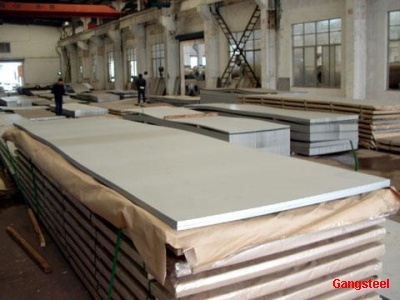
Gangsteel Stainless Factory is the large manufacturer to supply ASTM A240 TP316H,TP316H Stainless plate,TP316H

A240 TP310S,TP310S Stainless plate,TP310S stock,TP310S Supplier Gangsteel Stainless Factory is the large manufa


