Product List
Gangsteel Material Solution
Email: admin@gangsteel.com
Sales: jack@gangsteel.com
Gangsteel, a globally recognized leader in manufacturing and exporting structural steel plates, supplies premium EN 10025-2 S355JR steel plates, tailored for construction, bridges, and heavy machinery applications in industries such as infrastructure, shipbuilding, and offshore engineering.
EN 10025-2 S355JR is a non-alloy structural steel grade offering high strength, weldability, and impact resistance. This article focuses on the equivalent material grades for EN 10025-2 S355JR, detailing their standard numbers, material designations, and providing detailed tables comparing chemical compositions and mechanical properties to help engineers and fabricators select suitable alternatives.
EN 10025-2 S355JR is widely used in Europe for hot-rolled structural steels with a minimum yield strength of 355 MPa. Its equivalents in other international standards offer similar properties, allowing for global sourcing. Common equivalents include:
These equivalents are selected based on similar chemical limits, mechanical performance, and application suitability. For more on related grades, explore EN 10025-2 S355JR+N or refer to the BS EN 10025-2 material grade overview.
The chemical composition of EN 10025-2 S355JR and its equivalents is designed for good weldability and strength. The table below compares the key elements (% by weight) across selected standards:
|
Element |
EN 10025-2 S355JR |
ASTM A572 Gr 50 |
DIN ST52-3 |
JIS SM490A |
GB Q345B |
NFA 35-501 E 36-2 |
UNI 7070 Fe 510 B |
BS 4360 50 B |
UNE 36.080 AE 355 B |
|---|---|---|---|---|---|---|---|---|---|
|
Carbon (C) |
0.24 max |
0.23 max |
0.20 max |
0.18 max |
0.20 max |
0.22 max |
0.22 max |
0.20 max |
0.22 max |
|
Manganese (Mn) |
1.60 max |
1.35 max |
1.60 max |
1.60 max |
1.70 max |
1.60 max |
1.60 max |
1.50 max |
1.60 max |
|
Phosphorus (P) |
0.035 max |
0.040 max |
0.040 max |
0.035 max |
0.035 max |
0.040 max |
0.040 max |
0.040 max |
0.040 max |
|
Sulfur (S) |
0.035 max |
0.050 max |
0.040 max |
0.035 max |
0.035 max |
0.045 max |
0.050 max |
0.050 max |
0.050 max |
|
Silicon (Si) |
0.55 max |
0.40 max |
0.55 max |
0.55 max |
0.50 max |
0.55 max |
0.55 max |
0.55 max |
0.55 max |
|
Copper (Cu) |
0.55 max |
- |
- |
- |
0.30 max |
- |
- |
0.35 max |
- |
|
Nitrogen (N) |
0.012 max |
- |
0.009 max |
- |
- |
- |
- |
- |
- |
|
Iron (Fe) |
Balance |
Balance |
Balance |
Balance |
Balance |
Balance |
Balance |
Balance |
Balance |
Key Notes:
Gangsteel’s en 10025-2 s355jr plates undergo stringent chemical analysis to meet DIN EN 10025-2 requirements, with options for additional testing such as ultrasonic inspection.
The closest ASTM equivalent to EN 10025-2 S355JR is ASTM A572 Grade 50, which has a similar minimum yield strength of 345-355 MPa and tensile strength of 450-620 MPa. It is widely used for structural applications like bridges and buildings, with comparable weldability. However, S355JR has stricter impact toughness requirements at +20°C.
EN 10025-2 S355JR is tested for impact toughness at +20°C (27 J), suitable for general structural use in mild conditions. S355J2 requires testing at -20°C, making it better for cold environments. Both have the same yield strength (355 MPa), but S355J2 offers superior low-temperature performance for offshore or arctic applications.
EN 10025-2 S355JR is used for general structural purposes, including buildings, bridges, cranes, and machinery frames. Its high strength-to-weight ratio makes it ideal for load-bearing components where moderate toughness is sufficient, such as in non-seismic construction.
The naming in EN 10025-2 indicates the minimum yield strength (e.g., S355 = 355 MPa at 16 mm thickness), followed by JR (impact at +20°C) or J0/J2 (at 0°C or -20°C). "S" stands for structural steel, and the number represents the yield strength in MPa. This convention helps select grades based on required toughness and strength.
No, EN 10025-2 S355JR is not the same as ASTM A36. S355JR has a higher yield strength (355 MPa vs. 250 MPa for A36) and better impact properties, making it suitable for higher-load applications. A36 is a milder steel for general use, while S355JR is a high-strength low-alloy (HSLA) grade.
EN 10025-2 S355JR has a maximum carbon content of 0.24%, manganese up to 1.60%, phosphorus and sulfur limited to 0.035% each, and silicon up to 0.55%. These limits ensure good weldability and toughness, with nitrogen controlled at 0.012% max for fine grain structure.
Equivalents like ASTM A572 Gr 50 have a yield strength of 345 MPa (min) and tensile strength of 450 MPa (min), with elongation of 21% (50 mm gauge). S355JR itself has 355 MPa yield, 470–630 MPa tensile, and 20% elongation, ensuring comparable performance across standards.
EN 10025-2 S355JR has a higher yield strength (355 MPa vs. 275 MPa for S275JR) and tensile strength (470–630 MPa vs. 410–560 MPa), making it better for high-load structures. Both have similar weldability, but S355JR is preferred for demanding applications like bridges.
EN 10025-2 S355JR and equivalents like ASTM A572 Gr 50 have low carbon equivalents (CEV ≈ 0.42), allowing welding without preheating up to 25 mm thickness. Use low-hydrogen electrodes (e.g., E7018) to minimize cracking, and PWHT for thicker sections.
Select based on project requirements: ASTM A572 Gr 50 for US codes, GB Q345B for Chinese projects, or DIN ST52-3 for European machinery. Always verify chemical and mechanical matches against EN 10025-2 specs to ensure compatibility.
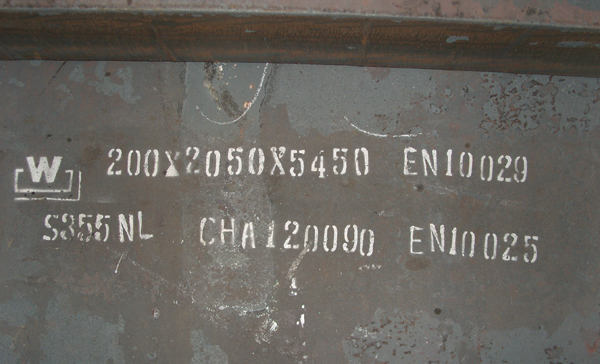
Gangsteel, a globally recognized leader in manufacturing and exporting structural steel plates, supplies premiu
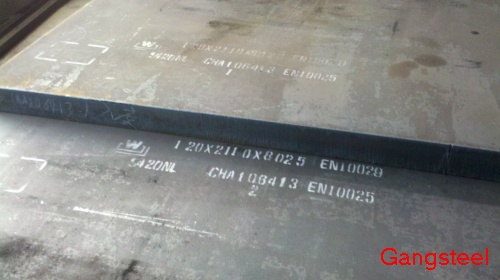
BS EN 10025-2 is the British version of the European standard for hot-rolled structural steels, with S355JR off
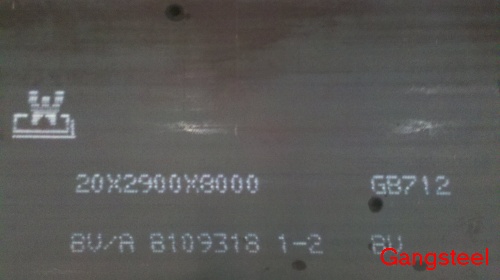
BS EN 10025-2 is the British version of the European standard for hot-rolled structural steels, with S355J2 off
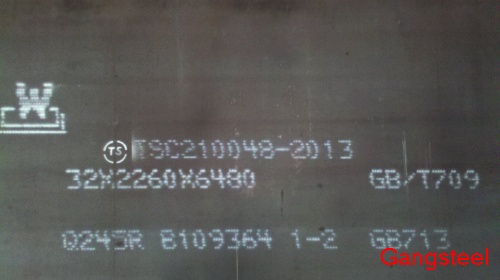
Gangsteel produces en 10025-2 s355k2 plates in compliance with DIN EN 10025-2, ensuring traceability and qualit


