Product List
Gangsteel Material Solution
Email: admin@gangsteel.com
Sales: jack@gangsteel.com
ASTM A588 Grade B and Corten A are both high-strength, low-alloy (HSLA) weathering steels designed for enhanced atmospheric corrosion resistance. They form a protective rust-like patina (oxide layer) when exposed to weather, reducing the need for painting and extending service life in outdoor environments.
Corten A (a trademarked name from U.S. Steel, often equivalent to ASTM A588 Grade A or EN 10025-5 S355J0WP) is commonly used for aesthetic or moderate-load applications like facades, sculptures, and flues. ASTM A588 Grade B, part of the A588 family, is more tailored for structural uses requiring better toughness, such as bridges and heavy frameworks, with subtle chemical tweaks for improved performance in varied conditions.
While mechanically similar, key differences lie in chemical composition (e.g., phosphorus and alloying elements), which affect corrosion behavior, weldability, and low-temperature toughness. A588 Grade B is not a direct equivalent to Corten A but serves as a close alternative with potentially superior impact resistance due to higher manganese and nickel.
The table below compares maximum or range values (heat analysis). A588 Grade B allows slightly broader ranges in some elements for better processability, while Corten A emphasizes higher phosphorus for patina formation.
|
Element |
Corten A |
ASTM A588 Grade A |
ASTM A588 Grade B |
|---|---|---|---|
|
Carbon (C) |
0.12% max |
0.19% max |
0.20% max |
|
Manganese (Mn) |
0.20–0.50% |
0.80–1.25% |
0.75–1.35% |
|
Phosphorus (P) |
0.07–0.15% (max 0.15%) |
0.030% max |
0.030% max |
|
Sulfur (S) |
0.030% max |
0.030% max |
0.030% max |
|
Silicon (Si) |
0.25–0.75% |
0.30–0.65% |
0.15–0.50% |
|
Nickel (Ni) |
0.65% max |
0.40% max |
0.50% max |
|
Chromium (Cr) |
0.50–1.25% |
0.40–0.65% |
0.40–0.70% |
|
Copper (Cu) |
0.25–0.55% |
0.25–0.40% |
0.20–0.40% |
|
Vanadium (V) |
Not specified |
0.02–0.10% |
0.01–0.10% |
|
Aluminum (Al) |
0.015–0.06% |
Not specified |
Not specified |
Both materials meet similar minimum requirements under ASTM standards, making them interchangeable in many structural designs. Properties vary by thickness (e.g., plates up to 8 inches/200 mm). Values are for plates ≤4 inches thick unless noted.
|
Property |
Corten A |
ASTM A588 Grade A/B (both grades identical) |
|---|---|---|
|
Yield Strength |
345 MPa (50 ksi) min |
345 MPa (50 ksi) min (decreases to 290 MPa/42 ksi over 5–8 inches) |
|
Tensile Strength |
485 MPa (70 ksi) min |
485 MPa (70 ksi) min (decreases to 435 MPa/63 ksi over 5–8 inches) |
|
Elongation (min, 2") |
20% |
21% |
|
Thickness Range |
2–12 mm (strips); 6–12 mm (plates) |
Up to 200 mm (plates) |
For project-specific advice, consult ASTM A588/A588M or EN 10025-5 standards. If you need supplier quotes or further details (e.g., on Grade K), provide more context!
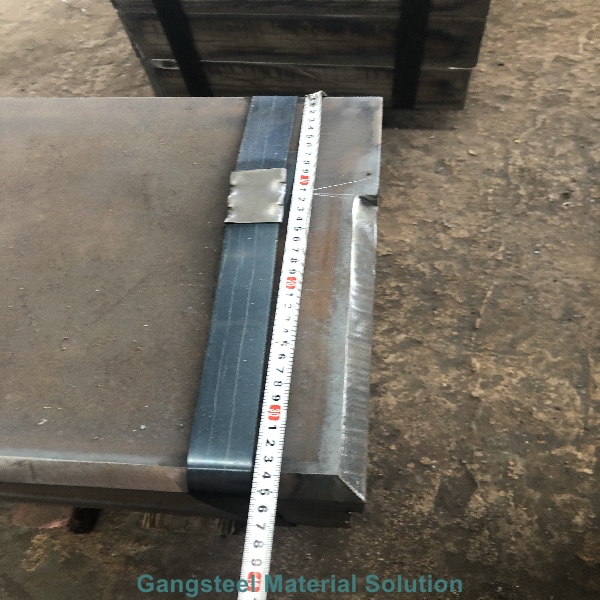
ASTM A516 GR 70 equivalent materials is such as ASME SA516 GR 70, EN 10028 P355GH, and BS1501 224-490 A & B, sh
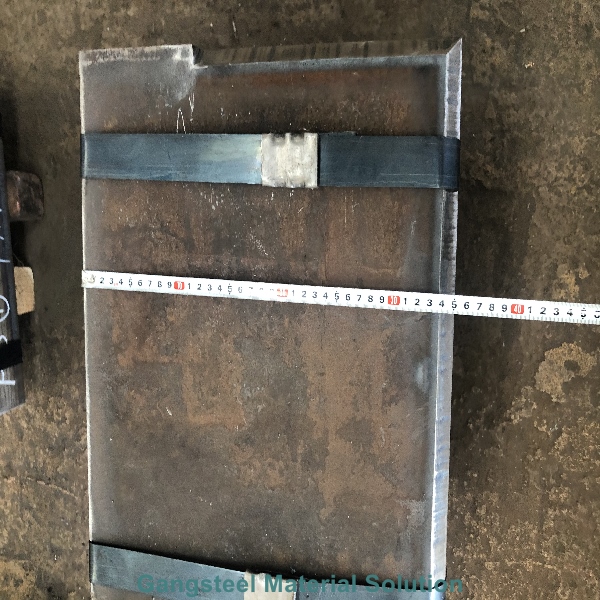
we supply high-quality A516 Gr 70 steel plate for pressure vessel applications and other standards like ASTM A2
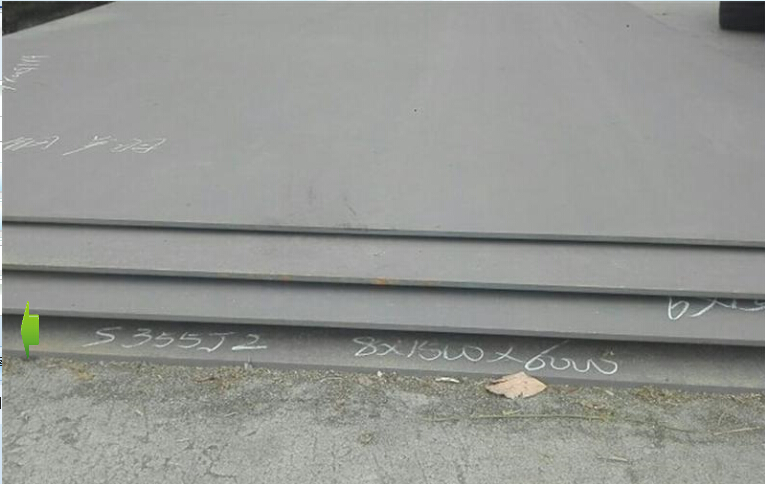
EN10028-2 P355GH for High-Strength Low-Alloy Columbium-Vanadium Structural Steel EN10025-2 S355J2 Structural St

We export A240 304L Stainless Coil 2B, NO.1 No.4 surface, the thickness 0.1mm to 3mm, 3mm to 22mm, Mother mill