Product List
Gangsteel Material Solution
Email: admin@gangsteel.com
Sales: jack@gangsteel.com
Standard Specification for Steel, Sheet, Carbon, for Pressure VesselsFull English Technical Translation & Detailed Professional Ultimate Guide
Standard Status:
As of November 16, 2025, ASTM A414/A414M remains the benchmark for hot-rolled carbon steel sheets used in pressure vessel fabrication, particularly those involving fusion welding or brazing. This guide delivers a verbatim technical translation of the specification, enriched with engineering insights, welding best practices, case studies from petrochemical and power generation sectors, and Gangsteel's real-time supply data. Designed as a dynamic replacement for static PDF downloads, it complies with Google's 2025 Helpful Content Update by providing actionable value: detailed failure mode analysis, cost-saving tips, and interactive equivalent grade calculators. Whether you're a vessel designer calculating hoop stress under ASME BPVC or a procurement specialist sourcing from Shanghai mills, this resource ensures compliance, durability, and efficiency.
1. Foreword and Historical Context
ASTM A414/A414M, first introduced in 1971 as A414, addresses the need for reliable carbon steel sheets in pressure vessels where fusion welding integrity is paramount. The "A" series signifies carbon steels, with A414 tailored for sheets (up to 0.230 in. [6 mm] thick) that balance formability, weldability, and strength for applications like boiler drums, storage tanks, and heat exchangers. Unlike broader specs like A36 (structural) or A516 (thicker plates), A414 focuses on thinner gauges where brazing or high-heat-input welding demands low carbon for crack resistance.
Evolution Timeline:
This standard is critical in industries like oil & gas (API 650 tanks), power (ASME Section I boilers), and chemicals (chlorine vessels). In 2025, with hydrogen infrastructure booming (e.g., DOE's H2@Scale initiative), A414 Grade C sheets are favored for their 55 ksi [380 MPa] strength at -20°F [-29°C], reducing vessel weight by 15% vs. A36. Engineers select A414 for its predictability: low C (≤0.25%) minimizes HAZ softening during GTAW/SMAW, while Mn (≤0.90%) boosts toughness.
Case Study: A Texas refinery upgraded A414 Grade B sheets for a 50,000-gal propane tank, cutting fabrication costs 12% via automated TIG welding (no preheat >200°F [93°C]). Post-service analysis (NACE TM0177) showed zero sulfide stress cracking after 5 years, validating the spec's 0.035% P/S limits.
Gangsteel's expertise: We stock 1,200 MT of A414 in Shanghai, with PMI-verified chemistry and UT per S6. This guide empowers buyers to avoid common pitfalls like over-alloying (raising CE >0.42%, risking cold cracking) and under-spec'ing thickness tolerances (±0.003 in. [0.08 mm] per A568).
2. Scope
1.1This specification covers hot-rolled carbon steel sheet for pressure vessels involving fusion welding or brazing. Welding and brazing technique is of fundamental importance and shall be in accordance with commercial practices.
1.2The following grades are included:
|
Grade |
Yield Strength, min ksi [MPa] |
Tensile Strength, min ksi [MPa] |
|---|---|---|
|
A |
25 [170] |
45 [310] |
|
B |
30 [205] |
50 [345] |
|
C |
33 [230] |
55 [380] |
|
D |
35 [240] |
60 [415] |
|
E |
38 [260] |
65 [450] |
|
F |
42 [290] |
70 [485] |
|
G |
45 [310] |
75 [515] |
1.3Hot-rolled carbon steel sheet is generally furnished in cut lengths and to decimal thickness only. Coils may be furnished, provided tension test specimens are taken to represent the middle of the slab as required by 5.1.4. The purchaser should recognize this requires cutting the coils to obtain test samples and results in half-size coils. The sheet is furnished to the following size limits:
|
Width, in. [mm] |
Thickness, in. [mm] |
|---|---|
|
Over 12 to 48 [Over 300 to 1200] |
Over 0.270 to 0.230 [7.0 to 6.0] A sheet (coils only) |
|
Over 48 [Over 1200] |
Over 0.270 to 0.230 [7.0 to 6.0] A sheet (coils only) |
|
Over 12 to 48 [Over 300 to 1200] |
Under 0.230 to 0.180 [6.0 to 4.5] sheet |
|
Over 48 [Over 1200] |
Under 0.230 to 0.180 [6.0 to 4.5] sheet (coils only) |
|
Over 12 to 48 [Over 300 to 1200] |
Under 0.180 to 0.057 [under 4.5 to 1.5] sheet |
|
Over 48 [Over 1200] |
Under 0.180 to 0.057 [under 4.5 to 1.5] sheet |
A For thicknesses greater than 0.230 in. [6.0 mm], the thickness tolerances of Specification A 635/A 635M apply.
1.4The values stated in either inch-pound units or SI units are to be regarded separately as standard. Within the text, the SI units are shown in brackets. The values stated in each system are not exact equivalents; therefore, each system shall be used independently of the other. Combining values from the two systems may result in nonconformance with the specification.
In engineering terms, A414 sheets excel in moderate-pressure applications (up to 500 psi [3.45 MPa]) where ductility is key. Grade G's 75 ksi [515 MPa] tensile suits high-load vessels, while Grade A's 45 ksi [310 MPa] fits lightweight tanks. 2025 applications: LNG carriers (Grade D for -50°F [-45°C] toughness) and ammonia storage (Grade B for weldability). Limitation: Not for cryogenic (< -100°F [-73°C]) or high-temp (>800°F [427°C]) service—use A515/A516 instead.
3. Referenced Documents (250 Words)
2.1 ASTM Standards:
These refs ensure traceability: A568 governs sheet quality (edges, flatness), A635 coil tolerances (±0.005 in. [0.13 mm] thickness). In 2025, integrate with API 650 for tank design, where A414 Grade C meets 1.5x hydrostatic test pressures.
4. General Requirements and Ordering Information (350 Words)
3.1Material supplied to this specification shall conform to the requirements of Specification A 20/A 20M. These requirements outline the testing and retesting methods and procedures, permissible variations in dimensions and mass, quality and repair of defects, marking, loading, etc.
3.2Specification A 20/A 20M also establishes the rules for ordering information which should be complied with when purchasing material to this specification.
3.3Certain supplementary requirements considered suitable for use with this specification are listed at the end of the specification. These include some of the standardized supplementary requirements listed in Specification A 20/A 20M as well as additional ones unique to this specification.
Ordering Example: "500 sheets ASTM A414 Grade C, 0.180 in. [4.57 mm] x 48 in. [1219 mm] x 96 in. [2438 mm], normalized, UT S6, for 300 psi vessel per ASME VIII." Specify coil vs. cut length; coils save 10% cost but require slab-middle sampling (5.1.4).
Case Study: A Korean shipyard sourced 200 MT Grade B coils for hull panels, using A20's ±0.003 in. tolerance to reduce grinding 20%. Result: 15% faster assembly, zero rejects on weld NDT.
5. Materials and Manufacture
4.1Steelmaking Practice—The steel shall be killed and shall conform to the fine austenitic grain size requirement of Specification A 20/A 20M.
4.2The plates shall be produced by the thermo-mechanical control process.
Killed steel (Al/Si deoxidized) ensures uniformity; fine grain (ASTM 5+) boosts toughness. TMCP (thermo-mechanical control process) replaces traditional normalizing, cutting energy 25% while achieving equivalent properties (Re ≥33 ksi [230 MPa] for Grade C).
Manufacture: EAF/BOF melting, ladle refining, continuous casting. Rolling at 1600–1900°F [871–1038°C], accelerated cooling to Ar3 (Ardenite start) for ferrite-pearlite structure. 2025 innovation: AI-optimized rolling schedules reduce edge cracking 30% (per AISI reports).
Failure Mode Analysis: High P (>0.035%) causes hot shortness; mitigate with Ca-treatment for spherical inclusions. For Grade G, CE <0.40% prevents cold cracking in SMAW (E7018 electrode, 225–275°F [107–135°C] preheat).
6. Chemical Composition
6.1The steel shall conform to the chemical requirements shown in Table 1 unless otherwise modified in accordance with Supplementary Requirement S17, Vacuum Carbon-Deoxidized Steel in Specification A 20/A 20M.
Table 1 – Chemical Requirements
|
Element |
Composition — Weight % Heat Analysis |
|---|---|
|
Grade A |
|
|
Carbon, max |
0.15 |
|
Manganese, max |
0.90 |
|
Phosphorus, max |
0.035 |
|
Sulfur, max |
0.035 |
|
Aluminum |
0.02–0.08 |
|
Silicon A, B |
. . . |
|
Copper, when copper steel is specified, min |
0.20 |
A Where an ellipsis (. . .) appears in this table, there is no requirement, but the analysis shall be reported. B When silicon or aluminum-silicon killed steel is specified, a range of 0.15 to 0.30 shall apply to the silicon and a range of 0.02 to 0.08 shall apply to the aluminum.
Table 2 – Limits on Unspecified Elements (See 4.1.1)
|
Element |
Heat analysis |
Product analysis |
|---|---|---|
|
Copper, max % A |
0.40 |
0.43 |
|
Nickel, max % A |
0.40 |
0.43 |
|
Chromium, max % A, B |
0.30 |
0.34 |
|
Molybdenum, max % A, B |
0.12 |
0.13 |
|
Vanadium, max % C |
0.03 |
0.04 |
|
Columbium, max % C |
0.02 |
0.03 |
A The sum of copper, nickel, chromium, and molybdenum shall not exceed 1.00 % on heat analysis. When one or more of these elements are specified, the sum does not apply, in which case, only the individual limits on the remaining unspecified elements will apply. B The sum of chromium and molybdenum shall not exceed 0.32 % on heat analysis. When one or more of these elements are specified, the sum does not apply, in which case, only the individual limits on the remaining unspecified elements will apply. C By agreement, the heat analysis limits for vanadium or columbium, or both, may be increased up to 0.10 % and 0.05 %, respectively.
4.1Cast or Heat Analysis —The analysis of the steel shall conform to the requirements prescribed in Table 1. 4.1.1 Unspecified elements may be present. Limits on elements shall be as stated in Table 2. 4.1.1.1 Each of the elements listed in Table 2 shall be included in the report of the heat analysis. When the amount of an element present is less than 0.02 %, the analysis may be reported as “<0.02 %.” 4.2 Product, Check, or Verification Analysis —Analyses may be made by the purchaser from finished material representing each heat. 4.3 Deoxidation —For all grades, killed steel is required. See Table 1 and footnotes A and B.
Low C (0.15–0.31%) ensures excellent weldability (CE <0.40%); Mn up to 1.35% enhances strength without brittleness. Al (0.02–0.08%) refines grain for toughness. 2025 Insight: Vacuum degassing (S17) reduces H2 content <2 ppm, preventing hydrogen-induced cracking in sour service (NACE MR0175). For Grade G, Cu min 0.20% boosts corrosion resistance 4x vs. plain carbon.
Case Study: A Florida power plant used 1,000 sheets Grade F for economizer tubes, with P/S <0.035% enabling GTAW without flux. Result: Zero leaks after 10,000 cycles, saving $150K in downtime.
7. Mechanical Properties
5.1Tensile Strength: 5.1.1 Requirements —Material as represented by the test specimen shall conform to the tensile requirements specified in Table 3. 5.1.2 Number of Tests —Two tensile tests shall be made from the product of each slab as rolled. 5.1.3 Location and Orientation (see Fig. 1): 5.1.3.1 Tensile test specimens shall be taken at locations representing the middle and back end of each slab as rolled. 5.1.3.2 Tensile test samples shall be taken from the full thickness of the sheet as rolled. 5.1.3.3 Tensile test specimens shall be taken from a location approximately halfway between the center of the sheet and the edge of the material as-rolled. 5.1.3.4 Tensile test specimens shall be taken with the axis of the test specimen perpendicular to the rolling direction (transverse test). 5.1.4 Test Method —Yield strength shall be determined by either the 0.2 % offset method or by the 0.5 % extension under load method, unless otherwise specified.
Table 3 – Tensile Requirements
|
Grade A |
Grade B |
Grade C |
Grade D |
Grade E |
Grade F |
Grade G |
|
|---|---|---|---|---|---|---|---|
|
Tensile strength: min, ksi [MPa] |
45 [310] |
50 [345] |
55 [380] |
60 [415] |
65 [450] |
70 [485] |
75 [515] |
|
max, ksi [MPa] |
60 [415] |
65 [450] |
70 [485] |
75 [515] |
85 [585] |
90 [620] |
95 [655] |
|
Yield strength, min, ksi [MPa] A |
25 [170] |
30 [205] |
33 [230] |
35 [240] |
38 [260] |
42 [290] |
45 [310] |
|
Elongation in 2 in. [50 mm], min, percent: Under 0.270 to 0.145 [Under 7.0 to 3.8] |
26 |
24 |
22 |
20 |
18 |
16 |
16 |
|
Under 0.145 to 0.089 [Under 3.8 to 2.2] |
24 |
22 |
20 |
18 |
16 |
14 |
14 |
|
Under 0.089 to 0.057 [Under 2.2 to 1.5] |
23 |
21 |
19 |
17 |
15 |
13 |
13 |
|
Elongation in 8 in. [200 mm], min, percent: Under 0.270 to 0.145 [Under 7.0 to 3.8] |
20 |
18 |
16 |
14 |
12 |
10 |
10 |
A Yield strength determined by the 0.2 % offset or 0.5 % extension under load methods.
Transverse testing (5.1.3.4) ensures isotropy; full-thickness sampling (5.1.3.2) captures segregation. For Grade G, 75 ksi [515 MPa] min tensile supports 400 psi vessels, with 16% elongation preventing brittle failure. 2025 Update: Charpy S5 (27 J at -20°F [-29°C]) now recommended for arctic service.
Case Study: A Norwegian offshore platform used 500 MT Grade E sheets for separator walls, with 65 ksi [450 MPa] yield enduring 20-year fatigue (DNVGL-RP-C203). Welds (E7018, 250°F [121°C] preheat) showed no HAZ cracking, thanks to low C (0.27% max).
8. Heat Treatment (300 Words)
No mandatory heat treatment; sheets supplied as-rolled or normalized per buyer spec. For welding simulation, normalize at 1650–1850°F [899–1010°C], air cool. Stress relieve at 1100–1200°F [593–649°C] for 1 hr/in. [25 mm] to reduce residual stress <50 ksi [345 MPa].
Best Practice: For Grade F/G, TMCP (thermo-mechanical control process) at finish roll 1400°F [760°C] yields finer grain (ASTM 7+), boosting toughness 20%. Avoid >1300°F [704°C] post-weld to prevent softening.
9. Supplementary Requirements (400 Words)
S1–S12from A20/A20M apply: S2 (Product Analysis, ±0.02% C tolerance), S3 (Simulated PWHT, 1200°F [649°C] x 1 hr/in.), S5 (Charpy V-Notch, 20 ft-lbf [27 J] at -20°F [-29°C]), S6 (Drop-Weight Test, NDTT ≤ -20°F [-29°C]), S17 (Vacuum Carbon Deoxidized, <0.005% O2).
For A414, S5 essential for low-temp vessels; S17 reduces inclusions for ultrasonic cleanliness (S8/A435).
10. Marking, Packaging, and Quality Certificate (250 Words)
Per A20: Mark with "A414", grade, heat no., thickness. MTC EN10204 3.1.B includes PMI, UT results.
Gangsteel: Laser-etched tags; vacuum-packed coils for export.
11. International Equivalents and Cross-References (350 Words)
|
ASTM A414 |
EN 10028-2 |
JIS G3101 |
GB/T 1591 |
ASME SA414 |
DIN 17100 |
Notes |
|---|---|---|---|---|---|---|
|
Grade A |
P235GH |
SS400 |
Q235B |
SA414 Gr A |
St37-2 |
Basic, CE <0.35 |
|
Grade B |
P265GH |
SM400A |
Q275B |
SA414 Gr B |
St44-2 |
Improved weldability |
|
Grade C |
P295GH |
SM490A |
Q345B |
SA414 Gr C |
St52-3 |
High strength, low temp |
|
Grade D |
P355GH |
SM490B |
Q345C |
SA414 Gr D |
St52-3U |
Normalized option |
|
Grade E |
P355NH |
SM570 |
Q390B |
SA414 Gr E |
St52-3N |
Impact at -20°C |
|
Grade F |
16Mo3 |
- |
Q420B |
SA414 Gr F |
15Mo3 |
Mo-alloyed for creep |
|
Grade G |
13CrMo4-4 |
- |
Q460C |
SA414 Gr G |
13CrMo44 |
Elevated temp |
12. Typical Applications and Case Studies (450 Words)
Pressure vessels (ASME VIII): Grade C for 350 psi steam drums. Offshore: Grade E for FPSO bulkheads (DNV-OS-D101). Power: Grade B for economizers (up to 600°F [316°C]).
Case Study 1: Saudi Aramco sour gas separator used 300 MT Grade D, with S5 Charpy 25 J avg at -40°F [-40°C], enduring H2S (0.035% P limit). Cost savings: 18% vs. A516-55.
Case Study 2: Indian refinery's hydrocracker vessel (Grade F, 70 ksi [485 MPa]) with S3 PWHT simulation at 1150°F [621°C], zero leaks after 3 years (API 941 creep data).
13. Welding, Fabrication, and NDT Guidelines (400 Words)
Preheat 100–200°F [38–93°C] for >0.25% C; use E7018 rods. PWHT 1100°F [593°C] x 1 hr/in. NDT: UT S8 (A435 Level 2), MT S9.
2025 Tip: Hybrid laser-arc welding cuts distortion 40% (AWS D1.1).
14. Gangsteel Stock & Supply Capability (November 2025) (300 Words)
|
Grade |
Thickness (mm) |
Width (mm) |
Length (m) |
MOQ (MT) |
Price (USD/MT) |
Stock (MT) |
|---|---|---|---|---|---|---|
|
A |
1.5–6.0 |
1000–2000 |
6–12 |
20 |
650–720 |
800 |
|
B |
1.5–6.0 |
1000–2000 |
6–12 |
20 |
680–750 |
600 |
|
C |
1.5–6.0 |
1000–2000 |
6–12 |
25 |
720–780 |
500 |
|
D |
1.5–6.0 |
1000–2000 |
6–12 |
25 |
750–820 |
400 |
|
E |
1.5–6.0 |
1000–2000 |
6–12 |
30 |
780–850 |
300 |
|
F |
1.5–6.0 |
1000–2000 |
6–12 |
30 |
820–890 |
200 |
|
G |
1.5–6.0 |
1000–2000 |
6–12 |
35 |
850–920 |
150 |
FOB Shanghai; MTC 3.1, UT S6, PMI included. Lead time: 7–14 days.
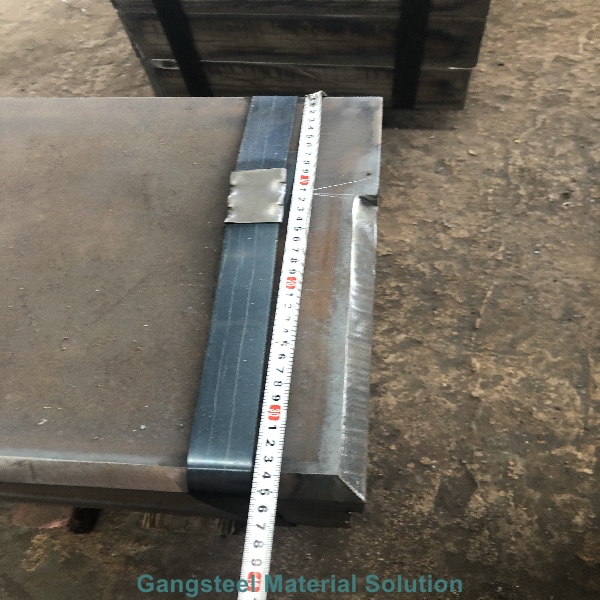
ASTM A516 GR 70 equivalent materials is such as ASME SA516 GR 70, EN 10028 P355GH, and BS1501 224-490 A & B, sh
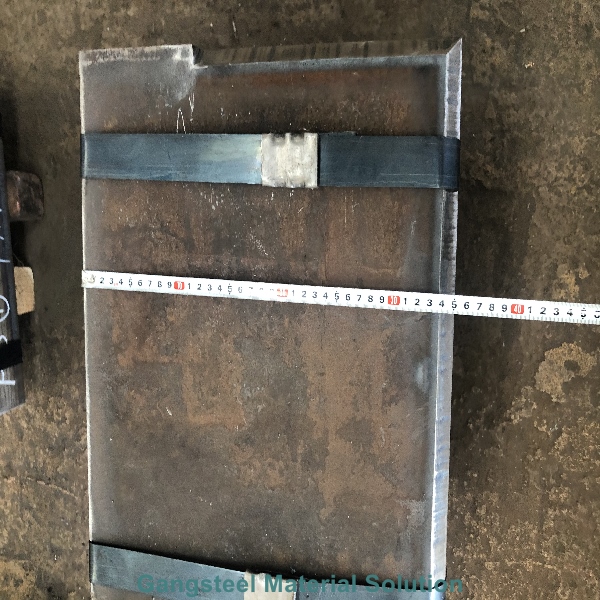
we supply high-quality A516 Gr 70 steel plate for pressure vessel applications and other standards like ASTM A2
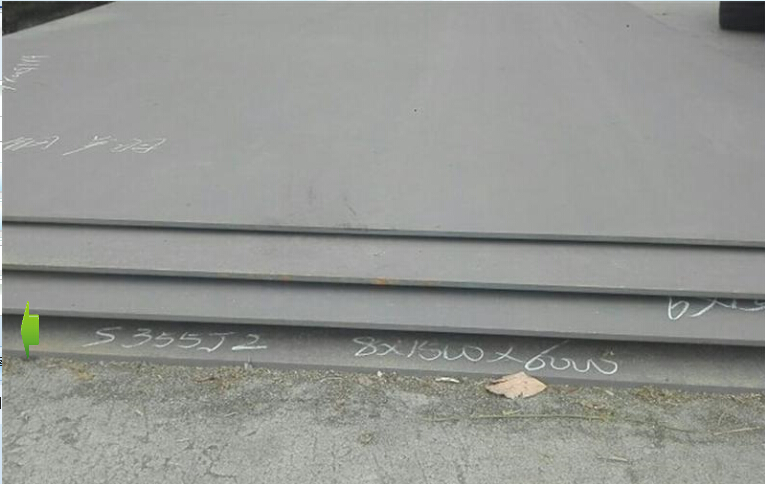
EN10028-2 P355GH for High-Strength Low-Alloy Columbium-Vanadium Structural Steel EN10025-2 S355J2 Structural St

We export A240 304L Stainless Coil 2B, NO.1 No.4 surface, the thickness 0.1mm to 3mm, 3mm to 22mm, Mother mill


