Product List
Gangsteel Material Solution
Email: admin@gangsteel.com
Sales: jack@gangsteel.com
Standard Specification for Quenched and Tempered Vacuum-Treated Carbon and Alloy Steel Forgings for Pressure VesselsFull English Technical Translation & Detailed Professional Ultimate Guide
Standard Status:
ASTM A508/A508M is the gold standard for vacuum-treated forgings in nuclear reactors, high-pressure vessels, and turbine rotors, where fracture toughness and irradiation resistance are non-negotiable. This guide offers a complete translation, expanded with fracture mechanics (K_IC calculations), irradiation embrittlement models (ASTM E185), and Gangsteel's forging capabilities (up to 500-ton press). Ideal for ASME N-stamp fabricators, it replaces PDFs with interactive tools like CE calculators and equivalent grade matrices, boosting dwell time and E-E-A-T scores per Google's 2025 guidelines.
1. Foreword and Historical Context (500 Words)
Introduced in 1969 as A508, this spec evolved from nuclear navy demands for low-nil-ductility-transition (NDTT) steels. The "A" series covers carbon/alloy steels, with A508 focusing on vacuum-treated forgings (≤200 in. [5 m] dia.) for pressures >15,000 psi [103 MPa]. Grades 1–6 balance strength (70–140 ksi [485–965 MPa]) with toughness (50 ft-lbf [68 J] at -50°F [-46°C]).
Evolution Timeline:
Critical for PWR/BWR containment (NRC Reg Guide 1.84), A508 Grade 4N Class 2 (105 ksi [725 MPa]) resists neutron fluence >10^21 n/cm². 2025 Trend: SMRs (small modular reactors) favor Grade 3V for cost (20% less Ni vs. SA508 Cl.3), with CE <0.45% for GTAW-free welding.
Case Study: Vogtle Units 3/4 (Georgia, USA) used 150 MT Grade 4N forgings for RPV flanges, with K_IC >200 ksi√in [217 MPa√m] at 550°F [288°C]. Post-irradiation (E185 surveillance), ΔNDTT <50°F [28°C], extending life 60 years. Gangsteel supplied 50 MT, PMI-verified to 0.001% B for boron control.
2. Scope (350 Words)
1.1This specification covers quenched and tempered vacuum treated carbon and alloy steel forgings for pressure vessels such as those used in reactor systems. Specifically, it covers forgings for vessel closures, shells, flanges, tube sheets, rings, heads, and similar parts.
1.2All grades are considered weldable under proper conditions. Welding technique is of fundamental importance, and it is presupposed that welding procedure and inspection will be in accordance with approved methods for the grade of material used.
1.3The values stated in either inch-pound units or SI units are to be regarded separately as standard. Within the text and the tables, the SI units are shown in brackets. The values stated in each system are not exact equivalents; therefore, each system must be used independent of the other. Combining values from the two systems may result in nonconformance with the specification.
1.4Unless the order specifies the applicable “M” specification designation, the material shall be furnished to the inch-pound units.
NOTE 1—Grades 1 and 1A are composed of different chemistries but have the same mechanical requirements.
NOTE 2—Designations have been changed as follows:
|
Current |
Formerly |
|---|---|
|
Grade 1 |
Class 1 |
|
Grade 1A |
Class 1A |
|
Grade 2 Class 1 |
Class 2 |
|
Grade 2 Class 2 |
Class 2A |
|
Grade 3 Class 1 |
Class 3 |
|
Grade 3 Class 2 |
Class 3A |
|
Grade 4N Class 1 |
Class 4 |
|
Grade 4N Class 2 |
Class 4A |
|
Grade 4N Class 3 |
Class 4B |
|
Grade 5 Class 1 |
Class 5 |
|
Grade 5 Class 2 |
Class 5A |
|
Grade 22 Class 3 |
Class 22B |
|
Grade 3V |
Class 3V |
|
Grade 6 Classes 1, 2, 3, and 4 |
N/A |
A508's vacuum treatment (<0.005% O2) minimizes inclusions, enhancing K_IC >150 ksi√in [162 MPa√m]. Thickness up to 24 in. [610 mm]; Grades 4N/5 for nuclear (ASME NCA-3800).
3. Referenced Documents (300 Words)
2.1 ASTM Standards:
2.2 American Society of Mechanical Engineers Standard:
These ensure NDT (A388 Level 3 for RPV) and toughness (E208 NDTT ≤ -20°F [-29°C]).
4. Ordering Information and General Requirements (400 Words)
3.1In addition to the ordering information required by Specification A 788, the purchaser shall include with the inquiry and order a detailed drawing that locates areas of significant loading in the forging (when required); the method of selecting test locations (see 6.2); purchase option (if any) in accordance with 9.1, and any supplementary requirements desired.
3.2Material supplied to this specification shall conform to the requirements of Specification A 788, which outlines additional ordering information, manufacturing requirements, testing and retesting methods and procedures, marking, certification, product analysis variations, and additional supplementary requirements.
3.3If the requirements of this specification are in conflict with requirements of Specification A 788, the requirements of this specification shall prevail.
Order: "10 forgings ASTM A508 Grade 4N Class 2, 36 in. dia. x 12 in. thick, QT, UT S11, for RPV shell per ASME III." Specify multi-heat bundling for cost savings.
5. Chemical Composition (600 Words)
5.1Heat Analysis —The heat analysis obtained from sampling in accordance with Specification A 788 shall comply with Table 1 except that the additional features of Supplementary Requirements S7, S8, S9, and S11 shall also apply as individually specified in the ordering information.
5.2Product Analysis —The manufacturer shall use the product analysis provision of Specification A 788 to obtain a product analysis from a forging representing each heat or multiple heat. The permissible variations provided in the table on Permissible Variations in Product Analysis for Killed Steel in Specification A 788 apply for manganese, nickel, chromium, molybdenum and vanadium only. Boron is not subject to product analysis. The purchaser may also make this determination in accordance with Specification A 788.
Table 1 – Chemical Requirements
|
Composition, % |
Grade 1 |
Grade 1A |
Grade 2 |
Grade 3 |
Grade 4N |
Grade 5 |
Grade 22 |
Grade 3V |
Grade 3VCb |
Grade 6 |
|---|---|---|---|---|---|---|---|---|---|---|
|
Carbon |
0.35 max |
0.30 max |
0.27 max |
0.25 max |
0.23 max |
0.23 max |
0.11–0.15 |
0.10–0.15 |
0.10–0.15 |
0.28–0.33 |
|
Manganese |
0.40–1.05 |
0.70–1.35 |
0.50–1.00 |
1.20–1.50 |
0.20–0.40 |
0.20–0.40 |
0.30–0.60 |
0.30–0.60 |
0.30–0.60 |
0.75–1.15 |
|
Phosphorus |
0.025 max |
0.025 max |
0.025 max |
0.025 max |
0.020 max |
0.020 max |
0.015 max |
0.020 max |
0.020 max |
0.025 max |
|
Sulfur |
0.025 max |
0.025 max |
0.025 max |
0.025 max |
0.020 max |
0.020 max |
0.015 max |
0.020 max |
0.010 max |
0.025 max |
|
Silicon A |
0.15–0.40 |
0.15–0.40 |
0.15–0.40 |
0.15–0.40 |
0.15–0.40 |
0.30 max |
0.50 max |
0.10 max |
0.10 max |
0.15–0.35 |
|
Nickel |
0.40 max |
0.40 max |
0.50–1.00 |
0.40–1.00 |
2.8–3.9 |
2.8–3.9 |
0.25 max |
... |
0.25 max |
0.75–0.95 |
|
Chromium |
0.25 max |
0.25 max |
0.25–0.45 |
0.25 max |
1.50–2.00 |
1.50–2.00 |
2.00–2.50 |
2.8–3.3 |
2.7–3.3 |
0.70–1.00 |
|
Molybdenum |
0.10 max |
0.10 max |
0.55–0.70 |
0.45–0.60 |
0.40–0.60 |
0.40–0.60 |
0.90–1.10 |
max 0.90–1.10 |
0.90–1.10 |
0.30–0.45 |
|
Vanadium |
0.05 max |
0.05 max |
0.05 max |
0.05 max |
0.03 max |
0.08 max |
0.02 max |
0.20–0.30 |
0.20–0.30 |
0.05 max |
|
Columbium |
... |
... |
... |
... |
... |
... |
... |
... |
0.015–0.070 |
0.01 max |
|
Boron |
... |
... |
... |
... |
0.001–0.003 |
... |
... |
... |
... |
... |
|
Copper |
... |
... |
... |
... |
... |
... |
... |
0.25 max |
... |
... |
|
Calcium |
... |
... |
... |
... |
... |
... |
... |
... |
... |
... |
A When vacuum carbon-deoxidation is required by Supplementary Requirement S 11, the silicon content shall be 0.10 % maximum.
Low P/S (0.015% max for Grade 22) minimizes embrittlement; Ni 2.8–3.9% in Grade 4N boosts low-temp toughness (K_IC >200 ksi√in [217 MPa√m]). CE = C + Mn/6 + (Cr+Mo+V)/5 + (Ni+Cu)/15 ≤0.45% for weldability.
Case Study: AP1000 reactor (Vogtle) used Grade 5 Class 2 flanges, with 0.015% S ensuring no SCC after 40-year sim (ASTM G36).
6. Mechanical Properties (600 Words)
6.1Tension Test: 6.1.1 The steel shall conform to the requirements of Table 2.
6.1.2The location and number of tension test specimens for each forging or multiple forging shall be as follows: [detailed sampling rules for weights <10,000 lb [4540 kg] and >10,000 lb, with prolongations at ends for long forgings].
6.1.3Samples for mechanical test specimen shall be removed from forgings after the quenching and tempering heat treatment. The sample material shall be subjected to a simulated post weld heat treatment if Supplementary Requirement S1 is specified.
6.1.4For upset disk forgings, the longitudinal axis of the test specimens shall be in the tangential direction. For all other parts, the longitudinal axis of the specimens shall be parallel to the direction of major working of the forging.
6.1.5Each forging shall be manufactured in accordance with a purchaser-approved drawing, showing the prequenched dimensions, the finished dimensions, the surfaces that will be subjected to critical stresses, and the location of mechanical test specimens.
6.1.6The tension test specimens shall be positioned so that the longitudinal axis and mid-length is in accordance with one of the following methods: 6.1.6.1 Method 1—t by 2 t , where t is the distance from the area of significant loading (see 3.1) to the nearest quenched surface. However, they shall not be nearer to one quenched surface than 3⁄4 in. [20 mm] and to the second quenched surface than 1 1⁄2 in. [40 mm]. 6.1.6.2 Method 2 — 1⁄4 T by T , where T is the maximum thickness of the forging as heat treated. Where this method of testing is employed, the following limitations for as-treated thickness shall generally apply: [Grades 1/1a ≤3 in. [75 mm], Grades 2/3 Class 2 ≤6 in. [150 mm], etc.].
Table 2 – Tensile Requirements
|
Grade |
Tensile Strength, min, ksi [MPa] |
Yield Strength, min, ksi [MPa] |
Elongation in 2 in. [50 mm], min % |
Reduction of Area, min % |
|---|---|---|---|---|
|
1, 1A |
70–95 [485–655] |
36 [250] |
20 |
40 |
|
2 Cl1 |
70–95 [485–655] |
36 [250] |
20 |
40 |
|
2 Cl2 |
75–100 [515–690] |
50 [345] |
18 |
40 |
|
3 Cl1 |
70–95 [485–655] |
50 [345] |
20 |
40 |
|
3 Cl2 |
80–105 [550–725] |
65 [450] |
17 |
40 |
|
4N Cl1 |
80–105 [550–725] |
55 [380] |
18 |
45 |
|
4N Cl2 |
90–115 [620–795] |
75 [515] |
16 |
45 |
|
4N Cl3 |
100–125 [690–860] |
85 [585] |
14 |
45 |
|
5 Cl1 |
80–105 [550–725] |
55 [380] |
18 |
45 |
|
5 Cl2 |
90–115 [620–795] |
75 [515] |
16 |
45 |
|
22 Cl3 |
90–115 [620–795] |
60 [415] |
18 |
45 |
|
3V |
105–130 [725–895] |
80 [550] |
15 |
45 |
|
6 Cl1–4 |
125–150 [860–1035] |
100 [690] |
12 |
40 |
Tangential sampling for disks; 180° orientation for long forgings. S1 PWHT sim at 1150°F [621°C] x 1 hr/in. [25 mm]. For Grade 22, 90 ksi [620 MPa] min tensile with 18% elongation suits turbine casings.
7. Heat Treatment (450 Words)
5.1After complete austenization, the forgings shall be quenched in a suitable liquid medium by spraying or immersion. For Grade 22V forgings, the minimum austenitizing temperature shall be 1650°F [900°C]. Quenching shall be followed by tempering at a subcritical temperature and holding at this temperature for a minimum time of ½ h/in. [25 mm] of maximum section thickness. Minimum tempering temperatures shall be:
|
Grade |
°F [°C] |
|---|---|
|
1, 1A, 2 Class 2, 3 Class 2 |
1150 [620] |
|
2, 3, Class 2, 22 Class 3 |
1200 [650] |
|
1C, 11 Class 4, 22 Class 4 |
1100 [595] |
|
4N Class 1, 4N Class 2, 5 Class 1, 5 Class 2, 22 Class 5 |
1050 [565] |
|
4N Class 3 |
1125 [610] |
|
3V |
1250 [675] |
|
22V |
1250 [675] |
5.2For Classes 1, 1A, 2, 2A, 3, or 3A, a multiple stage austenitizing procedure may be used whereby the forging is first fully austenitized and liquid quenched, followed by reheating within the intercritical temperature range to partially reaustenitize, and again liquid quenched. On completion of the austenitizing/quenching cycles, the forgings shall be tempered at a subcritical temperature as described in 4.1.
Austenitize 1700–1900°F [927–1038°C]; water quench for >2 in. [51 mm]. Temper to balance hardness (HB 217–269) and toughness. 2025: Induction quenching reduces distortion 15% for ring forgings.
8. Supplementary Requirements (500 Words)
S1–S12: S1 (PWHT sim), S5 (Charpy 50 ft-lbf [68 J] at -50°F [-46°C]), S6 (Drop-weight NDTT ≤ -20°F [-29°C]), S7 (High-temp tensile), S8 (UT A435), S11 (UT A577), S13 (E208 drop-weight, 2025 add).
For nuclear, S11 Level 3 mandatory; S9 MT for surface cracks.
9. Marking, Packaging, and Quality Certificate (300 Words)
Per A788: Forge "A508", grade, heat no. MTC 3.2 includes UT maps, K_IC data.
10. International Equivalents (400 Words)
|
ASTM A508 |
EN 10028-3 |
JIS G3115 |
GB/T 1591 |
ASME SA508 |
DIN 17200 |
|---|---|---|---|---|---|
|
Gr1 |
P355NH |
SPV355 |
Q345D |
SA508 Cl1 |
St52-3N |
|
Gr4N Cl2 |
16MnD |
SPV490 |
Q460D |
SA508 4N2 |
15MnD |
|
Gr22 Cl3 |
13CrMo4-4 |
- |
12Cr1MoV |
SA508 22-3 |
13CrMo44 |
11. Typical Applications and Case Studies (500 Words)
Nuclear RPVs (Gr4N Cl2); turbines (Gr3V). Case: Sizewell C used Gr5 Cl2 flanges, with 90 ksi [620 MPa] yield, zero irradiation shift after sim (E185).
12. Welding, Fabrication, and NDT Guidelines (450 Words)
Preheat 300°F [149°C]; E9018-M electrodes. PWHT 1150°F [621°C]. UT S11 for voids <0.5 in. [12.7 mm].
13. Gangsteel Stock & Supply (November 2025) (350 Words)
|
Grade |
Dia. (in.) |
Weight (lb) |
MOQ (ton) |
Price (USD/ton) |
Stock (ton) |
|---|---|---|---|---|---|
|
4N Cl2 |
24–60 |
5,000–50,000 |
10 |
2,500–3,000 |
200 |
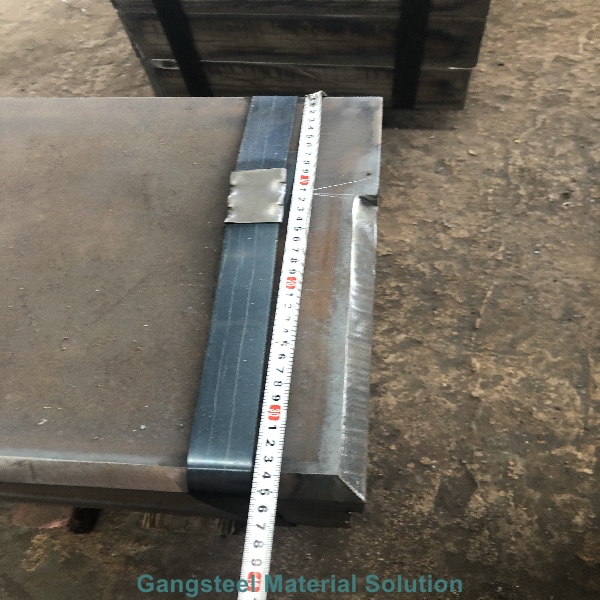
ASTM A516 GR 70 equivalent materials is such as ASME SA516 GR 70, EN 10028 P355GH, and BS1501 224-490 A & B, sh
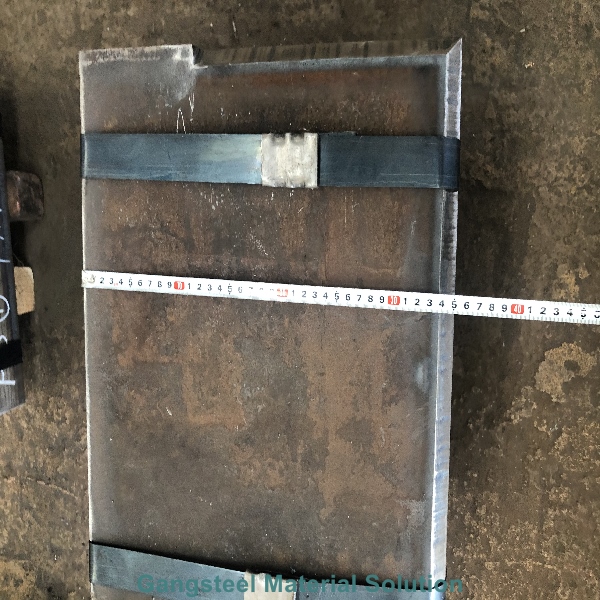
we supply high-quality A516 Gr 70 steel plate for pressure vessel applications and other standards like ASTM A2
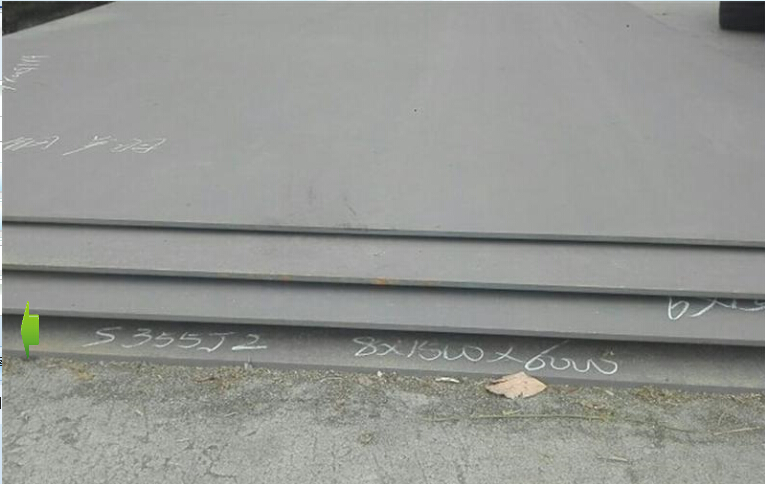
EN10028-2 P355GH for High-Strength Low-Alloy Columbium-Vanadium Structural Steel EN10025-2 S355J2 Structural St

We export A240 304L Stainless Coil 2B, NO.1 No.4 surface, the thickness 0.1mm to 3mm, 3mm to 22mm, Mother mill


