Product List
Gangsteel Material Solution
Email: admin@gangsteel.com
Sales: jack@gangsteel.com
UNS S41500, commonly known as AISI Type 415 or F6NM stainless steel, is a martensitic grade recognized for its high strength, good toughness, and moderate corrosion resistance. The question compares "ASTM A564 Type 415" to UNS S41500, but upon review, ASTM A564 (Standard Specification for Hot-Rolled and Cold-Finished Age-Hardening Stainless Steel Bars and Shapes) does not include a "Type 415." A564 covers age-hardening (precipitation-hardening) grades like Type 630 (17-4PH), Type XM-12 (15-5PH), and Type XM-25 (Custom 450), which rely on precipitation for hardening, not conventional quenching and tempering.
UNS S41500 is a conventional martensitic stainless steel hardened by quenching and tempering, not precipitation, so it's not listed in A564. Instead, it falls under other ASTM specifications like A240 (plates and sheets), A182 (forged fittings), A473 (forgings), and A479 (bars). A473, for example, explicitly includes "Type 415" as UNS S41500. The question may stem from a confusion between A564 (age-hardening) and A473 (general forgings) or AISI Type 415 (the legacy name for UNS S41500).
To clarify, UNS S41500 is the modern UNS designation for what was traditionally called AISI Type 415 stainless steel. They refer to the same material, not two different ones. AISI Type 415 is simply the older AISI nomenclature for UNS S41500, which is now standardized in ASTM specs like A240, A182, A473, and A479. There is no "vs" needed—they are the same alloy. If the intent was to compare A564-covered grades (like Type 630) to UNS S41500, they are different: A564 grades are precipitation-hardening, while S41500 is conventional martensitic.
As a producer, Gangsteel stocks UNS S41500 (AISI 415) in plates (1-200mm thick) under A240, priced at $2,600-2,800/ton FOB, with dual certs to equivalents for global use. Below, we'll detail the material's properties and clarify any confusion with A564.

UNS S41500 is a low-carbon martensitic stainless steel enhanced with nickel and molybdenum, making it a "soft martensitic" grade that's easier to weld and more tough than basic martensitics like 410. It's heat-treatable by quenching and tempering to achieve high strength (yield 620 MPa min) while maintaining ductility (elongation 15% min) and hardness (<32 HRB for NACE compliance). Density is 7.85 g/cm³, and PREN 18-22 for good pitting resistance in chlorides/H2S.
|
Element |
% Range or Max |
Role |
|---|---|---|
|
Carbon (C) |
0.05 max |
Low for weldability and to avoid brittleness. |
|
Manganese (Mn) |
0.50-1.00 |
Deoxidizer; improves hardenability. |
|
Silicon (Si) |
0.60 max |
Oxidation resistance. |
|
Phosphorus (P) |
0.030 max |
Impurity control for toughness. |
|
Sulfur (S) |
0.030 max |
Machinability aid. |
|
Chromium (Cr) |
11.50-14.00 |
Corrosion resistance base. |
|
Molybdenum (Mo) |
0.50-1.00 |
Pitting resistance enhancer. |
|
Nickel (Ni) |
3.50-5.50 |
Toughness and austenite stabilizer. |
|
Nitrogen (N) |
0.10 max |
Strength booster. |
|
Iron (Fe) |
Balance |
Matrix. |
|
Property |
Value |
Notes |
|---|---|---|
|
Tensile Strength (MPa) |
795 min |
High for load-bearing. |
|
Yield Strength (MPa) |
620 min |
Pressure resistance. |
|
Elongation (%) |
15 min |
Ductility for forming. |
|
Hardness (HRB max) |
32 |
Tunable for NACE. |
|
Impact (Charpy J) |
27 at -18°C |
Low-temp toughness. |
Gangsteel's stock achieves 850-950 MPa tensile in tempered state.
ASTM A564 covers age-hardening stainless steels like Type 630 (17-4PH) and XM-25 (Custom 450), which harden via precipitation (e.g., Cu phases) at low temps (480-620°C), minimizing distortion. S41500 hardens via conventional quenching (950-1050°C) and tempering (550-630°C), so it's in specs like A473 (forgings) where "Type 415" is listed as UNS S41500. The "A564 Type 415" may be a mix-up with AISI Type 415 or A473 Type 415—both the same as UNS S41500. No direct "Type 415" in A564; it's for PH grades like XM-13 (13-8Mo).
If comparing to A564 grades (e.g., Type 630), S41500 is conventional martensitic (QT-hardened), while A564 is precipitation-hardening—different hardening mechanisms, with A564 offering higher strength (e.g., 1310 MPa in H900) but S41500 better for weldability in sour service.
S41500 is used in oil & gas (sour valves), petrochemical (reactors), marine (shafts), and power (turbines). It's NACE-compliant for H2S, with PREN 18-22.
A564 grades like Type 630 are for aerospace (high strength) or medical (precision).
Gangsteel offers UNS S41500 at $2,600-2,800/ton FOB, 1-200mm thick. Contact for quotes—dual certs available.
Q: Is ASTM A564 Type 415 the same as UNS S41500?A: No, ASTM A564 does not include Type 415; it covers age-hardening grades like Type 630. UNS S41500 is AISI Type 415, covered in A240/A182/A473/A479.
Q: What is ASTM A564, and why doesn't it have Type 415?A: A564 is for age-hardening SS (precipitation-hardened like 17-4PH); Type 415 (S41500) is conventional martensitic, hardened by QT, so in A473 for forgings.
Q: What is UNS S41500, and how does it relate to Type 415?A: UNS S41500 is the UNS designation for AISI Type 415, a martensitic SS with Ni/Mo for toughness/corrosion.
Q: Can I use A564 grades as equivalents to S41500?A: No— A564 is for PH SS like Type 630 (higher strength 1310 MPa, different hardening); S41500 is QT-hardened for better weldability.
Q: What is the density of UNS S41500?A: 7.85 g/cm³, typical for martensitic SS.
Q: Where can I source UNS S41500?A: Gangsteel stocks at $2,600-2,800/ton FOB, 1-200mm thick. Contact for quotes.
Q: What standards cover UNS S41500?A: ASTM A240 (plates), A182 (fittings), A473 (forgings), A479 (bars).
Q: What is AISI Type 415?A: AISI Type 415 is the legacy name for UNS S41500, the same material.
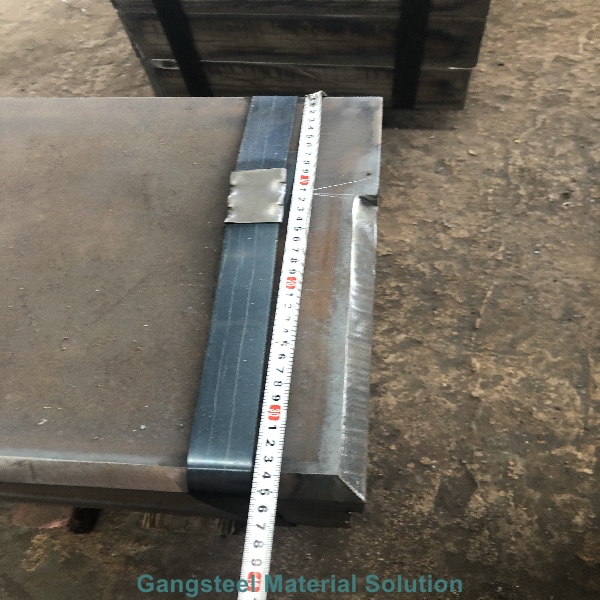
ASTM A516 GR 70 equivalent materials is such as ASME SA516 GR 70, EN 10028 P355GH, and BS1501 224-490 A & B, sh
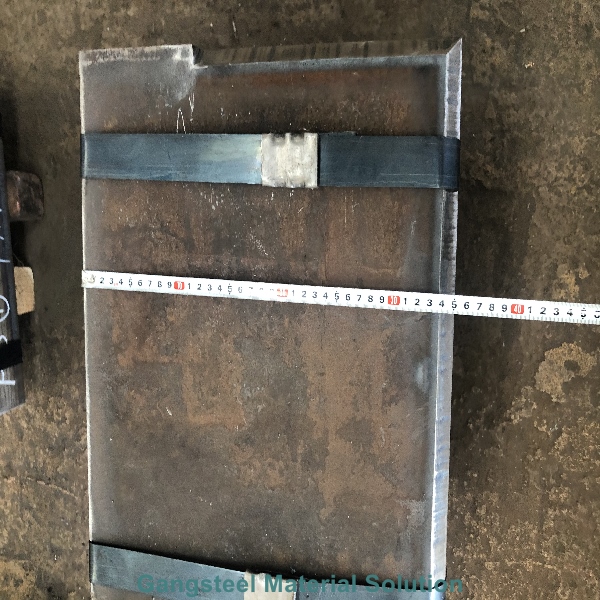
we supply high-quality A516 Gr 70 steel plate for pressure vessel applications and other standards like ASTM A2
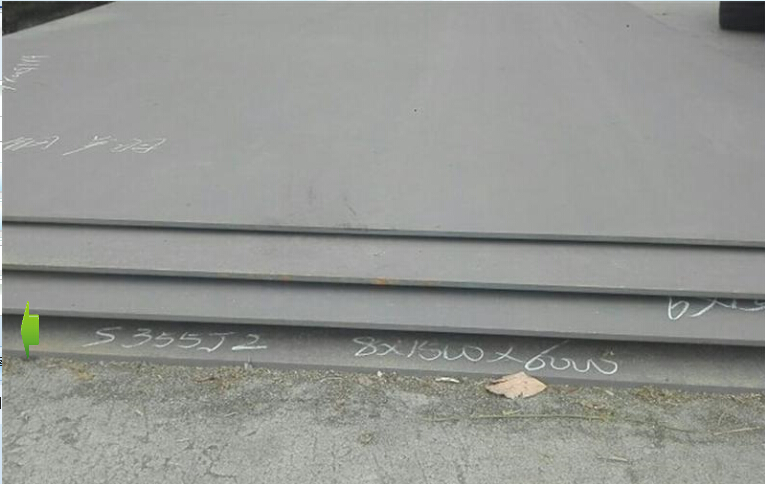
EN10028-2 P355GH for High-Strength Low-Alloy Columbium-Vanadium Structural Steel EN10025-2 S355J2 Structural St

We export A240 304L Stainless Coil 2B, NO.1 No.4 surface, the thickness 0.1mm to 3mm, 3mm to 22mm, Mother mill