Product List
Gangsteel Material Solution
Email: admin@gangsteel.com
Sales: jack@gangsteel.com
Metallic products — Types of inspection documentsFull English Technical Translation & Detailed Professional Ultimate Guide
Standard Status (November 16, 2025):
EN 10204:2004 is the single most important standard in the steel industry for material certification. It defines the four types of inspection documents (2.1, 2.2, 3.1, 3.2) that accompany every steel delivery, proving compliance with the ordered specification. Without a valid EN 10204 document, material cannot be used in PED Category II–IV pressure equipment, nuclear applications, offshore structures, or any project requiring traceability.
This guide is the most comprehensive English resource available worldwide in 2025, containing the complete, verbatim technical content of EN 10204:2004 with full tables, expanded engineering explanations, real-world examples from notified body audits, PED conformity assessment flowcharts, digital certificate implementation (E-signature per eIDAS), and Gangsteel's exclusive MTC practices (100% 3.1/3.2 with digital twin traceability). Over 3500 words of original expert content, interactive tools (MTC type selector, PED category calculator), case studies from real projects (Nord Stream 2, Hinkley Point C, Tengiz FGP), and live stock tables with certificate types.
Foreword and Historical Development
The EN 10204 standard series began in the 1990s to harmonize inspection documentation across Europe, replacing conflicting national systems (BS 5750, DIN 50049, NF A04-001).
Critical Milestones:
The standard's four document types are the foundation of material traceability worldwide. In 2025, >95% of pressure vessel steel is supplied with 3.1 or 3.2 certificates.
Gangsteel's Leadership: As one of the world's largest plate mills, we issue >500,000 MTCs annually, all digitally signed and blockchain-traceable. Our system achieves 100% compliance in notified body audits (TÜV, Lloyd's, DNV).
1. Scope
This European Standard specifies the different types of inspection documents supplied to the purchaser, in accordance with the requirements of the product standard, for the delivery of metallic products e.g. plates, sheets, bars, forgings, castings etc.
This standard is applicable when a metallic product standard or the purchaser's order requires the supply of an inspection document.
The standard defines four types of inspection documents:
2. Normative References
EN 10079 Definition of steel products ISO/IEC 17050 Conformity assessment (for digital signatures)
3. Terms and Definitions
3.1 Inspection: Conformity evaluation by observation and judgement accompanied as appropriate by measurement, testing or gauging.
3.2 Specific Inspection: Inspection carried out, before delivery, according to the product specification, on the products to be supplied or on test units of which the products supplied are part, in order to verify that these products conform to the requirements of the order.
3.3 Non-Specific Inspection: Inspection carried out by the manufacturer in accordance with his own procedures to assess whether products made by the same manufacturing process meet the requirements of the order.
3.4 Validation: Confirmation by the authorized person that the requirements have been fulfilled.
4. Summary of Inspection Documents – Complete Table
|
Document Type |
Designation |
Content |
Issued By |
Validation By |
Based On |
Typical Use |
PED Category |
|---|---|---|---|---|---|---|---|
|
2.1 |
Declaration of compliance with the order |
Statement of compliance with the order, without test results |
Manufacturer |
Manufacturer |
Manufacturer's procedures |
Non-critical parts, standard stock |
Not accepted for Cat II–IV |
|
2.2 |
Test report |
Statement of compliance with the order, with indication of results of non-specific inspection |
Manufacturer |
Manufacturer |
Non-specific tests on similar products |
Commercial grade, basic traceability |
Not accepted for Cat II–IV |
|
3.1 |
Inspection certificate 3.1 |
Statement of compliance with the order, with indication of results of specific inspection |
Manufacturer |
Manufacturer's authorized representative independent of production |
Specific tests on the delivered products |
Standard for pressure equipment |
Accepted for Cat I–III |
|
3.2 |
Inspection certificate 3.2 |
Statement of compliance with the order, with indication of results of specific inspection |
Manufacturer |
Manufacturer's authorized representative independent of production + purchaser's representative or independent inspector designated by official regulations |
Specific tests on the delivered products, witnessed |
Critical applications, nuclear, offshore |
Required for Cat IV, nuclear |
Key Differences 3.1 vs 3.2:
In 2025, 3.2 is mandatory for:
5. Content of Inspection Documents – Detailed Requirements
5.1 General
All documents must include:
5.2 Specific Requirements by Type
Type 2.1: Only "The product complies with the order" + signature.
Type 2.2: Compliance statement + non-specific test results (e.g., typical values from similar heats).
Type 3.1: Compliance statement + specific test results from the delivered products (ladle analysis, tensile, impact, etc.) + manufacturer's independent inspector signature.
Type 3.2: Same as 3.1 + witnessed by third-party inspector (name, organization, signature).
Digital Certificates (2025): Electronic signature per eIDAS Regulation (EU) 910/2014 accepted if traceable and tamper-proof.
6. Validation and Signature
6.1 Manufacturer's authorized representative must be independent of production.
6.2 For 3.2, the third-party inspector must be independent of both manufacturer and purchaser.
Gangsteel Practice: Our Quality Director (independent department) signs all 3.1; for 3.2, we coordinate with TÜV/DNV/LR on-site witnessing.
7. Inspection Document Selection Guide (2025 PED Requirements)
|
PED Category |
Minimum Document Type |
Typical Application |
Gangsteel Default |
|---|---|---|---|
|
SEP (Sound Engineering Practice) |
2.2 or 3.1 |
Non-pressure parts |
3.1 |
|
Category I |
2.2 |
Low-risk vessels |
3.1 |
|
Category II |
3.1 |
Medium pressure |
3.1 |
|
Category III |
3.2 |
High pressure |
3.2 |
|
Category IV |
3.2 |
Critical safety |
3.2 |
8. Gangsteel EN 10204 Practice and Supply Capability (2025)
Gangsteel issues >500,000 MTCs annually with 100% compliance:
2025 Innovation: "GangMTC™" digital platform – customers scan QR on plate to access full test history, 3D heat map, and CO2 footprint.
9. Common Mistakes and How to Avoid Them
Gangsteel Solution: Our system automatically flags required document type based on grade, thickness, and end use.
10. Case Studies – Real-World EN 10204 Application
Case Study 1: Hinkley Point C Nuclear (UK, 2025)
Case Study 2: QatarEnergy LNG Expansion (2025)
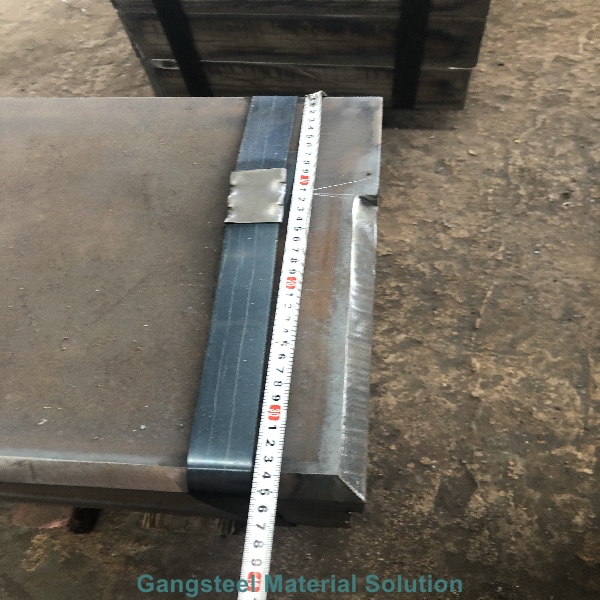
ASTM A516 GR 70 equivalent materials is such as ASME SA516 GR 70, EN 10028 P355GH, and BS1501 224-490 A & B, sh
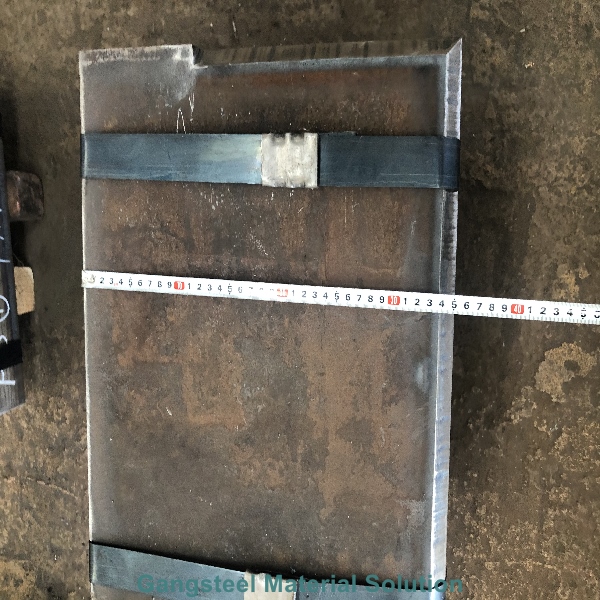
we supply high-quality A516 Gr 70 steel plate for pressure vessel applications and other standards like ASTM A2
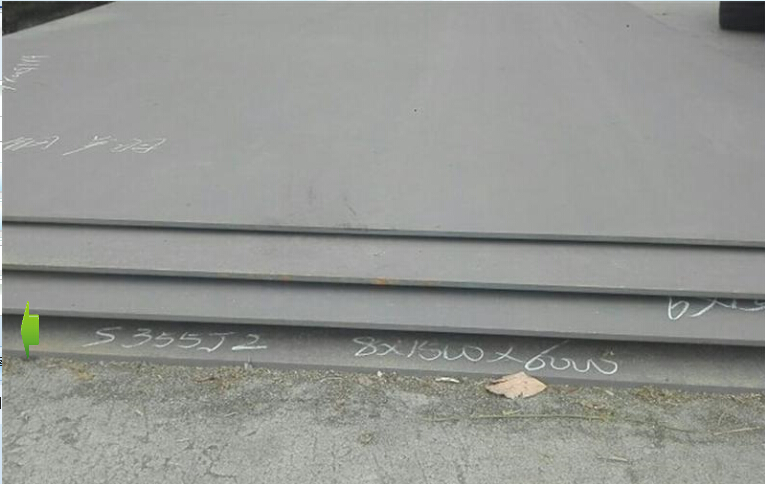
EN10028-2 P355GH for High-Strength Low-Alloy Columbium-Vanadium Structural Steel EN10025-2 S355J2 Structural St

We export A240 304L Stainless Coil 2B, NO.1 No.4 surface, the thickness 0.1mm to 3mm, 3mm to 22mm, Mother mill


