Product List
Gangsteel Material Solution
Email: admin@gangsteel.com
Sales: jack@gangsteel.com
As a premier exporter and manufacturer of high-quality structural steel plates, Gangsteel specializes in producing EN 10025-3 compliant materials, including the versatile S420N and S420NL steel grades.
Both S420N and S420NL are normalized fine-grain structural steels designed for welded constructions requiring enhanced toughness at low temperatures.
Ideal for heavy-duty applications in bridges, cranes, and offshore structures, our S420N and S420NL plates are delivered in normalized or normalized rolled conditions to ensure superior weldability and impact resistance.
For a comprehensive overview of our en 10025 3 normalized steel plate offerings, explore our full range.
S420N (material no. 1.8902) and S420NL (1.8912) are high-strength low-alloy (HSLA) fine-grain structural steels under EN 10025-3, with "N" indicating normalized delivery. The key difference is the impact test temperature: S420N at -20°C (40 J min longitudinal), S420NL at -50°C (27 J min). This makes S420NL suitable for arctic environments, while S420N suffices for moderate cold. Both share identical yield (420 MPa ≤16 mm) and tensile strength, with fine-grain structure for ductility.
Gangsteel produces both in thicknesses up to 250 mm, with dual certifications available.
Both grades have identical low-carbon profiles for weldability (ladle analysis, max % unless noted, ≤100 mm thickness).
|
Element |
Symbol |
Max (%) |
|---|---|---|
|
Carbon |
C |
0.20 |
|
Silicon |
Si |
0.60 |
|
Manganese |
Mn |
1.00–1.70 |
|
Phosphorus |
P |
0.025 |
|
Sulfur |
S |
0.020 |
|
Chromium |
Cr |
0.30 |
|
Molybdenum |
Mo |
0.10 |
|
Nickel |
Ni |
0.80 |
|
Vanadium |
V |
0.20 |
|
Nitrogen |
N |
0.025 |
|
Niobium |
Nb |
0.05 |
|
Titanium |
Ti |
0.05 |
|
Aluminum |
Al |
≥0.020 |
|
Copper |
Cu |
0.55 |
|
CEV |
- |
0.48 |
*Note: Identical compositions ensure similar weldability (CEV ≤0.48); no preheat ≤50 mm.
Both grades are normalized for fine-grain structure, with identical properties except impact temperature (minimum values).
|
Nominal Thickness (mm) |
Yield ReH Min (MPa) Both |
Tensile Rm (MPa) Both |
Elongation A Min (%) Both |
Charpy KV Longitudinal Min (J) S420N at -20°C |
Charpy KV Longitudinal Min (J) S420NL at -50°C |
Charpy KV Transverse Min (J) S420N at -20°C |
Charpy KV Transverse Min (J) S420NL at -50°C |
|---|---|---|---|---|---|---|---|
|
≤ 16 |
420 |
520–680 |
19 |
40 |
27 |
27 |
16 |
|
16 < t ≤ 40 |
400 |
520–680 |
19 |
40 |
27 |
27 |
16 |
|
40 < t ≤ 63 |
390 |
520–680 |
19 |
40 |
27 |
27 |
16 |
|
63 < t ≤ 80 |
380 |
520–680 |
18 |
40 |
27 |
27 |
16 |
|
80 < t ≤ 100 |
370 |
520–680 |
18 |
40 |
27 |
27 |
16 |
|
100 < t ≤ 150 |
360 |
500–650 |
18 |
40 |
27 |
27 |
16 |
|
150 < t ≤ 200 |
360 |
500–650 |
18 |
40 |
27 |
27 |
16 |
|
200 < t ≤ 250 |
340 |
500–650 |
18 |
40 |
27 |
27 |
16 |
*Notes: Elongation per Lo = 5.65 √So. S420NL's lower impact values at -50°C still provide superior cold performance than S420N at equivalent temperatures.
Both grades are supplied in normalized (+N) condition, refining grain for toughness.
Re-normalize post-forming if needed. Avoid quenching.
Follow EN 1011-2. Gangsteel optimizes for minimal heat treatment.
Both for heavy engineering, infrastructure, construction in cold climates. S420NL preferred for extreme cold like arctic offshore.
|
Standard |
S420N |
S420NL |
|---|---|---|
|
ASTM |
A572 Gr. 65 |
A572 Gr. 65 (with -50°C spec) |
|
DIN |
TStE 420 |
TStE 420 L |
|
JIS |
SM570 |
SM570 (with -50°C spec) |
|
GB |
Q420B |
Q420D/E |
With state-of-the-art mills and ISO-certified quality, Gangsteel delivers S420N and S420NL plates tailored to your specifications. Stocked in various sizes and ready for immediate export worldwide. For detailed pricing and availability, visit our en 10025 3 s420nl normalized structural steel plate product page or contact our sales team today.
S420N and S420NL are EN 10025-3 normalized fine-grain steels with identical 420 MPa yield and 520–680 MPa tensile, but differ in impact: S420N 40 J at -20°C vs S420NL 27 J at -50°C, making S420NL better for extreme cold. Both excel in cold welded structures like bridges and offshore platforms. S420N and S420NL from Gangsteel ensure reliability with certified plates for optimal performance.
The primary distinction is the Charpy V-notch impact testing temperature: S420N requires a minimum of 40 J longitudinal at -20°C, while S420NL demands 27 J at -50°C. This makes S420NL more suitable for sub-zero environments, as it guarantees toughness in colder conditions without altering other mechanical properties like yield or tensile strength.
Yes, S420N and S420NL share the same chemical composition, including maximum carbon at 0.20%, manganese at 1.00–1.70%, and CEV ≤0.48. This ensures low hardenability and resistance to cracking, with aluminum or niobium for grain refinement in both grades.
Yes, for thicknesses up to 250 mm, both exhibit the same minimum yield strength (decreasing from 420 MPa at ≤16 mm to 340 MPa at 200–250 mm), tensile strength (520–680 MPa up to 100 mm, 500–650 MPa beyond), and elongation (18–19%). The normalization process ensures a fine-grain structure in both, but S420NL's lower impact values at -50°C still provide better overall cold performance than S420N at equivalent temperatures.
Opt for S420N in moderate climates or non-critical low-temp structures, such as indoor machinery, standard bridges, or building frameworks where temperatures rarely drop below -20°C. It's more economical while meeting EN 10025-3 standards for weldable fine-grain steel, saving costs without compromising strength in temperate zones.
S420NL is essential for applications exposed to -50°C or lower, like offshore oil rigs, arctic pipelines, northern cranes, or wind farm foundations, where brittle fracture risks increase. Its advantages include superior ductility and impact resistance in extreme cold—maintaining 27 J at -50°C versus S420N's potential drop-off—leading to higher safety margins, reduced failure rates, and compliance with stringent codes like Eurocode 3 for cold regions.
Absolutely; both have low CEV (≤0.48) for excellent weldability without preheating up to 50 mm thickness. Use matching low-hydrogen electrodes (e.g., E9018) and limit interpass temperatures to 200°C. For S420NL in cold service, post-weld stress relief at 550–650°C may be recommended more often to preserve toughness, but procedures per EN 1011-2 apply to both.
S420N equivalents include DIN TStE 420 and ASTM A572 Gr. 65; S420NL aligns with DIN TStE 420 L and ASTM A633 Gr. C. Both share JIS SM570. Always verify impact equivalence for substitutions, as S420NL's -50°C rating may require normalized delivery in equivalents.
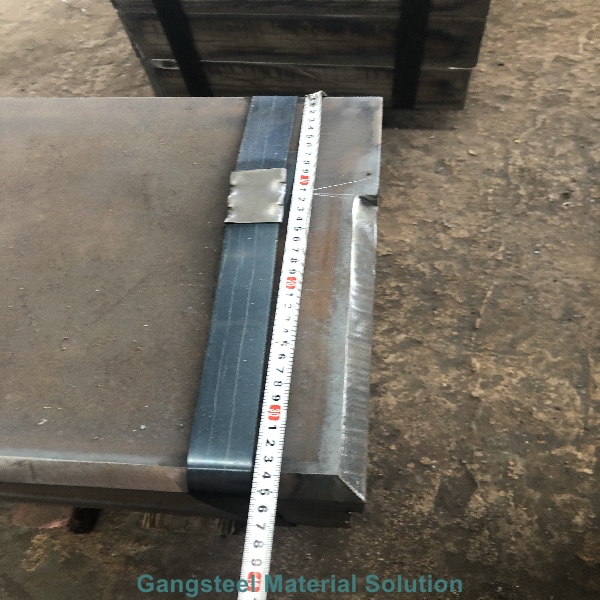
ASTM A516 GR 70 equivalent materials is such as ASME SA516 GR 70, EN 10028 P355GH, and BS1501 224-490 A & B, sh
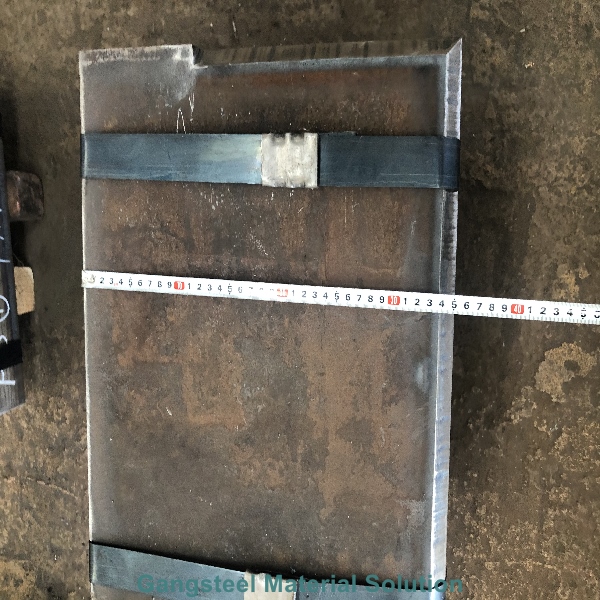
we supply high-quality A516 Gr 70 steel plate for pressure vessel applications and other standards like ASTM A2
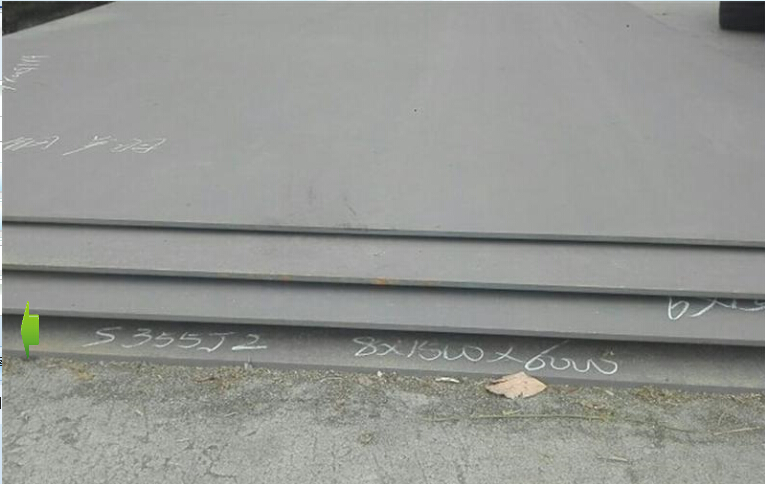
EN10028-2 P355GH for High-Strength Low-Alloy Columbium-Vanadium Structural Steel EN10025-2 S355J2 Structural St

We export A240 304L Stainless Coil 2B, NO.1 No.4 surface, the thickness 0.1mm to 3mm, 3mm to 22mm, Mother mill