Product List
Gangsteel Material Solution
Email: admin@gangsteel.com
Sales: jack@gangsteel.com
Duplex stainless steels have revolutionized the industry with their unique combination of austenitic and ferritic microstructures, offering superior strength and corrosion resistance compared to traditional austenitic grades like 304 or 316. Among the most popular duplex alloys are ASTM A240 OR ASME SA240 UNS S31803 and UNS S32205, both commonly known as 2205 duplex stainless steel.
Developed by the same family of specifications, these grades are often used interchangeably, but key differences in chemistry, performance, and application make one preferable over the other in specific scenarios.
As Gangsteel, a leading manufacturer, supplier, and exporter of premium stainless steel products, we provide this comprehensive comparison to help engineers and procurement teams make informed decisions. Both grades are specified under ASME SA240 and ASTM A240 for sheets, plates, and strips, but UNS S32205 represents an evolution of UNS S31803 with tighter controls for enhanced reliability. Below, we dive into their composition, mechanical properties, corrosion resistance, weldability, applications, and more.
The primary distinction between UNS S31803 and UNS S32205 lies in their chemical composition. UNS S32205 is essentially a refined version of S31803, produced to the upper limits of the S31803 specification, ensuring more consistent performance. According to ASTM A240, the key differences are in the minimum levels of critical alloying elements like chromium, molybdenum, and nitrogen, which directly impact corrosion resistance.
Here's a side-by-side comparison of the typical chemical composition ranges (maximum values unless noted):
|
Element |
UNS S31803 (%) |
UNS S32205 (%) |
Key Difference |
|---|---|---|---|
|
Carbon (C) |
≤0.030 |
≤0.030 |
Identical; low to prevent carbide precipitation |
|
Manganese (Mn) |
≤2.00 |
≤2.00 |
Identical; aids nitrogen solubility |
|
Phosphorus (P) |
≤0.030 |
≤0.030 |
Identical; controls impurities |
|
Sulfur (S) |
≤0.020 |
≤0.020 |
Identical; minimizes hot shortness |
|
Silicon (Si) |
≤1.00 |
≤1.00 |
Identical; deoxidation aid |
|
Chromium (Cr) |
21.00-23.00 |
22.00-23.00 (min 22.0) |
S32205 has higher minimum for better pitting resistance |
|
Nickel (Ni) |
4.50-6.50 |
5.50-6.50 (min 5.5) |
S32205 has higher minimum for phase stability |
|
Molybdenum (Mo) |
2.50-3.50 |
3.00-3.50 (min 3.0) |
S32205 has higher minimum for enhanced localized corrosion resistance |
|
Nitrogen (N) |
0.05-0.20 (min 0.08) |
0.14-0.20 (min 0.14) |
S32205 has significantly higher minimum for improved strength and pitting resistance |
|
Iron (Fe) |
Balance |
Balance |
Identical base metal |
These tighter limits in S32205 result in more predictable material properties, reducing variability in production. Notably, material produced to S32205 fully complies with S31803 specifications, but the reverse is not true—S31803 may not meet S32205's minimums.
Both grades exhibit the characteristic high strength of duplex stainless steels, but S32205's refined chemistry provides slightly better consistency and performance, particularly in impact toughness at low temperatures.
|
Property |
UNS S31803 (Minimum) |
UNS S32205 (Minimum) |
Key Difference |
|---|---|---|---|
|
Tensile Strength |
620 MPa (90 ksi) |
620 MPa (90 ksi) |
Identical; excellent for structural loads |
|
Yield Strength (0.2% offset) |
450 MPa (65 ksi) |
450 MPa (65 ksi) |
Identical; double that of austenitics |
|
Elongation |
25% (in 50mm) |
25% (in 50mm) |
Identical; good ductility for forming |
|
Hardness |
≤290 HB |
≤290 HB |
Identical; balanced for machinability |
|
Charpy Impact (RT) |
45 J (min) |
45 J (min) |
Identical, but S32205 shows less scatter in tests |
S32205's higher minimum nitrogen contributes to more uniform mechanical properties, reducing the risk of brittle failure in welded structures. Both grades are annealed at 1025-1125°C to achieve 40-60% ferrite for optimal balance.
The most significant differences emerge in corrosion performance, where S32205's tighter chemistry provides measurable improvements, particularly in pitting and crevice corrosion.
In summary, S32205 is the "upgraded" version for critical applications where consistency is paramount, while S31803 suffices for less severe conditions.
Both grades are highly weldable, using matching fillers like ER2209, with similar precautions: preheat to 100°C, interpass temperature <150°C, and post-weld annealing for thick sections to restore ferrite balance. S32205's higher nitrogen minimum can slightly increase hot cracking risk if not controlled, but its tighter specs ensure more predictable behavior during multi-pass welding. Both require ferrite verification per ASTM A923 to avoid detrimental phases.
Fabrication is straightforward for both, with good formability, though S32205's higher strength demands more powerful tooling.
S32205 is increasingly specified in new projects for its proven edge in performance.
S32205 typically costs 5-15% more than S31803 due to stricter chemistry controls, but the investment pays off in reduced maintenance and longer life. Both are widely available, but S32205's consistency makes it easier to qualify for critical codes like ASME NACE MR0175.
For standard applications, UNS S31803 offers excellent value as the original 2205. However, for enhanced reliability in pitting-prone environments, UNS S32205 is the superior choice—it's backward-compatible with S31803 specs but delivers measurable improvements in corrosion resistance and consistency. At Gangsteel, we recommend S32205 for new designs and stock both for flexibility. Contact us at admin@gangsteel.com for samples, quotes, or expert advice on your project.
Keywords: UNS S31803 vs S32205 difference, duplex stainless steel 2205 comparison, S31803 S32205 pitting resistance
Ready to procure? Gangsteel supplies both grades with full certifications. Visit https://gangsteel.net or email admin@gangsteel.com for quotes. Warehouses in Shanghai and Rotterdam ship worldwide.
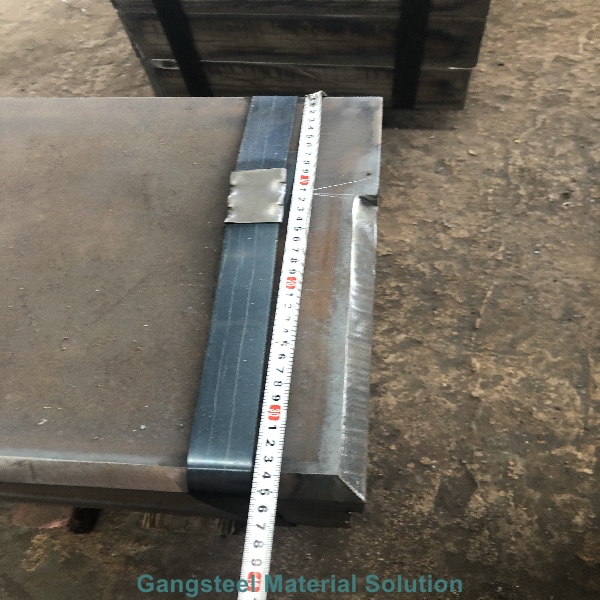
ASTM A516 GR 70 equivalent materials is such as ASME SA516 GR 70, EN 10028 P355GH, and BS1501 224-490 A & B, sh
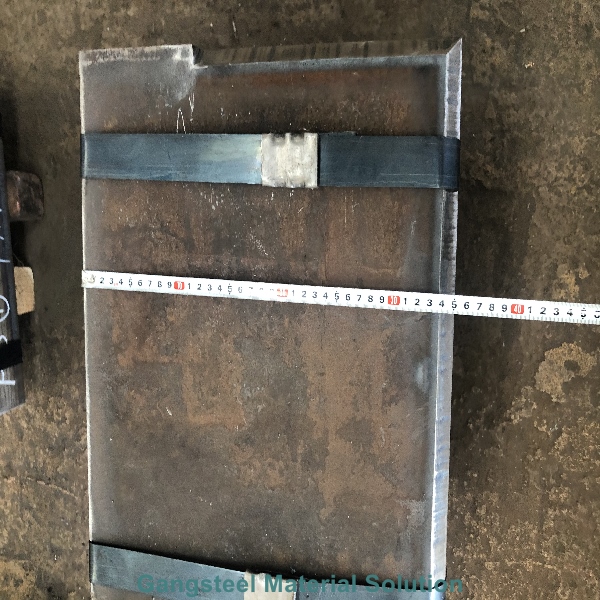
we supply high-quality A516 Gr 70 steel plate for pressure vessel applications and other standards like ASTM A2
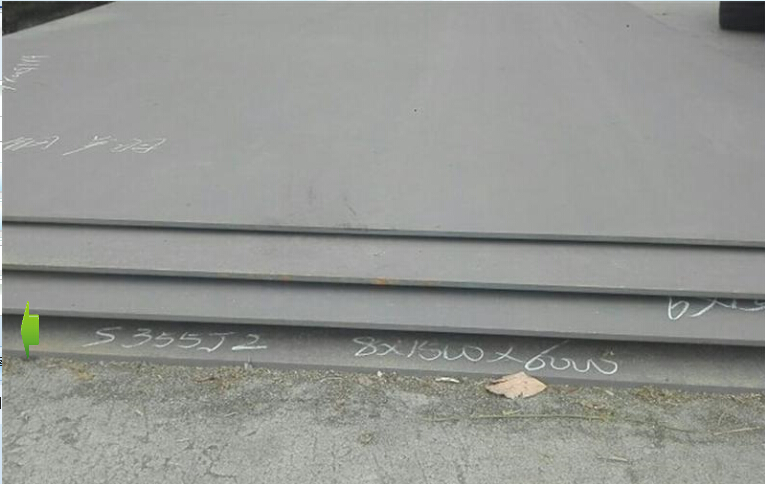
EN10028-2 P355GH for High-Strength Low-Alloy Columbium-Vanadium Structural Steel EN10025-2 S355J2 Structural St

We export A240 304L Stainless Coil 2B, NO.1 No.4 surface, the thickness 0.1mm to 3mm, 3mm to 22mm, Mother mill