Product List
Gangsteel Material Solution
Email: admin@gangsteel.com
Sales: jack@gangsteel.com
Trademarks and ownership of corten steel in the context of materials science, particularly for steel alloys, refers to the legal protections and proprietary rights associated with specific alloy names, compositions, or branding used by manufacturers. Trademarks ensure brand recognition and quality assurance, while ownership delineates the entities controlling production, licensing, or intellectual property.
This article explores the cor-ten steel trademarks and ownership of notable steel alloys, with a focus on weathering steel (commonly known as corten steel or its trademarked name, COR-TEN), as well as other alloys, adhering to neutral and verifiable principles.
Weathering steel, often referred to as corten steel, is a group of low-alloy steels designed to form a stable, rust-like patina (protective oxide layer) when exposed to weather, eliminating the need for painting or external coatings. This patina enhances corrosion resistance, making it ideal for applications like bridges, sculptures, and architectural facades. The term “corten” derives from the trademarked name COR-TEN, which stands for Corrosion Resistance and Tensile Strength, highlighting its two defining properties.
The COR-TEN name is a registered trademark held by United States Steel Corporation (U.S. Steel), established when the alloy was developed in the 1930s for railroad coal wagons. U.S. Steel retains the trademark for branding purposes, despite changes in its business structure. In 2003, U.S. Steel sold its discrete plate business to International Steel Group, which later became part of ArcelorMittal. However, U.S. Steel continues to produce and market COR-TEN branded material in strip-mill plate and sheet forms, while ArcelorMittal manufactures similar weathering steels under ASTM standards.
Weathering steels under the COR-TEN brand are standardized by ASTM International, ensuring consistent properties across manufacturers. The original COR-TEN alloy received the designation A242 (often called COR-TEN A), introduced in the 1960s for structural shapes and plates. Subsequent grades include:
These ASTM grades are in widespread production and use globally, with manufacturers licensing the COR-TEN trademark or producing equivalent alloys under generic names (e.g., weathering steel). The trademark does not cover the alloy composition itself, which is standardized, but rather the branding of products meeting specific quality criteria set by U.S. Steel.
Beyond COR-TEN, other steel alloys also carry trademarks tied to their proprietary development or branding:
These trademarks protect brand identity but do not restrict competitors from producing equivalent alloys under ASTM or EN standards, provided they meet the same specifications.
Ownership of steel alloy trademarks often shifts due to mergers, acquisitions, or divestitures in the steel industry:
Ownership also extends to intellectual property in processing techniques (e.g., quenching for T-1 or precipitation hardening for 17-4PH), but these are typically standardized, allowing broad industry adoption.
Trademarks like COR-TEN influence material selection in engineering and architecture. For example:
Trademarks signal quality assurance but require designers to verify compliance with ASTM or EN standards for safety and performance.
This article adheres to neutral, verifiable principles, drawing from reliable sources such as ASTM standards, industry publications, and corporate records. For further reading, consult ASTM International specifications or AISC design guides.
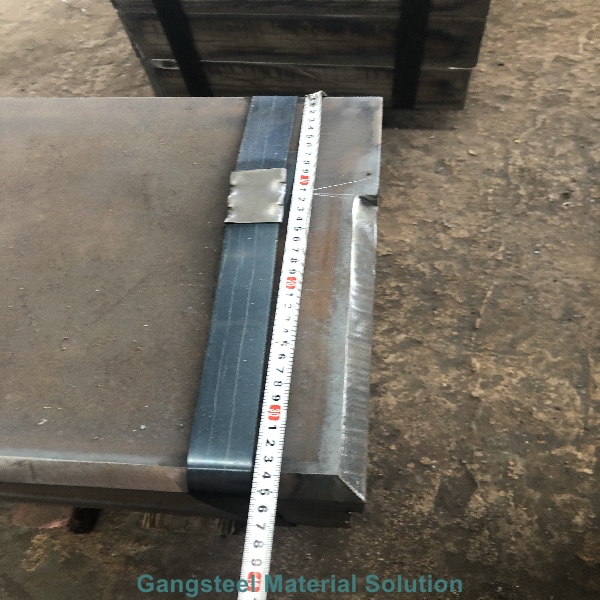
ASTM A516 GR 70 equivalent materials is such as ASME SA516 GR 70, EN 10028 P355GH, and BS1501 224-490 A & B, sh
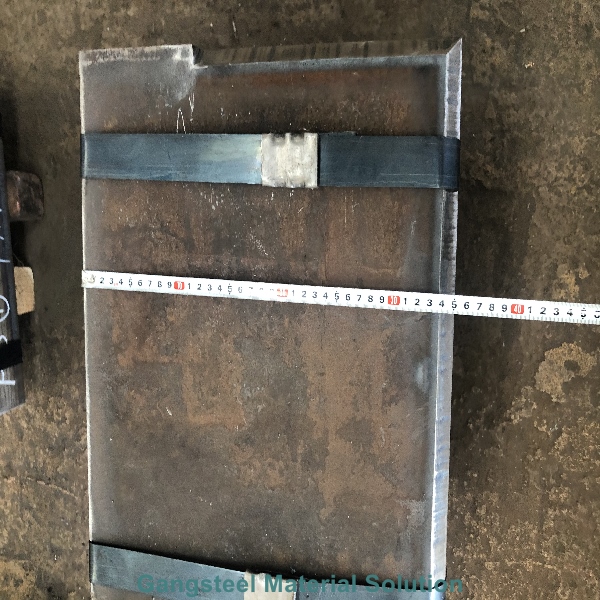
we supply high-quality A516 Gr 70 steel plate for pressure vessel applications and other standards like ASTM A2
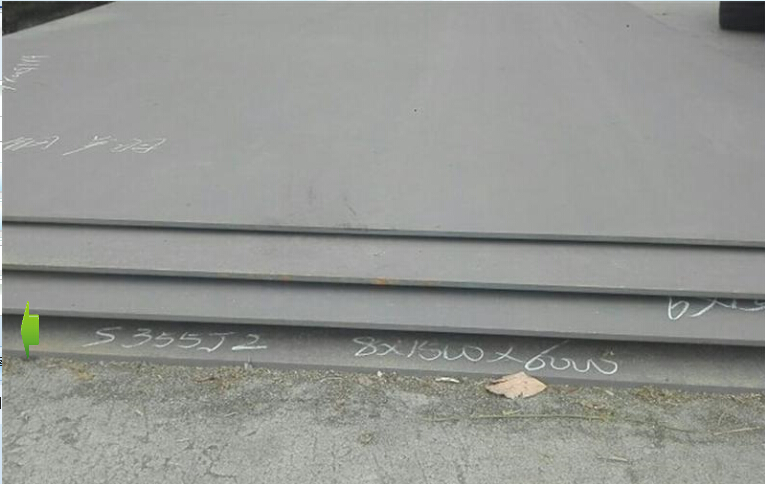
EN10028-2 P355GH for High-Strength Low-Alloy Columbium-Vanadium Structural Steel EN10025-2 S355J2 Structural St

We export A240 304L Stainless Coil 2B, NO.1 No.4 surface, the thickness 0.1mm to 3mm, 3mm to 22mm, Mother mill


