Product List
Gangsteel Material Solution
Email: admin@gangsteel.com
Sales: jack@gangsteel.com
The SS 304 data sheet provides comprehensive technical specifications for stainless steel 304, an austenitic grade renowned for its corrosion resistance, formability, and versatility in applications ranging from food processing to chemical equipment. This "18-8" alloy, containing 18% chromium and 8% nickel, is the most commonly used stainless steel worldwide. Gangsteel, a leading manufacturer and exporter in China, supplies SS 304 materials compliant with standards like ASME SA240 and ASTM A240. As a specialist in ASME SA240 stainless steel plates, Gangsteel ensures high-quality production with full data sheets upon request. This guide compiles key data from reliable sources for SS 304 (also known as AISI 304 or 1.4301).
SS 304 is an austenitic stainless steel with a stable microstructure that remains non-magnetic in the annealed condition, offering excellent weldability and cryogenic toughness. It is available in forms like sheets (0.016"–0.125" thick), plates (0.1875"–2.000" thick), and coils, with widths up to 48" (1219 mm). Equivalent grades include UNS S30400, EN 1.4301, and JIS SUS304. Gangsteel’s SA240 Gr 304 adheres to ASTM A240 stainless plate standards, suitable for "as-welded" conditions without post-weld annealing.
The chemical composition of SS 304 is controlled to balance strength, corrosion resistance, and fabricability. As per ASTM A240/ASME SA240, the maximum percentages by weight are:
|
Element |
Maximum (%) |
Typical (%) |
Role |
|---|---|---|---|
|
Carbon (C) |
0.08 |
0.05 |
Enhances strength; limited to prevent carbide precipitation. |
|
Manganese (Mn) |
2.00 |
1.00 |
Improves hot workability and deoxidizes. |
|
Phosphorus (P) |
0.045 |
0.025 |
Minimizes brittleness. |
|
Sulfur (S) |
0.030 |
0.015 |
Aids machinability but controlled to reduce pitting. |
|
Silicon (Si) |
0.75 |
0.50 |
Boosts oxidation resistance. |
|
Chromium (Cr) |
18.00–20.00 |
18.50 |
Forms protective oxide layer for corrosion resistance. |
|
Nickel (Ni) |
8.00–12.00 |
8.50 |
Stabilizes austenite for ductility. |
|
Nitrogen (N) |
0.10 |
0.05 |
Increases strength and pitting resistance. |
|
Iron (Fe) |
Balance |
Balance |
Base metal. |
Gangsteel maintains these limits for optimal performance, compatible with JIS G 4304 stainless steel plate standards.
SS 304 demonstrates reliable mechanical properties at room temperature, tested per ASTM A240/ASME SA240. Minimum values for annealed sheet/plate:
|
Property |
Minimum Value |
Typical Value |
Test Condition |
|---|---|---|---|
|
Tensile Strength |
515 MPa (75 ksi) |
620 MPa |
Ultimate strength. |
|
Yield Strength (0.2% Offset) |
205 MPa (30 ksi) |
310 MPa |
Proportional limit. |
|
Elongation |
40% (in 2") |
55% |
Ductility in 50.8 mm gauge. |
|
Hardness (Rockwell B) |
92 max |
82 |
Surface resistance. |
|
Density |
7.93 g/cm³ |
7.93 g/cm³ |
Mass per volume. |
These properties ensure SS 304's suitability for cryogenic and moderate-temperature service, outperforming SA240 Gr 201. Gangsteel also supplies SA240 Gr 304L for low-carbon variants.
SS 304's physical properties support its wide applicability. Key data at room temperature:
|
Property |
Value |
Unit |
Notes |
|---|---|---|---|
|
Modulus of Elasticity |
200 GPa (29 x 10⁶psi) |
GPa |
Tension/compression. |
|
Thermal Expansion (20-100°C) |
17.3 x 10⁻⁶/°C (9.6 x 10⁻⁶/°F) |
/°C |
Linear coefficient. |
|
Thermal Conductivity (100°C) |
16.3 W/m·K (9.4 Btu/hr·ft²·°F/ft) |
W/m·K |
Heat transfer. |
|
Specific Heat (0-100°C) |
500 J/kg·K (0.12 Btu/lb·°F) |
J/kg·K |
Heat capacity. |
|
Electrical Resistivity (20°C) |
72 μΩ·cm (28.3 μΩ·in) |
μΩ·cm |
Conductivity inverse. |
|
Magnetic Permeability |
≤ 1.02 (annealed) |
- |
Non-magnetic. |
These values indicate SS 304's thermal stability up to 870°C (1600°F) and cryogenic toughness down to -196°C (-320°F).
SS 304 has global equivalents for cross-standard compatibility:
|
Standard |
Equivalent Grade |
Key Notes |
|---|---|---|
|
UNS (USA) |
S30400 |
Base US designation. |
|
EN/DIN (Europe) |
1.4301 |
X5CrNi18-10; common in EU. |
|
JIS (Japan) |
SUS304 |
For Asian fabrication. |
|
ISO |
X5CrNi18-10 |
International norm. |
|
GB (China) |
0Cr18Ni9 |
Domestic Chinese standard. |
|
BS (UK) |
304S31 |
British engineering grade. |
|
AFNOR (France) |
Z7CN18-09 |
French wrought alloy. |
|
SS (Sweden) |
2332 |
Nordic equivalent. |
Gangsteel’s SS 304 aligns with these, supporting ASTM A 959 stainless steel plates.
SS 304's properties enable diverse uses:
|
Industry |
Application |
Why SS 304? |
|---|---|---|
|
Chemical Processing |
Reactors, tanks |
Resists acids/alkalis. |
|
Food/Beverage |
Utensils, dairy equipment |
Hygienic, FDA-compliant. |
|
Construction |
Cladding, handrails |
Aesthetic, weather-resistant. |
|
Automotive |
Exhaust manifolds |
Heat/formability tolerance. |
Gangsteel’s ASME SA 213/SA 213M stainless pipes pair with SS 304 for integrated systems.
Gangsteel’s nickel alloy steel plates suit extremes.
Gangsteel excels in SS 304 with:
The SS 304 data sheet underscores its role as a reliable, versatile alloy for corrosion-prone applications. Gangsteel’s offerings, including SA240 Gr 316L and SA240 Gr 904L, deliver excellence. Contact Gangsteel for UNS stainless steel plates and full data sheets.
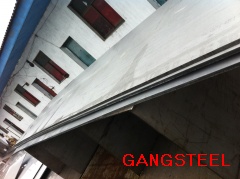
Gangsteel is your trusted global supplier. Our extensive inventory of 316Ti stainless steel bars and pipes meet
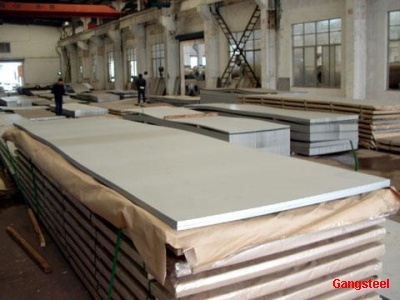
Gangsteel Stainless Factory is the large manufacturer to supply ASTM A240 TP316H,TP316H Stainless plate,TP316H
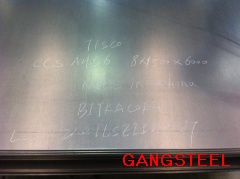
A240 TP310S,TP310S Stainless plate,TP310S stock,TP310S Supplier Gangsteel Stainless Factory is the large manufa


