Product List
Gangsteel Material Solution
Email: admin@gangsteel.com
Sales: jack@gangsteel.com
In the demanding world of boiler and pressure vessel manufacturing, choosing the right steel plate can make all the difference in terms of safety, performance, and longevity.
As a leading producer and exporter at Gangsteel, we're proud to specialize in ASME SA537 Class 1 (SA 537 Cl.1) steel plates, designed specifically for high-pressure applications like boilers. This material stands out for its robustness in elevated temperature environments, making it a staple in industries such as oil and gas, petrochemicals, and power generation.
In this detailed guide, we'll explore everything from its core properties to common user queries, helping you understand why it's such a reliable choice. If you're comparing options, you might also look into our ASME SA537/SA537M lineup or higher grades like ASME SA 537 Class 2.
ASME SA537 Class 1 is a heat-treated carbon-manganese-silicon steel plate specification under the ASME SA537/SA537M standard, tailored for welded pressure vessels and boilers. The "Class 1" refers to its normalized heat treatment, which refines the grain structure for better toughness and impact resistance. This makes it particularly suited for services where creep resistance and strength at moderate temperatures are essential.
At Gangsteel, we manufacture these plates with precision, ensuring they meet stringent ASME and ASTM A537 equivalents. They're often used in fabricating boiler drums, shells, and heads, where they handle internal pressures safely. For similar needs, our ASME SA537 Cl.1 variants provide consistent quality, and if you need enhanced properties, consider ASME SA 537 Class 3.
One of the most frequently asked questions from users is about the chemical makeup of this steel, as it directly influences its weldability and corrosion resistance. The composition is carefully balanced with carbon, manganese, and silicon as primary elements, along with controlled levels of phosphorus and sulfur to minimize impurities.
Here's a clear breakdown in table form:
|
Element |
Composition (%) |
|---|---|
|
Carbon (C) |
0.24 max |
|
Manganese (Mn) |
0.70-1.35 (≤40mm thickness) 1.00-1.60 (>40mm thickness) |
|
Phosphorus (P) |
0.035 max |
|
Sulfur (S) |
0.035 max |
|
Silicon (Si) |
0.15-0.50 |
|
Copper (Cu) |
0.35 max (if specified) |
|
Nickel (Ni) |
0.25 max (if specified) |
|
Chromium (Cr) |
0.25 max (if specified) |
|
Molybdenum (Mo) |
0.08 max (if specified) |
This formulation ensures excellent formability and strength without compromising on ductility.
Users often inquire about the mechanical specs to verify if it suits their load-bearing requirements. ASME SA537 Class 1 delivers impressive tensile and yield strengths, making it ideal for pressure containment.
Key properties include:
|
Property |
Value |
|---|---|
|
Tensile Strength |
70-90 ksi (485-620 MPa) |
|
Yield Strength |
50 ksi (345 MPa) min |
|
Elongation (in 200mm) |
18% min |
|
Elongation (in 50mm) |
22% min |
|
Reduction in Area |
Not specified, but typically high |
These values are achieved through normalization, providing reliable performance in dynamic conditions.
Density is another common point of interest, especially for weight calculations in design. For ASME SA537 Class 1, the density is approximately 7.85 g/cm³ or 7850 kg/m³, standard for carbon steels of this type.
As for delivery condition, these plates are supplied in the normalized state. This involves heating to around 900°C and air cooling, which enhances uniformity and toughness. At Gangsteel, we ensure all plates are delivered ready for immediate fabrication, with options for additional tests like ultrasonic inspection.
When it comes to sizes and models, flexibility is key. Gangsteel can produce ASME SA537 Class 1 plates in a wide range to fit various boiler designs:
We also offer value-added services like beveling, edge preparation, and heat treatment certifications to match your project specs.
Pricing is a top concern for buyers, and it varies based on thickness, quantity, and market conditions. As of 2025, expect prices to range from $600 to $3,200 per metric ton, depending on specifications and global steel trends. For instance, standard hot-rolled plates might start at around $800-1,000 per ton, while thicker or customized ones could go higher.
At Gangsteel, we offer competitive quotes tailored to your needs—contact us for the latest pricing, as it can fluctuate with raw material costs and demand.
Customers frequently ask about equivalent materials to ASME SA537 Class 1 for cross-referencing standards or sourcing alternatives. This steel is often interchangeable with ASTM A537 Class 1, as they share the same specifications for pressure vessel applications. Other equivalents include European norms like P355GH under EN 10028-2, which offers similar normalized properties for boilers.
Here's a comparison table of key equivalents:
|
Standard |
Grade/Equivalent |
Key Features |
Applications |
|---|---|---|---|
|
ASME SA537 |
Class 1 |
Normalized, C-Mn-Si steel, yield 345 MPa |
Boilers, pressure vessels |
|
ASTM A537 |
Class 1 |
Identical to SA537, heat-treated |
Pressurized service in oil/gas |
|
EN 10028-2 |
P355GH |
Normalized, similar composition |
Elevated temperature vessels |
|
BS 1501 |
224-490A/B |
Comparable strength and toughness |
Welded pressure vessels |
|
JIS G3115 |
SPV355 |
Boiler steel with good weldability |
High-pressure boilers |
These equivalents ensure compatibility in global projects, but always verify with specific codes. At Gangsteel, we can supply or advise on these alternatives to meet your requirements.
Beyond the specs, ASME SA537 Class 1 excels in real-world use. It's perfect for boilers handling steam or hot fluids, offering resistance to hydrogen-induced cracking in sour environments. Advantages include cost-effective design (thinner walls due to high strength), easy welding, and long service life, reducing maintenance headaches.
Based on common customer inquiries from industry sources and forums, here are additional questions often raised about this material:
ASME SA537 Class 1 is normalized for good toughness at moderate strengths, while Class 2 undergoes quenching and tempering for higher tensile strength (up to 115 ksi) and better performance in more demanding conditions. Class 1 is suitable for standard boiler applications, whereas Class 2 is preferred for higher pressure or temperature services.
These plates are primarily used in pressure vessels and boilers for industries like oil and gas, petrochemicals, and power generation. They're ideal for fabricating components that handle elevated temperatures and pressures, such as boiler drums and storage tanks in pressurized services.
Yes, they are essentially equivalent standards. ASME SA537 is the boiler and pressure vessel code version, while ASTM A537 is the material specification, but both define the same heat-treated carbon-manganese-silicon steel for pressure vessels.
Plates are typically available from 6mm to 300mm in thickness, making them versatile for various boiler designs. Thicker plates may require adjusted manganese content for optimal properties.
Yes, it often includes Charpy V-notch impact testing, especially for low-temperature applications, to ensure notch toughness and resistance to brittle failure. Gangsteel provides plates that meet these requirements as standard.
It offers good resistance to hydrogen-induced cracking, making it suitable for sour service in oil and gas applications, provided proper alloying and testing are applied.
In summary, whether you're building new boilers or retrofitting existing ones, ASME SA537 Class 1 from Gangsteel provides the reliability you need. Reach out to our team for expert guidance and prompt delivery.
asme sa537 class 1 boiler steel chemical composition details, sa 537 cl.1 mechanical properties and density guide, current pricing for asme sa537 class 1 pressure vessel plates
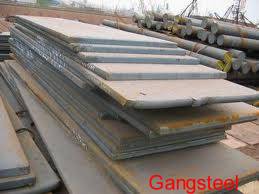
Gangsteel is specialized in supplying ASME SA537 steel plate asme sa537 class 2 boiler steel chemical compositi
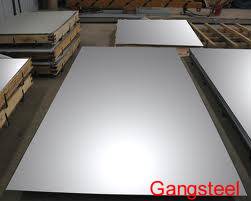
In summary, while equivalents like P355GH and SPV355 offer higher yield strengths and tighter impurity controls
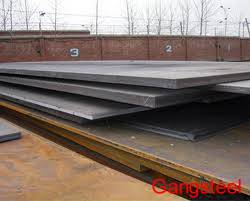
Gangsteel is specialized in supplying ASME SA537 steel plate asme sa537 class 3 boiler steel chemical composit
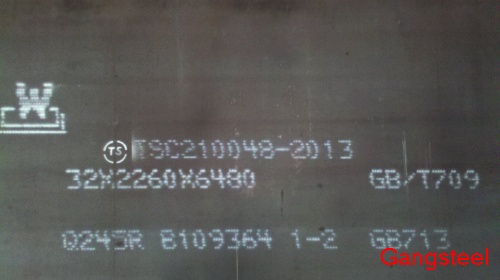
we're proud to specialize in ASME SA537 Class 1 (SA 537 Cl.1) steel plates, designed specifically for high-pre


