Product List
Gangsteel Material Solution
Email: admin@gangsteel.com
Sales: jack@gangsteel.com
ASME SA537 Class 1 is a normalized carbon-manganese-silicon steel plate used primarily for pressure vessels and boilers, offering excellent toughness and strength at moderate temperatures. Below, I provide a detailed comparison with its key equivalent materials based on international standards. The equivalents include ASTM A537 Class 1 (essentially identical), EN 10028-2 P355GH, DIN 17155 19Mn6 (noting that the query referenced 19Mn5, but reliable sources confirm 19Mn6 as the common equivalent under this outdated standard), JIS G3115 SPV355 (SPV36 is an older designation often equated to SPV355), and ASTM A671 Gr. CD70 (a pipe specification derived from A537 Class 1 plate).
Comparisons are structured first by chemical composition (in weight percentages, with maximum values unless specified as ranges or minimums), then by mechanical properties (focusing on yield strength, tensile strength, and elongation, as these are the most commonly compared metrics). Data is sourced from standard specifications and may vary slightly by thickness or heat treatment; always consult the latest standards for project-specific use. I've used tables for clarity.
ASME SA537 Class 1 and ASTM A537 Class 1 are functionally identical, as SA537 is the ASME-adopted version of the ASTM specification for pressure vessel plates.
Chemical Composition Comparison:
|
Element |
ASME SA537 Class 1 (%) |
ASTM A537 Class 1 (%) |
|---|---|---|
|
Carbon (C) |
0.24 max |
0.24 max |
|
Manganese (Mn) |
0.70-1.35 (≤40mm) 1.00-1.60 (>40mm) |
0.70-1.35 (≤40mm) 1.00-1.60 (>40mm) |
|
Phosphorus (P) |
0.035 max |
0.035 max |
|
Sulfur (S) |
0.035 max |
0.035 max |
|
Silicon (Si) |
0.15-0.50 |
0.15-0.50 |
|
Copper (Cu) |
0.35 max (if specified) |
0.35 max (if specified) |
|
Nickel (Ni) |
0.25 max (if specified) |
0.25 max (if specified) |
|
Chromium (Cr) |
0.25 max (if specified) |
0.25 max (if specified) |
|
Molybdenum (Mo) |
0.08 max (if specified) |
0.08 max (if specified) |
The compositions are identical, ensuring full interchangeability in most applications.
Mechanical Properties Comparison:
|
Property |
ASME SA537 Class 1 |
ASTM A537 Class 1 |
|---|---|---|
|
Yield Strength (min) |
50 ksi (345 MPa) |
50 ksi (345 MPa) |
|
Tensile Strength |
70-90 ksi (485-620 MPa) |
70-90 ksi (485-620 MPa) |
|
Elongation (50mm, min) |
22% |
22% |
|
Elongation (200mm, min) |
18% |
18% |
Properties match exactly, with both grades normalized for improved toughness.
P355GH is a European non-alloy quality steel for pressure vessels, offering similar elevated-temperature performance but with slightly different alloying for better weldability.
Chemical Composition Comparison:
Table 1
|
Element |
ASME SA537 Class 1 (%) |
EN 10028-2 P355GH (%) |
|---|---|---|
|
Carbon (C) |
0.24 max |
0.16 max |
|
Manganese (Mn) |
0.70-1.35 (≤40mm) 1.00-1.60 (>40mm) |
1.00-1.50 |
|
Phosphorus (P) |
0.035 max |
0.025 max |
|
Sulfur (S) |
0.035 max |
0.015 max |
|
Silicon (Si) |
0.15-0.50 |
0.35 max |
|
Copper (Cu) |
0.35 max (if specified) |
0.30 max |
|
Nickel (Ni) |
0.25 max (if specified) |
0.30 max |
|
Chromium (Cr) |
0.25 max (if specified) |
0.30 max |
|
Molybdenum (Mo) |
0.08 max (if specified) |
0.08 max |
|
Aluminum (Al) |
Not specified |
0.020 min (total) |
|
Nitrogen (N) |
Not specified |
0.012 max |
|
Niobium (Nb) |
Not specified |
0.040 max |
|
Titanium (Ti) |
Not specified |
0.03 max |
|
Vanadium (V) |
Not specified |
0.02 max |
P355GH has lower max C, P, and S for improved purity and weldability, but similar Mn and Si ranges. Additional elements like Al and N are controlled in P355GH for fine-grain structure.
Mechanical Properties Comparison:
|
Property |
ASME SA537 Class 1 |
EN 10028-2 P355GH |
|---|---|---|
|
Yield Strength (min) |
50 ksi (345 MPa) |
355 MPa (≤16mm; decreases to 265 MPa for >150mm) |
|
Tensile Strength |
70-90 ksi (485-620 MPa) |
510-650 MPa |
|
Elongation (min) |
22% (50mm) |
20% |
P355GH has slightly higher minimum yield but overlapping tensile ranges; it's also normalized and suitable for similar pressure applications.
DIN 17155 19Mn6 is an outdated German standard for creep-resistant boiler steel, superseded by EN 10028 but still referenced as an equivalent.
Chemical Composition Comparison:
|
Element |
ASME SA537 Class 1 (%) |
DIN 17155 19Mn6 (%) |
|---|---|---|
|
Carbon (C) |
0.24 max |
0.08-0.20 |
|
Manganese (Mn) |
0.70-1.35 (≤40mm) 1.00-1.60 (>40mm) |
0.90-1.50 |
|
Phosphorus (P) |
0.035 max |
0.030 max |
|
Sulfur (S) |
0.035 max |
0.025 max |
|
Silicon (Si) |
0.15-0.50 |
0.40 max |
|
Copper (Cu) |
0.35 max (if specified) |
0.30 max |
|
Nickel (Ni) |
0.25 max (if specified) |
0.30 max |
|
Chromium (Cr) |
0.25 max (if specified) |
0.30 max |
|
Molybdenum (Mo) |
0.08 max (if specified) |
0.08 max |
|
Aluminum (Al) |
Not specified |
0.020 min |
|
Niobium (Nb) |
Not specified |
0.040 max |
|
Titanium (Ti) |
Not specified |
0.03 max |
|
Vanadium (V) |
Not specified |
0.02 max |
19Mn6 has a narrower C range and tighter P/S limits, emphasizing creep resistance.
Mechanical Properties Comparison:
|
Property |
ASME SA537 Class 1 |
DIN 17155 19Mn6 |
|---|---|---|
|
Yield Strength (min) |
50 ksi (345 MPa) |
355 MPa |
|
Tensile Strength |
70-90 ksi (485-620 MPa) |
510-650 MPa |
|
Elongation (min) |
22% (50mm) |
20% |
Similar properties, with 19Mn6 offering comparable strength for boiler use.
SPV355 (formerly SPV36) is a Japanese standard for pressure vessel steel with good weldability.
Chemical Composition Comparison:
|
Element |
ASME SA537 Class 1 (%) |
JIS G3115 SPV355 (%) |
|---|---|---|
|
Carbon (C) |
0.24 max |
0.18 max |
|
Manganese (Mn) |
0.70-1.35 (≤40mm) 1.00-1.60 (>40mm) |
1.40 max |
|
Phosphorus (P) |
0.035 max |
0.030 max |
|
Sulfur (S) |
0.035 max |
0.030 max |
|
Silicon (Si) |
0.15-0.50 |
0.35 max |
SPV355 has lower C and similar impurity controls, without specified trace elements like Cu or Ni.
Mechanical Properties Comparison:
|
Property |
ASME SA537 Class 1 |
JIS G3115 SPV355 |
|---|---|---|
|
Yield Strength (min) |
50 ksi (345 MPa) |
355 MPa (≤16mm; decreases with thickness) |
|
Tensile Strength |
70-90 ksi (485-620 MPa) |
520-640 MPa |
|
Elongation (min) |
22% (50mm) |
21% |
SPV355 provides higher yield strength, making it suitable for comparable high-pressure uses.
ASTM A671 Gr. CD70 is an electric-fusion-welded pipe grade using A537 Class 1 plate as base material, so properties align closely.
Chemical Composition Comparison:
|
Element |
ASME SA537 Class 1 (%) |
ASTM A671 Gr. CD70 (%) |
|---|---|---|
|
Carbon (C) |
0.24 max |
0.24 max |
|
Manganese (Mn) |
0.70-1.35 (≤40mm) 1.00-1.60 (>40mm) |
0.70-1.60 |
|
Phosphorus (P) |
0.035 max |
0.035 max |
|
Sulfur (S) |
0.035 max |
0.035 max |
|
Silicon (Si) |
0.15-0.50 |
0.15-0.50 |
|
Copper (Cu) |
0.35 max (if specified) |
0.35 max (if specified) |
|
Nickel (Ni) |
0.25 max (if specified) |
0.25 max (if specified) |
|
Chromium (Cr) |
0.25 max (if specified) |
0.25 max (if specified) |
|
Molybdenum (Mo) |
0.08 max (if specified) |
0.08 max (if specified) |
Identical, as CD70 is based on A537 Class 1.
Mechanical Properties Comparison:
|
Property |
ASME SA537 Class 1 |
ASTM A671 Gr. CD70 |
|---|---|---|
|
Yield Strength (min) |
50 ksi (345 MPa) |
50 ksi (345 MPa) |
|
Tensile Strength |
70-90 ksi (485-620 MPa) |
70 ksi min (485 MPa) |
|
Elongation (min) |
22% (50mm) |
22% |
Matching properties, with A671 focused on welded pipe applications.
In summary, while equivalents like P355GH and SPV355 offer higher yield strengths and tighter impurity controls, ASME SA537 Class 1 excels in balanced toughness for U.S.-based codes. For cross-standard use, verify with engineering requirements, as heat treatment and testing may differ.
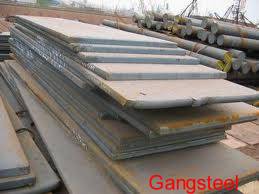
Gangsteel is specialized in supplying ASME SA537 steel plate asme sa537 class 2 boiler steel chemical compositi
In summary, while equivalents like P355GH and SPV355 offer higher yield strengths and tighter impurity controls
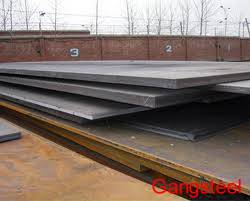
Gangsteel is specialized in supplying ASME SA537 steel plate asme sa537 class 3 boiler steel chemical composit
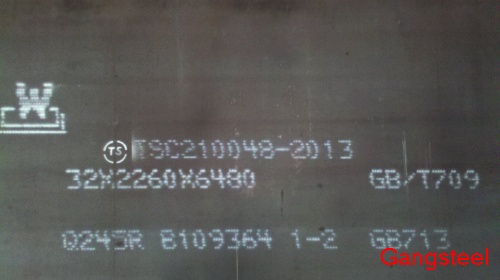
we're proud to specialize in ASME SA537 Class 1 (SA 537 Cl.1) steel plates, designed specifically for high-pre