


SA240 304H Carbon Content: Impact on Properties
At Gangsteel, a leading manufacturer and exporter of stainless steel products, we supply premium SA240 304H stainless steel plates compliant with ASME SA 240 and ASTM A240 standards. SA240 304H, also known as AISI 304H, UNS S30409, or EN 1.4948, is a high-carbon austenitic stainless steel designed for enhanced high-temperature strength and creep resistance up to 1500°F (815°C).
This guide focuses on the carbon content of SA240 304H and its impact on properties, including chemical composition, mechanical properties, corrosion resistance, and weldability for applications like plat stainless 304 and SA 240 GR 304 pipe. For inquiries, contact us at admin@gangsteel.com or explore our ASME SA240 Stainless sheet offerings.
Chemical Composition of SA240 304H
The chemical composition of SA240 304H is:
|
Element |
Range (%) |
|---|---|
|
Carbon (C) |
0.04 - 0.10 |
|
Manganese (Mn) |
0.00 - 2.00 |
|
Silicon (Si) |
0.00 - 0.75 |
|
Phosphorus (P) |
0.00 - 0.045 |
|
Sulfur (S) |
0.00 - 0.030 |
|
Chromium (Cr) |
18.00 - 20.00 |
|
Nickel (Ni) |
8.00 - 10.50 |
|
Nitrogen (N) |
0.00 - 0.10 |
|
Iron (Fe) |
Balance |
Carbon (0.04-0.10%) is higher than 304 (≤0.08%) and 304L (≤0.03%), driving key property impacts. See sa240 gr 304h.
Impact of Carbon Content on Properties
Carbon content in SA240 304H profoundly influences its properties.
Impact on Strength and Creep Resistance
The high carbon level (0.04-0.10%) enhances carbide formation, boosting creep and stress rupture strength at temperatures above 800°F (427°C). This results in an allowable stress of 25.5 ksi at 1000°F (538°C), compared to 18.6 ksi for 304 and 14.9 ksi for 304L. Carbon strengthens the microstructure, making SA240 304H ideal for boilers and heat exchangers.
Impact on Weldability and Sensitization
Higher carbon increases sensitization risk during welding, as chromium carbides form in the 797°F-1580°F (425°C-860°C) range, depleting chromium and reducing corrosion resistance in weld zones. This requires low heat input (<2.0 kJ/mm) and post-weld annealing (1870-2050°F) to dissolve carbides. Unlike 304L, which has low carbon for better weldability, SA240 304H needs precautions.
Impact on Corrosion Resistance
Carbon aids corrosion resistance at high temperatures by improving scaling resistance, but sensitization can compromise it in welds. Overall, SA240 304H resists mild acids and atmospheric conditions, outperforming SS204 vs SS 304 due to chromium (18-20%). For chlorides, see sa240 gr 316l.
Impact on Formability
High carbon slightly reduces formability compared to 304L, but elongation (40%) remains excellent for applications like plat SS 304 3mm. It supports bending and rolling with proper annealing.
See sa240 gr 304l for low-carbon comparison.
Mechanical Properties
|
Property |
Value (Minimum) |
|---|---|
|
Tensile Strength |
515 MPa (75 ksi) |
|
Yield Strength (0.2% Offset) |
205 MPa (30 ksi) |
|
Elongation (A5, 50 mm) |
40% |
|
Hardness (Brinell) |
≤ 201 HB |
|
Hardness (Rockwell B) |
≤ 92 HRB |
Carbon contributes to high tensile and yield strength.
Physical Properties
- Density: 8.00 g/cm³.
- Melting Point: 1400-1450°C.
- Thermal Conductivity: 16.2 W/m·K.
- Coefficient of Thermal Expansion: 17.2 × 10⁻⁶/K.
- Max Service Temperature: 1500°F (815°C) continuous.
Applications
SA240 304Hwith high carbon is used in:
- Boilers and pressure vessels.
- Heat exchangers.
- Power generation piping.
- High-temperature chemical processing.
For cost-effective options, see sa240 gr 201.
Pricing and Availability
As of October 19, 2025, SA240 304H plate prices (2B finish, 3-6mm) range from $1.60-$3.50/kg. Gangsteel offers $1.60/kg FOB (MOQ 1 ton) for sa240 gr 304h. Contact admin@gangsteel.com or visit astm a 240 stainless plate.
FAQ on SA240 304H Carbon Content
What is the carbon content of SA240 304H stainless steel?
0.04-0.10%, higher than 304 (≤0.08%) and 304L (≤0.03%), for enhanced creep resistance.
How does carbon impact the strength of SA240 304H?
It boosts creep and tensile strength (515 MPa), improving performance at high temperatures up to 1500°F.
How does carbon affect weldability in SA240 304H?
High carbon increases sensitization risk, requiring annealing to maintain corrosion resistance in welds.
How does SA240 304H carbon content compare to 316L?
304H (0.04-0.10%) is higher than 316L (≤0.03%), prioritizing heat strength over weldability; 316L has molybdenum for corrosion.
What applications benefit from SA240 304H’s carbon content?
Boilers, heat exchangers, and high-temperature piping, where creep resistance is critical up to 1500°F.
-

BHW35 Steel Plate for Sale | RF
BHW35 / 13MnNiMo5-4 (DIWA 353 family): identity, chemistry, mechanical properties, related grades, and RFQ note
-
ASTM A516 Grade 70 Equivalent:
ASTM A516 Grade 70 equivalents include ASME SA516 Gr 70, EN 10028-2 P355GH and BS 1501 224-490. Gangsteel compa
-
What is the difference between
we supply high-quality A516 Gr 70 steel plate for pressure vessel applications and other standards like ASTM A2
-
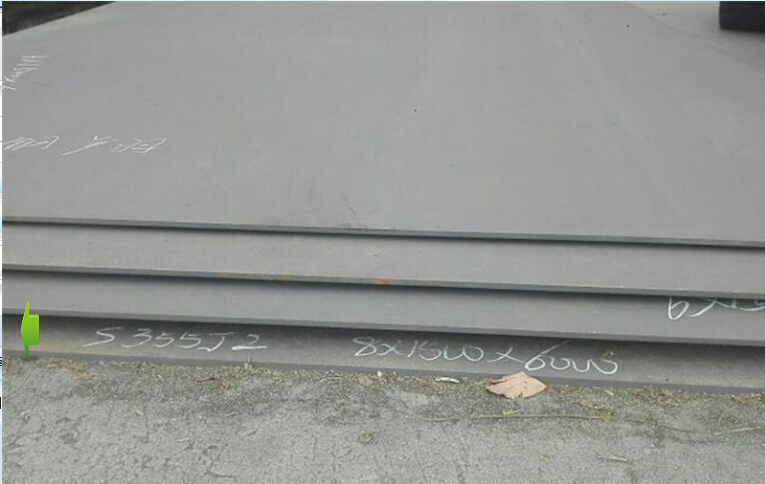
P355GH AND S355J2 Steel Plates
EN10028-2 P355GH for High-Strength Low-Alloy Columbium-Vanadium Structural Steel EN10025-2 S355J2 Structural St