Product List
Gangsteel Material Solution
Email: admin@gangsteel.com
Sales: jack@gangsteel.com
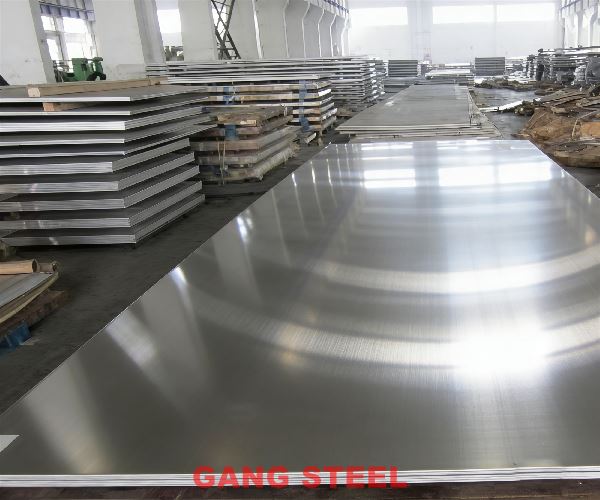
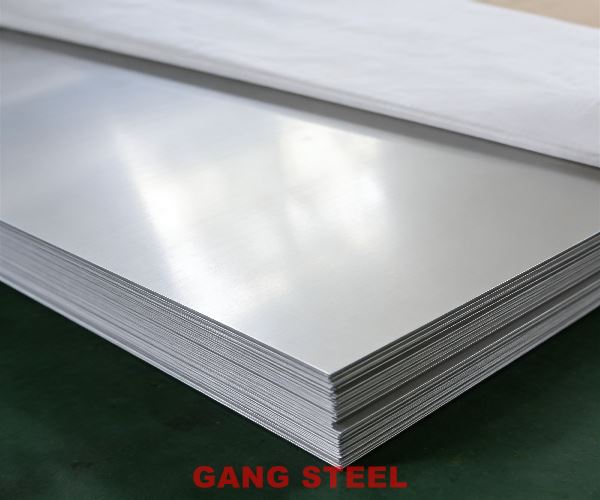
Gangsteel is a leading manufacturer and global exporter of GB/T 4237 022Cr19Ni13Mo3 stainless steel hot-rolled coils, plates, and wide heavy plates. Internationally recognized as Grade 317L (low-carbon, high-molybdenum variant of 317), 022Cr19Ni13Mo3 is an austenitic chromium-nickel-molybdenum stainless steel engineered for superior resistance to pitting, crevice corrosion, and chloride-induced stress corrosion cracking — significantly outperforming standard 304L and even 316L in aggressive chemical, acidic, and chloride-rich environments.
With ultra-low carbon (≤0.030%) and elevated molybdenum (3.0–4.0%), 317L provides a PREN (Pitting Resistance Equivalent Number) of approximately 29–33, making it ideal for applications involving sulfuric acid, phosphoric acid, pulp & paper liquors, chemical processing, desalination, and offshore/marine service.
Produced under GB/T 4237-2015 (Stainless Steel Hot-Rolled Sheets and Strips), Gangsteel supplies 022Cr19Ni13Mo3 in thicknesses from 2 mm to 500 mm and widths up to 4200 mm — one of the widest hot-rolling capabilities in the industry. Our products are delivered in standard hot-rolled finishes No.1 (annealed & pickled) and 2D (annealed & pickled dull) and are exported worldwide to chemical, petrochemical, pulp & paper, desalination, pharmaceutical, and energy sectors.
Gangsteel’s wide heavy-plate rolling mills allow single-piece production of large acid storage tanks, digesters, evaporator bodies, and heat exchanger shells, reducing welds and improving service life in highly corrosive conditions. We maintain strict control over molybdenum and carbon to ensure consistent pitting resistance and weld performance.
|
Element |
Symbol |
Minimum (%) |
Maximum (%) |
Typical Range (%) |
Notes |
|---|---|---|---|---|---|
|
Carbon |
C |
- |
0.030 |
≤0.020–0.025 |
Ultra-low to prevent sensitization |
|
Silicon |
Si |
- |
1.00 |
≤0.50–0.80 |
Improves oxidation resistance |
|
Manganese |
Mn |
- |
2.00 |
≤1.00–1.50 |
Austenite stabilizer |
|
Phosphorus |
P |
- |
0.045 |
≤0.030 |
Controlled for weldability |
|
Sulfur |
S |
- |
0.030 |
≤0.015–0.020 |
Minimized for corrosion |
|
Chromium |
Cr |
18.00 |
20.00 |
18.50–19.50 |
Forms protective passive layer |
|
Nickel |
Ni |
11.00 |
15.00 |
12.00–14.00 |
Enhances ductility and resistance |
|
Molybdenum |
Mo |
3.00 |
4.00 |
3.00–3.50 |
Critical for pitting/crevice resistance |
|
Iron |
Fe |
Balance |
Balance |
Balance |
Base element |
Gangsteel consistently produces at the higher end of molybdenum range to maximize PREN and corrosion performance.
|
Property |
Symbol |
Minimum Requirement |
Typical Value |
Units |
Notes |
|---|---|---|---|---|---|
|
Tensile Strength |
Rm |
≥ 480 |
500–680 |
MPa |
Slightly higher than 316L |
|
Yield Strength (0.2% offset) |
Rp0.2 |
≥ 175 |
190–300 |
MPa |
Good for forming |
|
Elongation (50 mm gauge) |
A50 |
≥ 40 |
45–55 |
% |
Excellent ductility |
|
Hardness (Rockwell B) |
HRB |
≤ 95 |
85–92 |
HRB |
Soft, highly formable |
|
Hardness (Brinell) |
HB |
≤ 217 |
170–200 |
HB |
Reference |
|
Bend Test (180°) |
- |
No cracks |
Excellent |
- |
Ideal for deep drawing |
Moderate work-hardening rate supports cold forming without excessive strength gain.
|
Property |
Value (Metric) |
Value (Imperial) |
Temperature/Condition |
Notes |
|---|---|---|---|---|
|
Density |
7.98–8.00 g/cm³ |
0.288–0.289 lb/in³ |
Room temperature |
Austenitic standard |
|
Elastic Modulus |
193–200 GPa |
28–29 × 10⁶psi |
Room temperature |
Typical |
|
Thermal Conductivity |
16.2–16.3 W/m·K |
9.4 BTU/hr·ft·°F |
100°C |
Moderate |
|
Specific Heat Capacity |
500 J/kg·K |
0.12 BTU/lb·°F |
Room temperature |
Standard |
|
Coefficient of Thermal Expansion |
16.0–18.0 × 10⁻⁶/°C |
8.9–10.0 × 10⁻⁶/°F |
0–100°C |
Similar to 316 |
|
Electrical Resistivity |
720–750 nΩ·m |
27–28 μΩ·in |
Room temperature |
Austenitic norm |
|
Melting Range |
1370–1400°C |
2500–2550°F |
- |
Approximate |
|
Standard |
Grade / Designation |
UNS Number |
EN / W.Nr. |
Other Designation |
Key Notes / Differences |
|---|---|---|---|---|---|
|
GB/T 4237 |
022Cr19Ni13Mo3 |
- |
- |
317L |
Chinese hot-rolled low-C high-Mo spec |
|
ASTM A240 |
317L (Type 317L) |
S31703 |
- |
317L |
US equivalent; identical low-C high-Mo |
|
EN 10088-2 |
X2CrNiMo18-15-4 |
- |
1.4438 |
317L |
European match; high-Mo austenitic |
|
JIS G4304/5 |
SUS317L |
- |
- |
SUS317L |
Japanese equivalent |
|
AISI / Trade |
AISI 317L / Grade 317L |
S31703 |
1.4438 |
317L |
Global trade name; interchangeable |
|
Related |
316L (022Cr17Ni12Mo2) |
S31603 |
1.4404 / 1.4432 |
316L |
Lower Mo version; inferior pitting resistance |
Key Insight: 022Cr19Ni13Mo3 (317L) provides significantly better pitting and crevice corrosion resistance (PREN ~29–33) than 316L (PREN ~24–26) due to higher molybdenum.
Gangsteel's hot-rolling process for 022Cr19Ni13Mo3 includes:
Thickness range: 2 mm – 500 mm Width range: up to 4200 mm Length: up to 18 m (plate) or coil form
Finishes: No.1 (annealed & pickled), 2D (annealed & pickled dull)
All compliant with GB/T 4237-2015; optional third-party certification (SGS, TUV, BV).
High molybdenum content provides excellent resistance to pitting (PREN ~29–33), crevice corrosion, and chloride stress corrosion cracking. Ultra-low carbon eliminates sensitization risk. Oxidation resistance up to ~870°C intermittent.
Outstanding weldability with TIG/MIG/resistance/laser; ultra-low carbon prevents sensitization. Use ER317L fillers. High ductility supports complex forming.
Every heat is tested for chemistry, mechanical properties, surface quality, and dimensions. Full MTRs (EN 10204 3.1) and third-party certification available.
Coils eye-to-wall/eye-to-sky on steel pallets; plates bundled with skids; seaworthy export packaging with waterproof wrapping and edge protection.
Q1: What is the main advantage of 317L (022Cr19Ni13Mo3) over 316L?
A: 317L has higher molybdenum (3.0–4.0% vs. 2.0–3.0% in 316L), resulting in significantly better pitting and crevice corrosion resistance (PREN ~29–33 vs. ~24–26), especially in sulfuric acid, phosphoric acid, and chloride environments.
Q2: Can 022Cr19Ni13Mo3 be used in seawater or highly acidic conditions?
A: Yes, it performs well in many chloride and acid applications (e.g., dilute sulfuric acid, pulp liquors), but for severe seawater or concentrated acids, duplex grades like 2205 or 2507 may be preferred.
Q3: What finishes are available under GB/T 4237 for hot-rolled 317L?
A: Standard finishes are No.1 (annealed & pickled) and 2D (annealed & pickled dull). No.1 is most common for further processing.
Q4: What is the maximum width and thickness Gangsteel can produce for 022Cr19Ni13Mo3?
A: Up to 4200 mm wide and 500 mm thick in hot-rolled plates; coils typically 2–25 mm thick.
Q5: Is 317L weldable? What filler should be used?
A: Yes, excellent weldability. Use ER317L fillers to match the higher molybdenum content.
Q6: Does Gangsteel offer third-party inspection for GB/T 4237 317L material?
A: Yes — SGS, TUV, BV, or customer-nominated agencies are welcome at any stage.
Q7: What is the lead time for hot-rolled 022Cr19Ni13Mo3 coils or plates?
A: Standard sizes from stock: 7–15 days. Custom wide/heavy plates: 25–45 days depending on thickness and quantity.
Q8: Can Gangsteel provide 317L with BA or 2B finish?
A: Hot-rolled material is No.1 or 2D. For BA or 2B, we supply cold-rolled versions under GB/T 3280.
Contact Gangsteel today for real-time pricing, stock availability, samples, or custom specifications of GB/T 4237 022Cr19Ni13Mo3 (317L) stainless steel hot-rolled coils, plates, and strips. Let us support your next highly corrosive project with premium high-molybdenum stainless steel solutions.
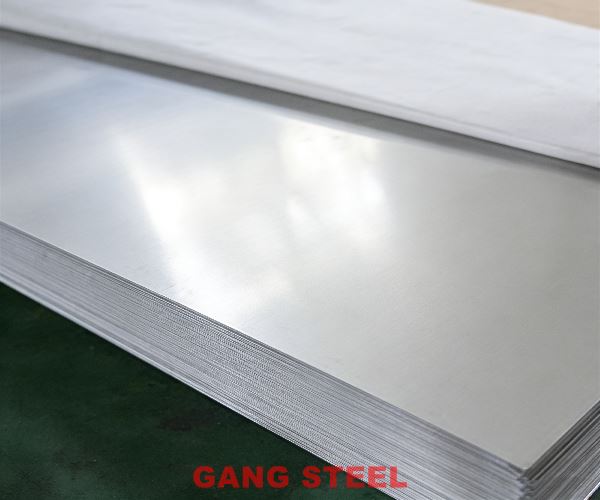
Contact Gangsteel today for real-time pricing, stock availability, samples, or custom specifications of GB/T 42
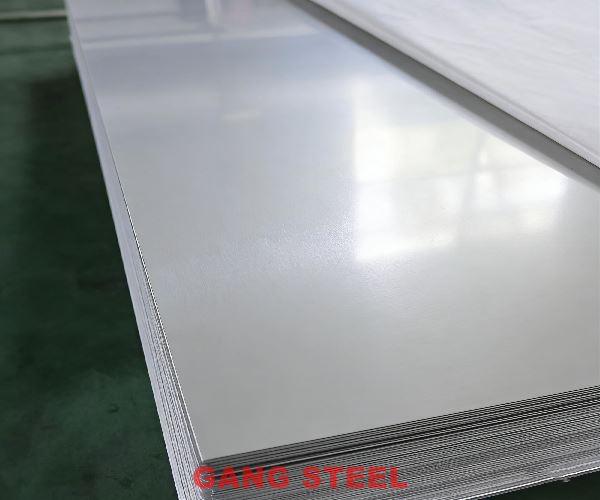
Gangsteel is a leading manufacturer and global exporter of GB/T 4237 06Cr25Ni20 stainless steel hot-rolled coil
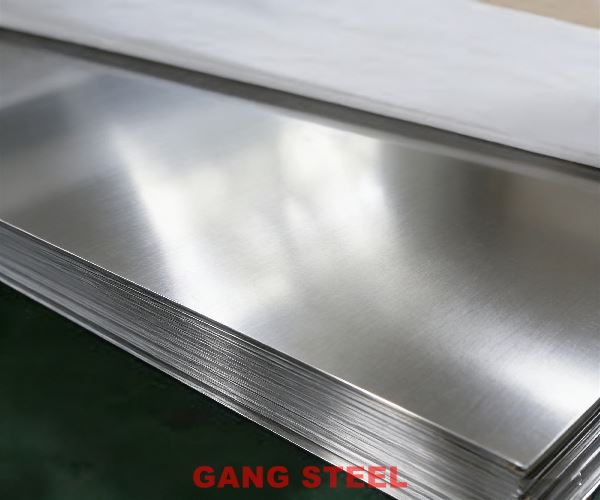
Gangsteel is a leading manufacturer and global exporter of GB/T 4237 06Cr18Ni13Si4 stainless steel hot-rolled c
Gangsteel is a leading manufacturer and international exporter of GB/T 4237 022Cr19Ni10 stainless steel hot-rol


