Product List
Gangsteel Material Solution
Email: admin@gangsteel.com
Sales: jack@gangsteel.com
When materials specialists, engineers, or buyers ask "What is ASTM A240 316L material?", they're referring to ASTM A240 Grade 316L (UNS S31603), a low-carbon, molybdenum-bearing austenitic stainless steel plate, sheet, or strip optimized for enhanced corrosion resistance in chloride and acidic environments, with superior weldability to avoid intergranular corrosion (IGC) without post-weld annealing.
ASTM A240/A240M is the specification for chromium and chromium-nickel stainless steel plate, sheet, and strip for pressure vessels and general applications, and Grade 316L is the low-carbon variant of 316, with carbon capped at ≤0.03% to prevent carbide precipitation in the heat-affected zone (HAZ) during welding. As a leading manufacturer and exporter in China, Gangsteel produces ASTM A240 316L material, certified to both ASTM A240 and ASME SA240, with a focus on low carbon for weld integrity and molybdenum for a PREN (Pitting Resistance Equivalent Number) of 24-26, making it ideal for marine, chemical, and pharmaceutical uses.
ASTM A240 316L is non-magnetic in the annealed state, offers good strength (yield ≥170 MPa), and excels in formability for deep drawing or bending, with resistance to atmospheric corrosion, dilute acids, and food acids. At Gangsteel, we refine 316L through argon-oxygen decarburization (AOD) and vacuum oxygen decarburization (VOD) for carbon below 0.025% and minimal inclusions, delivering plates up to 100 mm thick in finishes like 2B, BA, and electropolished. Priced at USD 5-8/kg in November 2025, it's a premium upgrade from 304L for chloride-prone settings but more economical than super-austenitics. This comprehensive guide details its composition, properties, and more. For our molybdenum-bearing lineup, explore the ASTM A 240/A 240M stainless steel plate portfolio, including ASTM A 240 Gr 316L and high-carbon ASTM A 240 Gr 316H.
Long-tail keywords: what is ASTM A240 316L material, S31603 low carbon stainless, A240 Gr 316L overview, AISI 316L austenitic steel, ASTM A240 316L weldability
ASTM A240 Grade 316L (UNS S31603) is a low-carbon, molybdenum-enhanced austenitic stainless steel under ASTM A240/A240M, tailored for superior corrosion resistance in aggressive environments like chlorides, acids, and seawater, while providing excellent weldability for as-welded structures without annealing. The "L" signifies low carbon (≤0.03%), which minimizes chromium carbide formation in the 425-870°C HAZ during welding, preventing sensitization and IGC—making it the preferred choice for thick-section fabrications in pressure vessels, tanks, and piping.
Developed as a weld-optimized version of 316 in the mid-20th century, 316L addresses issues like weld decay in chemical and marine industries. At Gangsteel, we produce it from premium melts with VOD for carbon <0.025% and inclusions <0.01%, achieving grain size ASTM 6-8 for ductility. The austenitic structure—16-18% Cr, 10-14% Ni, 2-3% Mo—ensures non-magnetic status, high toughness (Charpy >120J at -196°C), and formability for complex shapes like dished heads. Thermal conductivity is 14.6 W/m·K at 100°C, with expansion 16.5 × 10⁻⁶/°C for stable assemblies.
Commonly known as "AISI 316L plate," it welds with 316L filler without preheat, passing bend tests per ASTM A240. Compared to ASTM A 240 Gr 316 (C ≤0.08%), 316L trades minor strength for superior weld IGC resistance. For stabilized versions, see ASTM A 240 Gr 316Ti.
In pharma vessels or offshore piping, A240 316L's durability cuts maintenance 40-60% vs 304L in brines, based on our European client feedback.
Long-tail keywords: what is A240 Grade 316L, ASTM A240 Grade 316L stainless steel, S31603 low carbon Mo alloy, A240 Gr 316L basics, AISI 316L weld stainless
The chemistry of A240 Grade 316L is precision-tuned for weldability and corrosion, per ASTM A240 Table 1.
|
Element |
Percentage (%) |
|---|---|
|
Carbon (C) |
≤ 0.03 |
|
Chromium (Cr) |
16.0 – 18.0 |
|
Nickel (Ni) |
10.0 – 14.0 |
|
Molybdenum (Mo) |
2.0 – 3.0 |
|
Manganese (Mn) |
≤ 2.0 |
|
Silicon (Si) |
≤ 0.75 |
|
Phosphorus (P) |
≤ 0.045 |
|
Sulfur (S) |
≤ 0.030 |
|
Nitrogen (N) |
≤ 0.10 |
|
Iron (Fe) |
Balance |
Low C prevents Cr23C6 in HAZ; Mo enhances film vs chlorides. N ≤0.10% adds strength. Gangsteel keeps C <0.025%, S <0.01% for polishability, with <0.05 mm/year in sulfuric.
Note: Vs ASTM A 240 Gr 316H (high C), 316L for welds not creep. MTRs with spectro.
Long-tail keywords: A240 Grade 316L chemical composition, ASTM A240 Grade 316L alloy elements, S31603 Mo low carbon, A240 Gr 316L chemistry, AISI 316L Cr Ni Mo
Mechanics of A240 Grade 316L emphasize ductility, annealed at 1010-1120°C.
|
Property |
Value at 20°C (Room Temp) |
Value at 500°C (932°F) |
|---|---|---|
|
Tensile Strength (MPa) |
≥ 485 (70 ksi) |
≥ 360 (52 ksi) |
|
Yield Strength (MPa) |
≥ 170 (25 ksi) |
≥ 130 (19 ksi) |
|
Elongation (%) |
≥ 40 |
≥ 35 |
|
Reduction of Area (%) |
≥ 50 |
- |
|
Hardness (HB max) |
217 |
- |
|
Modulus of Elasticity (GPa) |
193 |
170 |
Low C yields softer than 316 (yield 205 MPa); excellent for stamping. Fatigue ~220 MPa at 10^7 cycles. Charpy >120J at -196°C.
Vs ASTM A 240 Gr 304L, similar ambient but Mo for corrosives.
Long-tail keywords: A240 Grade 316L mechanical properties, ASTM A240 Grade 316L tensile yield, S31603 elongation hardness, A240 Gr 316L fatigue, AISI 316L high temp mechanics
Stresses per ASME BPVC Table 1A.
|
Temperature (°C / °F) |
Allowable Stress (MPa / ksi) |
|---|---|
|
100 / 212 |
115 / 16.7 |
|
200 / 392 |
103 / 15.0 |
|
300 / 572 |
95 / 13.8 |
|
400 / 752 |
88 / 12.8 |
|
500 / 932 |
80 / 11.6 |
Mo for 8 bar at 300°C. For hotter, ASTM A 240 Gr 316H. Certs with tables.
Long-tail keywords: A240 Grade 316L allowable stress, ASTM A240 Grade 316L ASME values, S31603 design stress, A240 Gr 316L pressure ratings, AISI 316L derating
Equivalents for global use.
|
Standard |
Grade/Designation |
Full Spec Details |
|---|---|---|
|
UNS |
S31603 |
UNS S31603 |
|
Werkstoff Nr. |
1.4404 |
DIN EN 10088-2/3 |
|
EN |
X2CrNiMo17-12-2 |
EN 10028-7 |
|
ASTM |
A240 Type 316L |
ASTM A240/A240M-22a |
|
ASME |
SA-240 Grade 316L |
ASME SA-240/SA-240M |
|
JIS |
SUS316L |
JIS G4305 |
|
AFNOR |
Z3CND17-11-02 |
NF EN 10088-3 |
|
BS |
316S11 |
BS 1501-3 |
Gangsteel dual-certs.
Long-tail keywords: A240 Grade 316L equivalents, ASTM A240 Grade 316L international grades, S31603 DIN EN JIS, A240 Gr 316L standards match, AISI 316L global substitutes
Vs ASTM A 240 Gr 316, ASTM A 240 Gr 304L, ASTM A 240 Gr 316Ti.
|
Property |
A240 Gr 316L (S31603) |
A240 Gr 316 (S31600) |
A240 Gr 304L (S30403) |
A240 Gr 316Ti (S31635) |
|---|---|---|---|---|
|
UNS Number |
S31603 |
S31600 |
S30403 |
S31635 |
|
Type |
Austenitic, Mo, Low C |
Austenitic, Mo |
Austenitic, Low C |
Austenitic, Mo, Ti-stab |
|
Carbon Content |
≤0.03% |
≤0.08% |
≤0.03% |
≤0.08% |
|
Chromium Content |
16.0-18.0% |
16.0-18.0% |
18.0-20.0% |
16.0-18.0% |
|
Nickel Content |
10.0-14.0% |
10.0-14.0% |
8.0-12.0% |
10.0-14.0% |
|
Molybdenum/Ti |
Mo 2.0-3.0% |
Mo 2.0-3.0% |
- |
Mo 2.0-3.0%, Ti 5x(C+N) |
|
PREN |
24-26 |
24-26 |
18-20 |
24-26 |
|
Corrosion Resistance |
Superior chlorides/welds |
Superior chlorides |
Good mild/weld zones |
Superior chlorides/stab |
|
Yield Strength (MPa) |
≥170 |
≥205 |
≥170 |
≥205 |
|
Creep Rupture (MPa at 650°C) |
≥130 |
≥150 |
≥100 |
≥160 |
|
Max Temp (°C) |
925 |
925 |
870 |
925 |
|
Cost (USD/kg) |
5-8 |
5-8 |
3-5 |
6-10 |
|
Applications |
Pharma, welded tanks |
Marine, chem |
Food, general |
Heat exchangers, exhausts |
Choose 316L for welded corrosives, 316 strength, 304L economy, 316Ti heat stab.
Long-tail keywords: A240 Grade 316L vs 316, ASTM A240 Grade 316L vs 304L comparison, S31603 vs S31600, A240 Gr 316L vs 316Ti, AISI 316L grade differences
Gangsteel delivers with ±0.05 mm and full NDT.
1000 tons stock; 7-14 days.
Long-tail keywords: A240 Grade 316L plate specs, ASTM A240 Grade 316L sheet dimensions, S31603 bar sizes, A240 Gr 316L custom parts, AISI 316L finishes
316L dominates in welded corrosives:
Vs 304L, 316L for salts.
Long-tail keywords: A240 Grade 316L applications, ASTM A240 Grade 316L uses, S31603 pharma marine, A240 Gr 316L chemical oil, AISI 316L food processing
November 2025: USD 5-8/kg FOB, hot-rolled $5.5/kg, cold $7/kg, per trends. Mo/Ni ~$17k/ton volatile; 30% over 304L. Gangsteel discounts bulk.
Long-tail keywords: A240 Grade 316L price per kg 2025, ASTM A240 Grade 316L cost, S31603 market rate, A240 Gr 316L pricing, AISI 316L bulk
Q: What is the difference between A240 316L and 316?
A: A240 316L has lower carbon (≤0.03% vs ≤0.08% in 316), preventing sensitization and IGC in welds without annealing; both share Mo for corrosion (PREN 25), but 316L is preferred for heavy fabrication, while 316 offers slightly higher strength for non-weld loads.
Q: Is A240 316L food grade?
A: Yes; compliant with FDA 21 CFR 177 and EU 1935/2004, its smooth surface resists bacterial adhesion and withstands CIP with caustics/acids—ideal for dairy tanks and pharma vessels.
Q: Can A240 316L be used in seawater?
A: Yes; Mo provides excellent pitting resistance (CPT ~30°C), making it standard for marine piping and desalination; passivate per A380 for longevity in high-chloride.
Q: What welding rod for A240 316L?
A: ER316L or E316L; low heat input (0.8-1.5 kJ/mm) preserves resistance; no preheat/anneal needed—the weld matches base for corrosion.
Q: What is the maximum service temperature for A240 316L?
A: Continuous 870°C, intermittent 925°C; beyond, scaling accelerates, stress drops (80 MPa at 500°C per ASME)—for sustained heat, use 316H.
Q: Is A240 316L magnetic?
A: Non-magnetic annealed; cold work induces slight (5-20% martensite)—anneal at 1040°C to restore.
Q: What thicknesses are available for A240 316L plates?
A: 0.3-100 mm plates, 0.2-6 mm sheets; widths to 3000 mm, custom cuts ±0.05 mm.
Q: How does A240 316L compare to 304L in corrosion?
A: 316L superior in chlorides (PREN 25 vs 19) due to Mo; 304L for mild—316L for marine/chem.
Long-tail keywords: A240 316L FAQ, ASTM A240 Grade 316L questions, S31603 vs 316, A240 Gr 316L temp limits, AISI 316L welding
Gangsteel’s 25+ years, 500+ experts deliver E-E-A-T. 120k tons/year, ABS/TUV certified. For 316L: 100% PMI, low C custom, global ship. Explore ASTM A 240 Gr 304L.
Long-tail keywords: A240 316L supplier China, ASTM A240 Grade 316L Gangsteel, S31603 quality, A240 Gr 316L source, AISI 316L Gangsteel
ASTM A240 316L material is the low-carbon, Mo-enhanced austenitic stainless for welded corrosion resistance in pharma, marine, and chemical. With equivalents like EN 1.4404 and mechanics for durability, at $5-8/kg in 2025, it’s premium value. Contact Gangsteel for quotes or data on this or ASTM A 240 Gr 304H. Innovate with integrity.
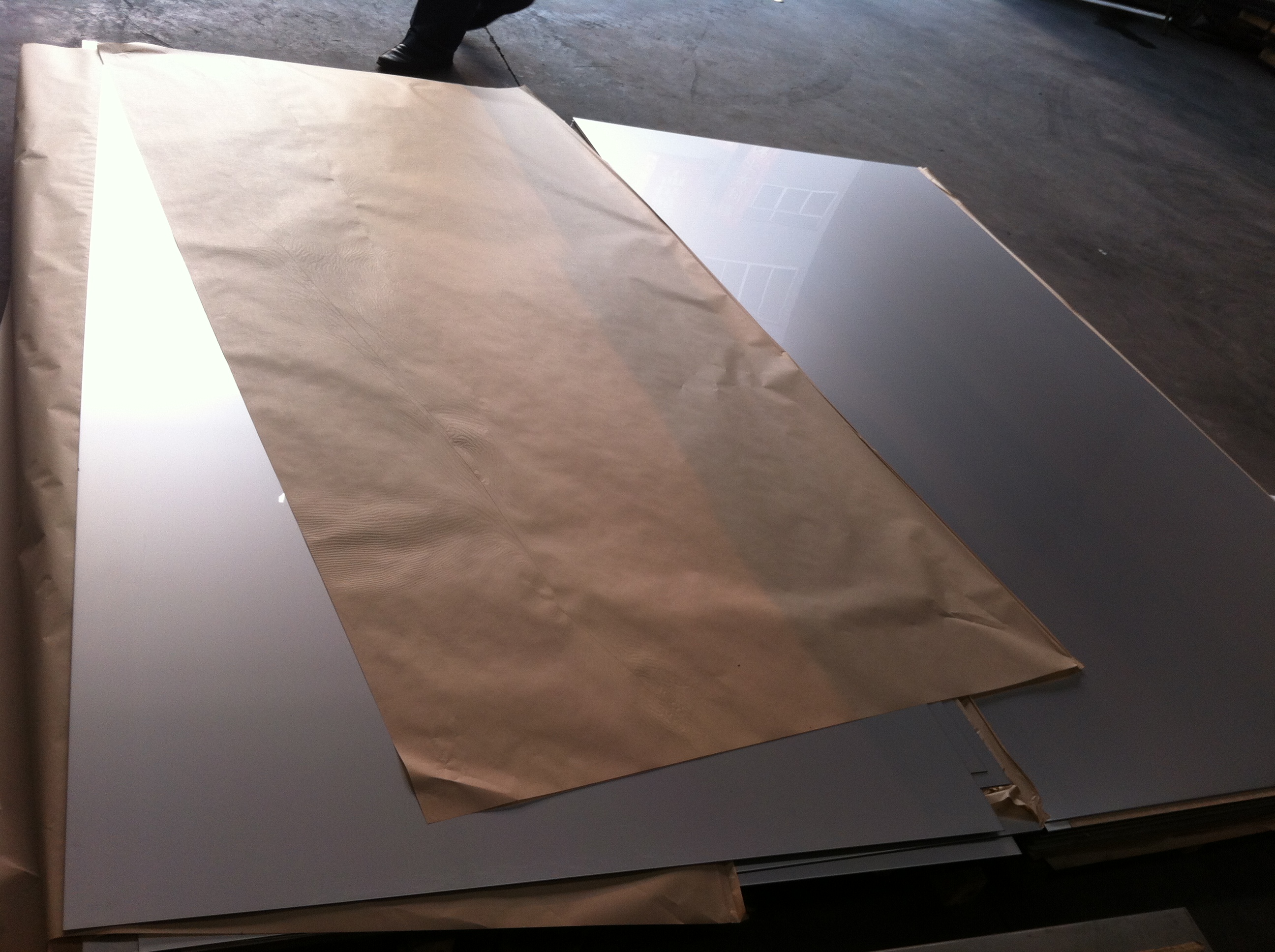
ASTM A240 321H equivalents unlocks global flexibility, with grades like EN 1.4878, JIS SUS321H, and BS 321S51 o
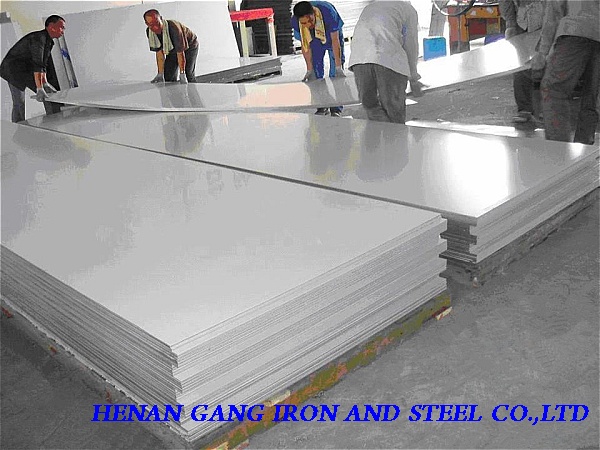
ASTM A240 Grade 304L (S30403) from Gangsteel is the weld-ready austenitic essential, its low-C design conquerin
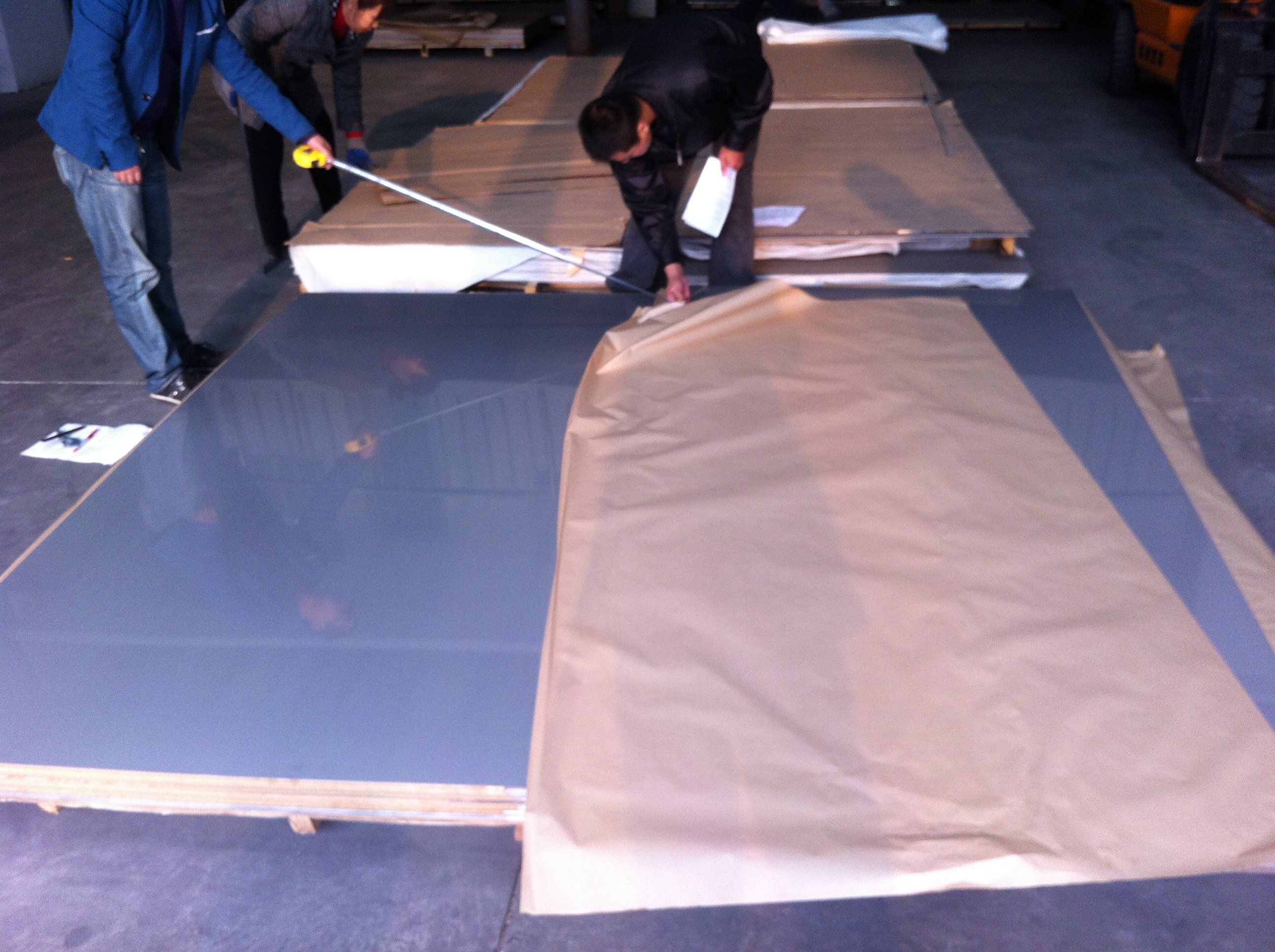
ASTM A240 Grade 304 (S30400) stainless steel plate from Gangsteel is the gold standard for affordable durabilit
ASTM A240 Grade 304H (UNS S30409) is an austenitic stainless steel variant of the widely used Type 304 family,


