Product List
Gangsteel Material Solution
Email: admin@gangsteel.com
Sales: jack@gangsteel.com
Stainless steel 304 (SS 304) plates are a cornerstone in industries like construction, manufacturing, and chemical processing due to their excellent corrosion resistance and durability. As a versatile material, SS 304 is widely used for its balance of strength, formability, and affordability. A critical property of these plates is their density, which is essential for engineering calculations and project planning.
Gangsteel, a leading manufacturer and exporter, specializes in high-quality ASME SA240 stainless steel plates, including SA240 Gr 304 plates, ensuring reliable performance for global applications. In this article, we’ll explain SS 304 plate density data in simple terms and explore its importance.
The density of a material measures its mass per unit volume, typically expressed in grams per cubic centimeter (g/cm³) or kilograms per cubic meter (kg/m³). For SS 304 plates, the density is approximately 7.93 g/cm³ or 7930 kg/m³. This means a cubic meter of SS 304 weighs 7930 kilograms. This consistent density makes SS 304, including variants like SA240 Gr 304L and SA240 Gr 304H, ideal for precise weight calculations in engineering designs. Gangsteel’s ASTM A240 stainless plates are manufactured to meet strict standards, ensuring accurate density for your projects.
Understanding the density of SS 304 plates is vital for several reasons:
Gangsteel’s SA240 Gr 304 plates are crafted for reliability, making them a top choice for projects requiring precise density data.
Calculating the weight of an SS 304 plate is simple with the following formula:
Weight (kg) = Density (kg/m³) × Volume (m³)
The volume of a plate is calculated as:
Volume (m³) = Length (m) × Width (m) × Thickness (m)
For example:
This calculation is essential for applications using SA240 Gr 304L for welding or SA240 Gr 316L for enhanced corrosion resistance. Gangsteel’s JIS G 4304 stainless steel plates also follow similar density standards, ensuring versatility across standards.
SS 304 plates, with their balanced density and corrosion resistance, are used in various industries:
Gangsteel also supplies nickel alloy steel plates and UNS stainless steel plates for specialized applications, ensuring a wide range of options.
SS 304’s density (7.93 g/cm³) is similar to other austenitic grades like SA240 Gr 316 (8.00 g/cm³) but differs from ferritic grades like SA240 Gr 430 (7.74 g/cm³). For high-temperature applications, SA240 Gr 310S or SA240 Gr 347 may be considered. Gangsteel’s ASTM A 959 stainless steel plates provide detailed comparisons across grades.
Gangsteel is a trusted manufacturer and exporter of ASME SA240 stainless steel plates, including SA240 Gr 304. Here’s why our SS 304 plates stand out:
SS 304 plate density data (7.93 g/cm³) is essential for weight calculations, material selection, and cost estimation in industrial projects. Gangsteel’s SA240 Gr 304 plates offer unmatched corrosion resistance and durability, making them ideal for construction, chemical, and food processing applications. With a range of grades like SA240 Gr 316L, SA240 Gr 904L, and SA240 Gr 410, Gangsteel ensures high-quality solutions for global markets. Contact us today to explore our ASME SA 312/SA 312M stainless pipes and other products for your next project.
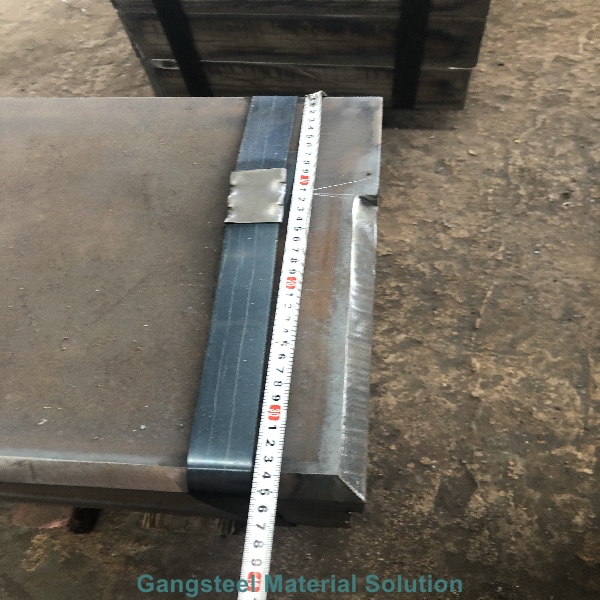
ASTM A516 GR 70 equivalent materials is such as ASME SA516 GR 70, EN 10028 P355GH, and BS1501 224-490 A & B, sh
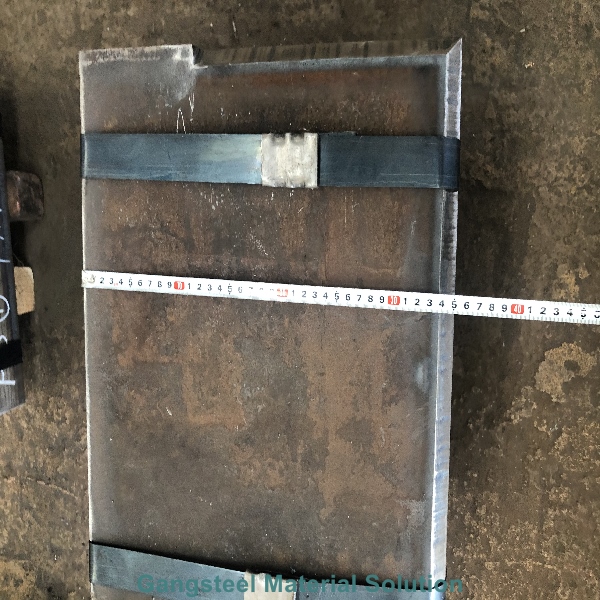
we supply high-quality A516 Gr 70 steel plate for pressure vessel applications and other standards like ASTM A2
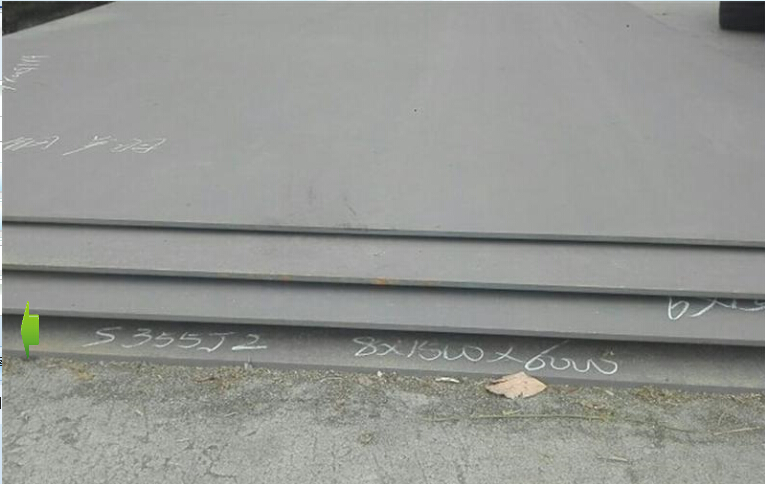
EN10028-2 P355GH for High-Strength Low-Alloy Columbium-Vanadium Structural Steel EN10025-2 S355J2 Structural St

We export A240 304L Stainless Coil 2B, NO.1 No.4 surface, the thickness 0.1mm to 3mm, 3mm to 22mm, Mother mill