Product List
Gangsteel Material Solution
Email: admin@gangsteel.com
Sales: jack@gangsteel.com
In the field of pressure vessel and boiler construction, choosing between materials like ASTM A537 and A516 can impact safety, performance, and cost.
At Gangsteel, we specialize in producing and exporting high-quality steel plates, including those under the ASTM A537/A537M specification for heat-treated carbon-manganese-silicon steels.
ASTM A537 is designed for welded pressure vessels requiring higher strength and toughness, available in Class 1 (normalized), Class 2 (quenched and tempered), and Class 3 (quenched and tempered with intermediate strength).
In contrast, ASTM A516 is a standard specification for carbon steel plates used in moderate- and lower-temperature services, with grades like Gr 70 being common.
Gangsteel offers equivalents under ASME SA537/SA537M, such as ASME SA 537 Class 1 and ASME SA 537 Class 2.
This guide from Gangsteel compares ASTM A537 and A516, focusing on composition, properties, and applications to help you decide.
ASTM A537 focuses on high-strength, heat-treated plates for demanding environments.
It excels in low-temperature and high-pressure services with better notch toughness.
ASTM A516, however, is for general-purpose carbon steels in moderate temperatures, offering good weldability and machinability.
A537 allows thinner designs due to higher strength, reducing material costs.
A516 is more versatile for standard vessels.
Gangsteel supplies both, including ASME SA537 Cl.1 as an A537
equivalent.
Both share similar base elements, but differences affect performance.
In asme sa537 class 1 boiler steel chemical composition details, A537 limits carbon to 0.24% max for weldability, with manganese adjusting by thickness (0.70-1.35% or 1.00-1.60%).
A516 Gr 70 has carbon up to 0.27-0.28%, manganese 0.85-1.20%, with similar low phosphorus/sulfur (0.035% max).
A537 allows optional alloys like copper/nickel for corrosion resistance.
A516 focuses on basic carbon composition for cost-effectiveness.
Comparison table:
|
Element |
ASTM A537 (%) |
ASTM A516 Gr 70 (%) |
|---|---|---|
|
Carbon (C) |
0.24 max |
0.27-0.28 max |
|
Manganese (Mn) |
0.70-1.60 (varies by thickness) |
0.85-1.20 |
|
Phosphorus (P) |
0.035 max |
0.035 max |
|
Sulfur (S) |
0.035 max |
0.035 max |
|
Silicon (Si) |
0.15-0.50 |
0.15-0.40 |
This shows A537's tighter controls for enhanced properties.
Mechanical differences highlight A537's superiority in strength.
For A537 Class 1, yield is 50 ksi (345 MPa) min, tensile 70-90 ksi (485-620 MPa).
A516 Gr 70 has yield 38 ksi (260 MPa) min, tensile 70-90 ksi.
A537 Class 2 boosts yield to 60 ksi (415 MPa).
A537 requires impact testing for better low-temp toughness.
A516 is normalized but lacks A537's heat treatment options.
Properties table (A537 Class 1 vs A516 Gr 70):
|
Property |
ASTM A537 Class 1 |
ASTM A516 Gr 70 |
|---|---|---|
|
Yield Strength (min) |
50 ksi (345 MPa) |
38 ksi (260 MPa) |
|
Tensile Strength |
70-90 ksi (485-620 MPa) |
70-90 ksi (485-620 MPa) |
|
Elongation (50mm, min) |
22% |
21% |
A537's higher yield allows thinner plates.
A537 Class 1 is normalized for all thicknesses.
Class 2 and 3 are quenched and tempered for superior strength.
A516 is typically normalized, suited for moderate services.
A537 is for low-temp, high-pressure uses like sour gas vessels.
A516 fits general-purpose tanks.
Gangsteel recommends A537 for tougher conditions, like ASME SA 537 Class 3.
Direct equivalent is ASME SA537/SA537M.
For Class 1: EN 10028-2 P355GH, DIN 19Mn6, JIS SPV355.
Class 2: EN P460NH, JIS SPV490.
These match in strength and treatment.
Equivalents table:
|
Standard |
Equivalent Grade |
Key Features |
|---|---|---|
|
ASME SA537 |
SA537 (all classes) |
Identical to A537 |
|
EN 10028-2/3 |
P355GH/P460NH |
Similar normalized/Q&T |
|
DIN 17155/02 |
19Mn6/WStE460 |
Creep-resistant/toughness |
|
JIS G3115 |
SPV355/SPV490 |
Good weldability/strength |
A537 suits cryogenic or sour services with better toughness.
A516 is for ambient conditions, easier to fabricate.
Gangsteel advises A537 for high-impact needs.
A537 has higher strength and toughness for low-temp services; A516 is for general use.
A537 Class 1: 50 ksi min; A516 Gr 70: 38 ksi min.
Yes, SA537 is the ASME version of A537.
Low-temperature or high-pressure vessels requiring impact testing.
In summary, ASTM A537 offers advanced properties for tough conditions, while A516 is reliable for standard needs. Reach out to Gangsteel for supply.
astm a537 class 1 equivalent materials comparison, astm a537 class 2 international standards guide, astm a537 class 3 pressure vessel steel equivalents
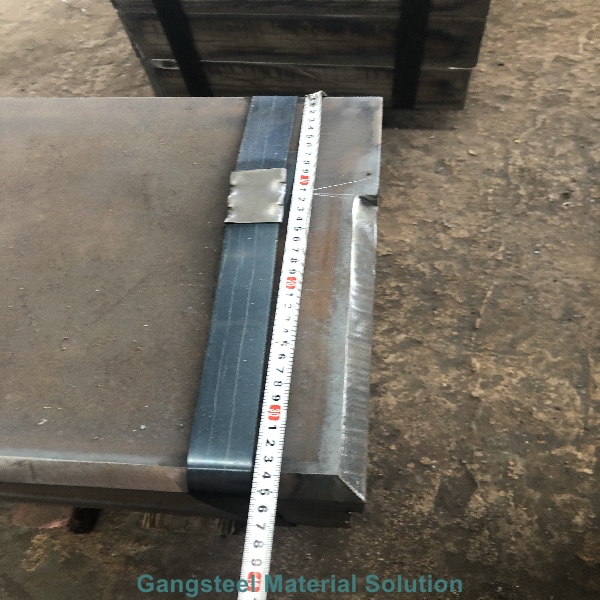
ASTM A516 GR 70 equivalent materials is such as ASME SA516 GR 70, EN 10028 P355GH, and BS1501 224-490 A & B, sh
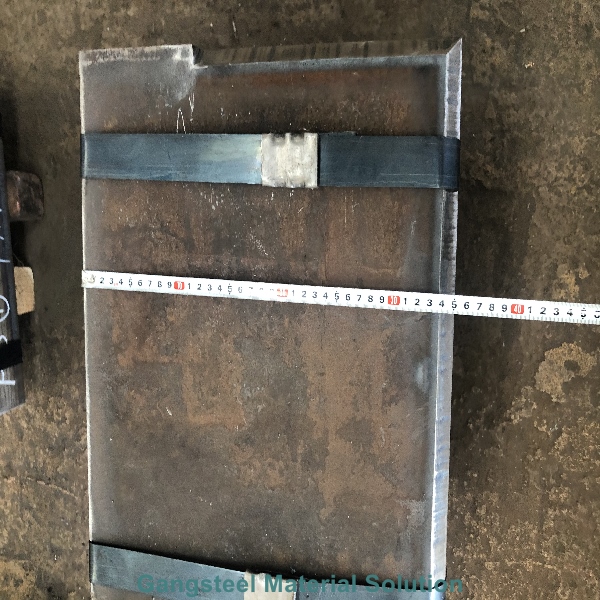
we supply high-quality A516 Gr 70 steel plate for pressure vessel applications and other standards like ASTM A2
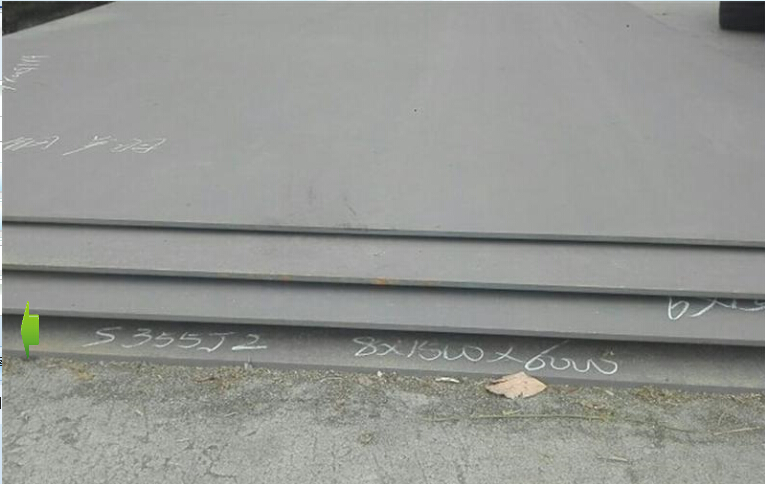
EN10028-2 P355GH for High-Strength Low-Alloy Columbium-Vanadium Structural Steel EN10025-2 S355J2 Structural St

We export A240 304L Stainless Coil 2B, NO.1 No.4 surface, the thickness 0.1mm to 3mm, 3mm to 22mm, Mother mill


