Product List
Gangsteel Material Solution
Email: admin@gangsteel.com
Sales: jack@gangsteel.com
 what is 430 stainless steel
Gangsteel supplies large volumes of 430 stainless steel (AISI 430 / UNS S43000 / SUS430 / 1.4016 / X6Cr17) every month to fabricators, appliance manufacturers, and industrial customers who weld it regularly. 430 is one of the most weldable ferritic stainless steels when you follow a few simple rules — it does not suffer from hot cracking like some austenitics, but it does require control of heat input and proper post-weld treatment to avoid brittleness and maintain corrosion resistance.
Below is the practical, step-by-step guide we give our customers who weld 430 coil, sheet, or plate every day.
1. Recommended Welding Methods
|
Method |
Suitability for 430 |
Heat Input |
Comments & Tips |
|---|---|---|---|
|
TIG (GTAW) |
Excellent (most recommended) |
Low–moderate |
Cleanest welds, minimal HAZ, best for thin material (0.3–3 mm) |
|
MIG (GMAW) |
Very good |
Moderate |
Fast for thicker parts (>1.5 mm); use pulsed mode + short arc |
|
Resistance (Spot/Seam) |
Excellent |
Very low |
No filler needed, ideal for thin sheet joining |
|
Laser |
Excellent |
Very low |
Minimal distortion, very clean edges |
|
Plasma |
Good |
Moderate–high |
Acceptable for thicker plate; use nitrogen shield |
|
Stick (SMAW) |
Fair |
High |
Avoid on thin material; high heat input risks grain growth |
Best choice for most 430 welding: TIG with low amperage and fast travel speed.
2. Filler Metal Selection (What Works Best)
|
Filler Type |
When to Use |
Advantages |
|---|---|---|
|
ER430 / E430 |
Matching chemistry, color match important |
Good for visible welds |
|
ER308L / ER309L |
Most common & recommended (austenitic fillers) |
Much better ductility, reduces cracking & embrittlement risk |
|
ER316L |
When maximum corrosion resistance is needed |
Best for food or mild acid environments |
Gangsteel recommendation: Use ER308L or ER309L for most welding of 430 — the austenitic filler improves weld toughness and corrosion resistance dramatically compared to matching 430 filler.
3. Preheating, Interpass Temperature & Cooling
4. Welding Parameters (Practical Starting Points)
|
Thickness (mm) |
TIG Amps (DCEN) |
Travel Speed |
Filler Diameter |
Gas Flow (Argon) |
Notes |
|---|---|---|---|---|---|
|
0.5–1.0 |
40–80 A |
Fast |
1.0–1.6 mm |
10–15 L/min |
Low heat, no preheat |
|
1.0–2.0 |
80–120 A |
Moderate |
1.6–2.4 mm |
12–18 L/min |
Preheat if >1.5 mm |
|
2.0–3.0 |
120–160 A |
Moderate |
2.4 mm |
15–20 L/min |
Preheat 150–200 °C |
Heat input guideline: Keep below 15–20 kJ/inch (0.6–0.8 kJ/mm) for thin material to avoid excessive grain growth.
5. Post-Weld Treatment (Very Important for Durability)
This restores the passive layer in the HAZ and prevents intergranular corrosion. Skip it only for non-critical, non-corrosive applications.
6. Common Problems & How to Avoid Them
|
Problem |
Cause |
Prevention |
|---|---|---|
|
Grain coarsening / brittleness |
Excessive heat input |
Low heat, fast travel speed |
|
Sensitization (intergranular corrosion) |
Carbon migration in HAZ |
Low heat + post-weld anneal |
|
Weld cracking |
High carbon or poor technique |
Use austenitic filler, preheat thick material |
|
Oxidation / discoloration |
Oxygen in shielding gas |
Use pure argon or argon + small helium |
Available 430 Coil & Sheet from Gangsteel (Optimized for Welding)
Why Choose Gangsteel for Your 430 Welding Projects?
As a professional 430 stainless steel supplier and 430 stainless steel exporter, Gangsteel offers genuine Yongjin Stainless Steel (Yongjin Mill) material with full traceability, flexible MOQ (from 5 tons), fast delivery (15–30 days), and complete export documentation. We provide welding procedure recommendations and technical support to help you achieve strong, corrosion-resistant welds every time.
FAQ
Is 430 easy to weld?
Yes — good weldability with low to moderate heat input.
What filler metal is best for 430?
ER308L or ER309L (austenitic fillers) for best ductility and corrosion resistance.
Do I need to anneal after welding 430?
Recommended for maximum corrosion resistance, especially in food or outdoor applications.
Can 430 be laser welded?
Yes — excellent for thin coils/sheets with minimal HAZ.
Does welding affect corrosion resistance?
Slightly in the HAZ if not annealed; proper technique + annealing restores full performance.
Contact our technical sales team today for current pricing, samples, welding procedure recommendations, or customized specifications for
430 cold rolled stainless steel coil.
Let Gangsteel help you source genuine top Chinese mill material at factory prices and achieve strong, reliable welds.
We look forward to supporting your success.
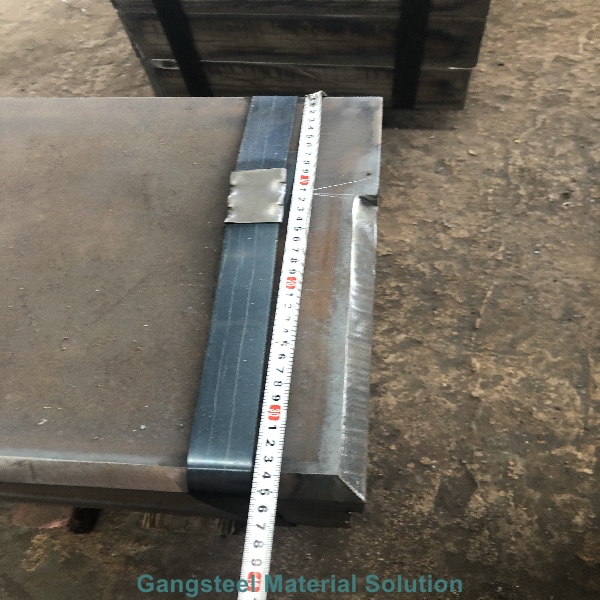
ASTM A516 GR 70 equivalent materials is such as ASME SA516 GR 70, EN 10028 P355GH, and BS1501 224-490 A & B, sh
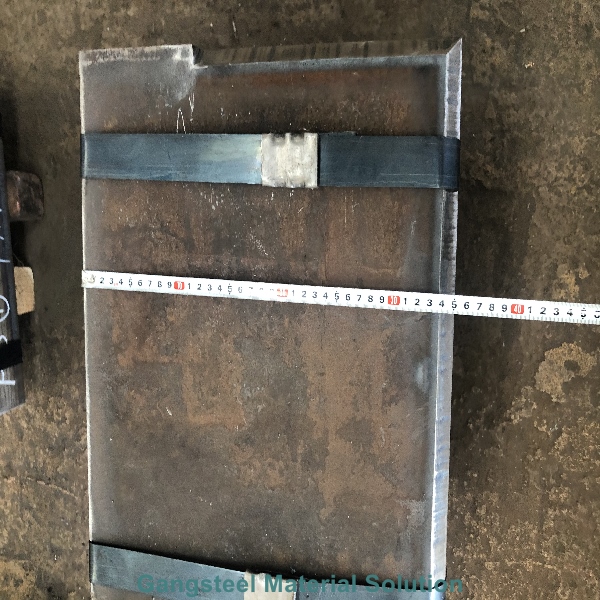
we supply high-quality A516 Gr 70 steel plate for pressure vessel applications and other standards like ASTM A2
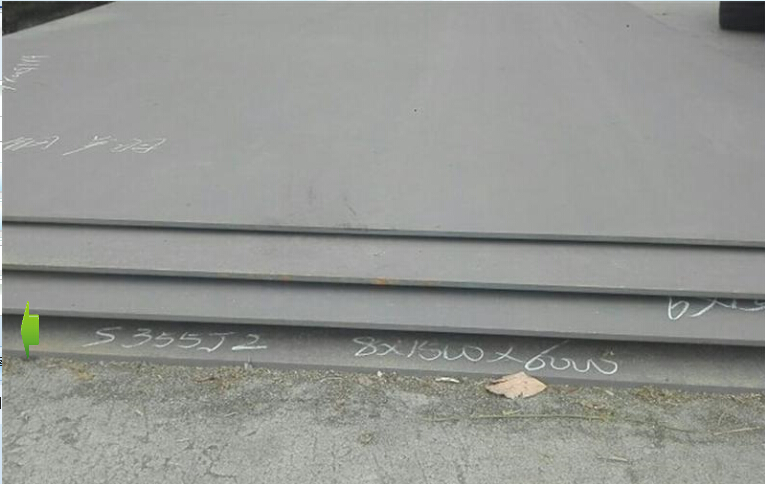
EN10028-2 P355GH for High-Strength Low-Alloy Columbium-Vanadium Structural Steel EN10025-2 S355J2 Structural St

We export A240 304L Stainless Coil 2B, NO.1 No.4 surface, the thickness 0.1mm to 3mm, 3mm to 22mm, Mother mill


