


EN 10083-3 Alloy Steel Plate
EN10083-3 51CrV4 STEEL PLATE
Gangsteel (HENAN GANG IRON AND STEEL CO.,LTD.) supplies EN 10083-3 51CrV4 (steel number 1.8159) as hot-rolled plate for parts that are cut, machined and then quenched and tempered. EN 10083-3:2006 classifies 51CrV4 as a chromium-vanadium steel for quenching and tempering: C 0.47–0.55%, Mn 0.70–1.10%, chromium 0.90–1.20%, vanadium 0.10–0.25%. It is a high-carbon chromium steel with a vanadium addition that refines grain and improves temper resistance, and it is well known as a spring and high-strength machine steel. This page sets out the chemistry, the quenched and tempered property table, the Jominy hardenability band, delivery conditions and heat treatment guidance from the standard, so that a purchase order can name exactly what is needed.
What is EN 10083-3 51CrV4?
EN 10083-3 is Part 3 of the European standard for steels for quenching and tempering and covers the alloy grades (Part 2 covers the non-alloy grades). Its scope includes semi-finished products, bars, rod, wide flats, forgings and hot-rolled strip and sheet/plate. All grades are special steels; the standard requires a fine austenite grain size of 5 or finer and a special-steel level of cleanness. 51CrV4 indicates about 0.51% mean carbon; the suffix 4 refers to chromium divided by the factor 4, about 1% Cr, with vanadium also present. The steel number 1.8159 identifies the same grade in the EN 10027-2 numbering system.
The grade can be ordered with or without hardenability requirements. Without a suffix, the order is governed by the chemical composition and the mechanical properties after quenching and tempering. With the suffix +H, the Jominy hardenability band of Table 5 becomes a requirement and, for the restricted bands, +HH or +HL from Table 6 can be ordered. Either way, the steel is designed to be hardened by the user; plate in the as-rolled condition does not yet have the tabulated strength.
51CrV4 Chemical Composition (EN 10083-3:2006 Table 3)
Table 3 gives the cast analysis. The ranges below are those printed for 51CrV4 (1.8159); elements not quoted may not be added intentionally without the purchaser’s agreement, except for finishing the heat.
| Grade (number) | C % | Si % | Mn % | P % | S % | Cr % | V % |
|---|---|---|---|---|---|---|---|
| 51CrV4 (1.8159) | 0.47–0.55 | ≤ 0.40 | 0.70–1.10 | ≤ 0.025 | ≤ 0.025 | 0.90–1.20 | 0.10–0.25 |
Product (check) analysis may deviate from the cast analysis by the amounts in Table 4. For this grade the relevant permissible deviations are:
| Element | Cast analysis, % | Permissible deviation, % |
|---|---|---|
| C | 0.47–0.55 | ±0.02 |
| Si | ≤ 0.40 | +0.03 |
| Mn | 0.70–1.10 | ±0.05 |
| P | ≤ 0.025 | +0.005 |
| S | ≤ 0.025 | +0.005 |
| Cr | 0.90–1.20 | ±0.05 |
| V | 0.10–0.25 | ±0.02 |
Notes: deviations in product analysis apply to individual elements; within one cast, the deviation of an element may lie above the upper limit or below the lower limit of the Table 3 range, but not both at the same time. For improved machinability, the standard allows sulphur up to about 0.10% to be agreed at the time of enquiry and order, in which case the manganese maximum may be raised by 0.15%.
51CrV4 Mechanical Properties, Quenched and Tempered (+QT, Table 8)
Table 8 gives minimum yield strength, the tensile strength range, elongation, reduction of area and Charpy V-notch energy for 51CrV4 after quenching and tempering, listed by ruling section. For flat products the ruling section is the thickness t; the round-bar diameter d of the same column is shown for comparison. For 51CrV4, values are tabulated up to t ≤ 160 mm.
| Plate thickness t, mm | Bar diameter d, mm | Re min, MPa | Rm, MPa | A min, % | Z min, % | KV min, J |
|---|---|---|---|---|---|---|
| t ≤ 8 | d ≤ 16 | 900 | 1100–1300 | 9 | 40 | – |
| 8 < t ≤ 20 | 16 < d ≤ 40 | 800 | 1000–1200 | 10 | 45 | 30 |
| 20 < t ≤ 60 | 40 < d ≤ 100 | 700 | 900–1100 | 12 | 50 | 30 |
| 60 < t ≤ 100 | 100 < d ≤ 160 | 650 | 850–1000 | 13 | 50 | 30 |
| 100 < t ≤ 160 | 160 < d ≤ 250 | 600 | 800–950 | 13 | 50 | 30 |
Notes: Re is the upper yield strength or, where no yield phenomenon occurs, the 0.2% proof strength Rp0.2. Impact values are not specified for the thinnest ruling section. The original page lists plate up to 300 mm thick; Table 8 stops at t ≤ 160 mm for this grade, so for thicker plate the mechanical requirements must be agreed for the actual product at the time of order. Not all flat-product dimensions can be supplied in the +QT condition.
51CrV4+H Hardenability Band (Jominy, Table 5)
The end-quench (Jominy) test according to EN ISO 642 measures how hardness falls with distance from the water-quenched end of a standard bar. For 51CrV4+H the test is carried out from 850 °C, and the measured hardness must stay within the band below. The band describes the steel’s capacity to harden; it is the most direct way to check whether a cast will through-harden in a given section.
| Distance from quenched end, mm | HRC max | HRC min |
|---|---|---|
| 1.5 | 65 | 57 |
| 3 | 65 | 56 |
| 5 | 64 | 56 |
| 7 | 64 | 55 |
| 9 | 63 | 53 |
| 11 | 63 | 52 |
| 13 | 63 | 50 |
| 15 | 62 | 48 |
| 20 | 62 | 44 |
| 25 | 62 | 41 |
| 30 | 61 | 37 |
| 35 | 60 | 35 |
| 40 | 60 | 34 |
| 45 | 59 | 33 |
| 50 | 58 | 32 |
Notes: a dash means no limit is set at that distance. The values apply to the +H grade only; a grade ordered without +H is not tested against the band. Table 6 additionally defines restricted scatter bands, +HH (narrowed toward the upper part of the band) and +HL (narrowed toward the lower part), for this grade when tighter control of hardenability is needed.
51CrV4 Delivery Condition
Table 1 of EN 10083-3 lists the heat treatment conditions in which products can be delivered. If nothing is agreed, the steel is supplied untreated, i.e. as hot rolled. For plate in 51CrV4 the usual choices are untreated (for later quenching and tempering by the fabricator), a condition that eases shearing and machining, or quenched and tempered to a Table 8 property class.
| Condition | Symbol | Requirement for 51CrV4 |
|---|---|---|
| Untreated | none or +U | Default when not agreed; as-rolled, for heat treatment by the user |
| Treated to improve shearability | +S | No value given; order +A where shearability matters |
| Soft annealed | +A | Max. HBW: 248 |
| Quenched and tempered | +QT | Table 8 properties for the ordered thickness |
| Other | by agreement | e.g. annealing to a certain structure, agreed at enquiry and order |
Notes: for the untreated, +S and +A conditions the Table 8 properties must still be achievable after correct quenching and tempering. No +S value is given for 51CrV4; where shearability is important, the standard recommends ordering it soft annealed (+A). The Table 7 hardness values do not apply to continuously cast slabs that have not been further deformed. Surface condition at delivery and the type of inspection document are agreed at order.
51CrV4 Heat Treatment
Table 11 of EN 10083-3 gives guidance conditions for heat treating 51CrV4. The austenitizing temperature and quenchant are chosen with the section and shape in mind: the lower end of the hardening range generally applies to water quenching and the upper end to oil quenching. Tempering then sets the final strength level within the Table 8 range.
| Step | Guidance for 51CrV4 |
|---|---|
| Hardening (austenitizing) | 820–870 °C |
| Quenching agent | Oil |
| Tempering | 540–680 °C |
| End-quench test temperature | 850 ± 5 °C (mandatory) |
Notes: the conditions in Table 11 are for guidance, but the end-quench test temperature is mandatory. Austenitizing time is at least 30 min and tempering time at least 60 min as guide values. When choosing the quenching agent, the shape, dimensions and quenching temperature should be considered because they affect properties and crack susceptibility; synthetic quenchants may also be used.
Related Grades and Alternatives to 51CrV4
Choosing between neighbouring grades is mostly a question of section size and strength class. Compared with 51CrV4: EN 10083-3 50CrMo4 steel has similar carbon with molybdenum instead of vanadium; AISI 6150 Cr-V steel is listed in GB/T 3077-2015 Annex A as the similar ASTM grade, with 50CrV for China. Similarity listings such as those in GB/T 3077-2015 Annex A are only a comparison aid; chemistry limits and test rules differ, so a substitution should be checked against the governing standard.
Typical Applications of 51CrV4 Plate
Typical uses are heavily loaded springs, torsion bars, gears, shafts and wear parts, and plate components that need high strength after quenching and tempering. In plate form the steel is normally profile-cut, machined and then quenched and tempered, so the purchaser should state whether heat treatment will be done by the mill or by the fabricator, and on what ruling section the properties are to be proven.
51CrV4 Plate Supply and Ordering Information
The supply range below is taken from the original product page and is subject to confirmation for each enquiry.
| Item | Range / option |
|---|---|
| Thickness | 3 to 300 mm |
| Width | 1500 to 4050 mm |
| Length | 3000 to 27000 mm |
| Delivery condition | Untreated, +A or +QT, as agreed |
| Hardenability | Without suffix, or +H / +HH / +HL |
Notes: an order should state the standard EN 10083-3, the grade 51CrV4 or number 1.8159, any +H suffix, the delivery condition, the dimensions, whether Table 8 properties are to be tested on a quenched and tempered sample and the inspection document required. Thicknesses above the Table 8 range need agreed property values.
51CrV4 Steel FAQ
What is the chemical composition of EN 10083-3 51CrV4?
Per Table 3, 51CrV4 contains C 0.47–0.55%, Si ≤ 0.40%, Mn 0.70–1.10%, P ≤ 0.025%, S ≤ 0.025% and chromium 0.90–1.20%, vanadium 0.10–0.25%. Product analysis may deviate within the Table 4 tolerances.
What are the quenched and tempered properties of 51CrV4 plate?
For t ≤ 8 mm, Table 8 requires Re of at least 900 MPa and Rm of 1100–1300 MPa. For the heaviest tabulated plate (100 < t ≤ 160 mm) the values are Re 600 MPa minimum and Rm 800–950 MPa, with elongation of at least 13%.
What heat treatment is recommended for 51CrV4?
Table 11 gives hardening at 820–870 °C, quenching in oil, and tempering at 540–680 °C. These are guidance values, but the Jominy test temperature of 850 °C is mandatory.
What does 51CrV4+H mean on an order?
The +H suffix makes the Table 5 Jominy band a requirement. At 1.5 mm from the quenched end the hardness must be 57–65 HRC, and at 15 mm it must be 48–62 HRC.
In which delivery conditions can 51CrV4 plate be ordered?
Untreated is the default. No +S value is given for 51CrV4, so where shearability matters it should be ordered soft annealed. For +A the maximum is 248 HBW. Quenched and tempered (+QT) supply follows Table 8 for the ordered thickness.
Is 51CrV4 the same as AISI 6150 or 50CrV?
GB/T 3077-2015 Annex A lists 50CrV and ASTM 6150 as similar grades to 51CrV4. They are close in purpose, but chemistry limits differ, so the order should name one standard.
Can 51CrV4 be supplied in the +S condition?
Table 7 gives no +S value for 51CrV4; where shearability is important, the standard recommends ordering it soft annealed (+A), with a maximum of 248 HB.
-
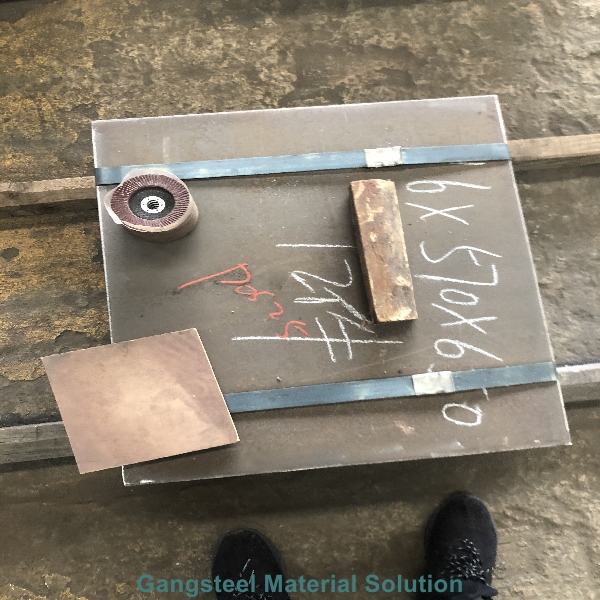
EN10083-3 51CrV4 STEEL PLATE
EN 10083-3 51CrV4 (1.8159) plate: C 0.47–0.55%, Cr 0.90–1.20%, V 0.10–0.25%; QT Re ≥900 MPa at t ≤8 m
-
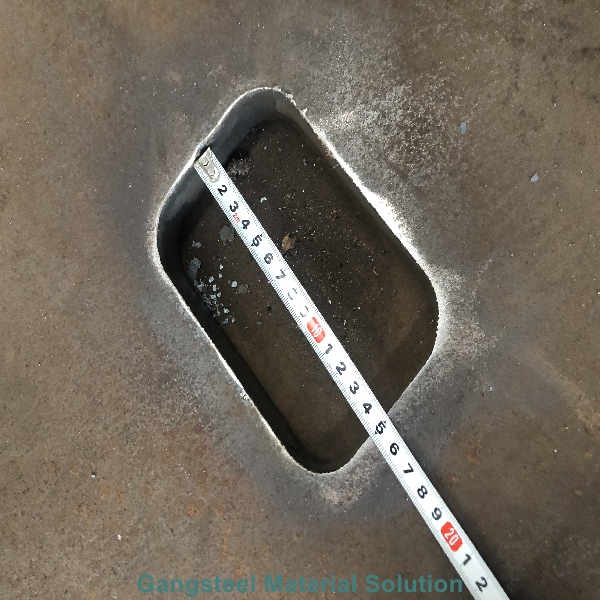
EN10083-3 25CrMo4 STEEL PLATE
EN 10083-3 25CrMo4 (1.7218) alloy steel plate: C 0.22–0.29%, Cr 0.90–1.20%, Mo 0.15–0.30%; QT Re ≥700 M
-
EN10083-3 25CrMoS4 STEEL PLATE
EN10083-3 25CrMoS4 STEEL PLATE Gangsteel Grade : EN10083-3 25CrMoS4 Specification (mm) THK: 3 to 300, Width: 15
-
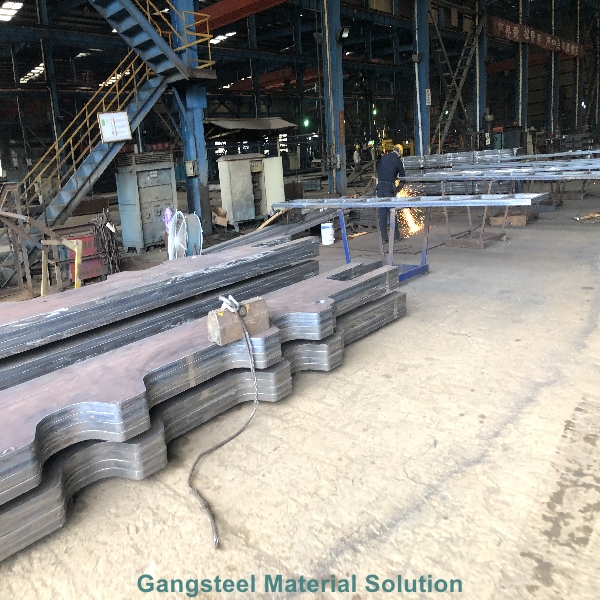
EN10083-3 20MnB5 STEEL PLATE
EN10083-3 20MnB5 STEEL PLATE Gangsteel Grade : EN10083-3 20MnB5 Specification (mm) THK: 3 to 300, Width: 1500 t