


Clad Steel Plate
A516 Grade 70 + Alloy 400 N04400 Clad Steel Plate
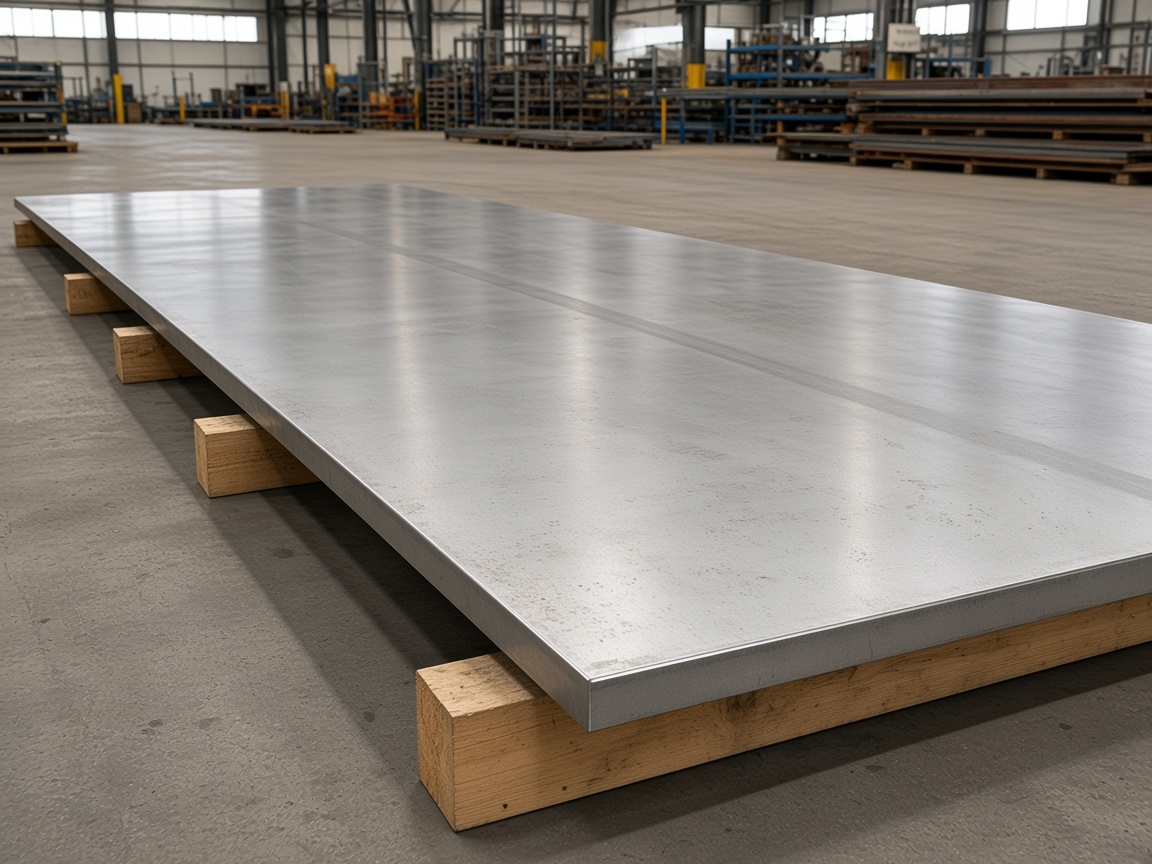
A516 Grade 70 + Alloy 400 N04400 Clad Steel Plate uses an Alloy 400 nickel-copper face on a carbon-manganese pressure-vessel backing. The nickel alloy is the corrosion barrier, not a special high-strength carbon steel grade and not a chromium-nickel stainless facing. Gangsteel builds the enquiry around separate backing and facing certificates, the finished bond and the actual fabrication requirements.
Material Pair and Engineering Use
This is an established material-pairing option for specialist process and heat-exchanger equipment when the process engineer selects Alloy 400. Its service envelope differs from the 300-series stainless family. Do not infer resistance to every acid, oxidizing salt or aerated water merely because the facing contains nickel and copper.
| Part | Designation | Role |
|---|---|---|
| Backing | ASTM A516/A516M-25 Grade 70 [485] | Pressure-retaining strength and structural wall thickness |
| Facing | ASTM B127-19 Alloy 400 (N04400) | Selected corrosion-resistant surface |
| Composite | ASTM A265; contractual edition stated in order | Bonded product, not two loosely assembled plates |
The clad-standard scope follows ASTM's A265-12(2026) listing. The clause-level manufacturing and test discussion uses the accessible A265-12(2019) text; the purchase order must name the contractual edition. Component data below identify their own editions and are not a claim of automatic ASME certification.
Backing Steel Chemical Composition
| Backing thickness | C max | Mn | Si | P max | S max |
|---|---|---|---|---|---|
| ≤12.5 mm | 0.27 | 0.85–1.20 | 0.15–0.40 | 0.025 | 0.025 |
| >12.5–50 mm | 0.28 | 0.85–1.20 | 0.15–0.40 | 0.025 | 0.025 |
| >50–100 mm | 0.30 | 0.85–1.20 | 0.15–0.40 | 0.025 | 0.025 |
| >100 mm | 0.31 | 0.85–1.20 | 0.15–0.40 | 0.025 | 0.025 |
Thickness in this table is the backing-steel thickness, not the sum of the layers. For each 0.01 percentage-point reduction below the specified carbon maximum, A516/A516M-25 permits a 0.06 percentage-point increase above the manganese maximum, up to 1.50% on heat analysis and 1.60% on product analysis. Product-analysis manganese and silicon ranges differ from heat analysis; compare the correct certificate column. Special supplementary chemistry provisions must be stated in the order.
Corrosion-Resistant Facing Chemical Composition
| Element | Requirement |
|---|---|
| Ni | ≥63.0 |
| Cu | 28.0–34.0 |
| Fe | ≤2.5 |
| Mn | ≤2.0 |
| C | ≤0.30 |
| Si | ≤0.50 |
| S | ≤0.024 |
In B127-19, nickel is determined arithmetically by difference. These are alloy chemistry requirements, not a special composition for the bond line.
Mechanical Properties: Backing, Facing and Bond
| Layer / reference | Applicable reference condition | Yield / Rp0.2 min, MPa | Tensile, MPa | Elongation min |
|---|---|---|---|---|
| A516/A516M-25 Grade 70 [485] backing | All qualified plate thicknesses; no fixed maximum thickness in A516 | 260 | 485–620 | 21% in 50 mm; 17% in 200 mm; A20 adjustments apply |
| Alloy 400 N04400 facing; ASTM B127-19 | Annealed hot-rolled plate, thickness ≥4.8 mm | 195 | 485 min | 35% |
The cladding row describes the separately specified flat-product reference condition. It is not a requirement to extract a tiny tensile coupon from every finished facing. Finished clad-plate tensile acceptance follows the clad specification and the selected test section. Do not add the two tensile strengths or substitute bond shear strength for backing tensile strength. Cladding strength can enter vessel calculations only when the construction code and design permit it.
| Test decision | Application to this material pair | Order action |
|---|---|---|
| Tensile section | The Grade 70 [485] backing minima, 485 MPa tensile and 260 MPa yield, satisfy the cited 485/275 MPa strength thresholds. Total gage still determines the applicable section. | At total gage up to 1.5 in. (about 38 mm), the composite section is the general route unless the corrosion-only provision is used. Above that gage use backing-only testing. |
| Backing-only option | When the facing is for corrosion allowance only, it need not be included in the tensile specimen. | Identify this basis and retain the backing tensile limits; a face-excluded test is not a test of the facing. |
| Required bond test | Where the purchaser specifies the interface shear route, the minimum is 20 ksi (140 MPa). | Specify the coupon requirement, facing thickness and any agreed thin-facing procedure; this is not 140 MPa plate tensile strength. |
| Area integrity | One mechanical bond specimen does not sample all of the Alloy 400 face. | Agree ultrasonic method, coverage, acceptance class and the treatment of areas that will become formed or welded edges. |
The ASTM clad specification uses inch-pound values as controlling requirements. The 0.075 in. (1.9 mm) shear-coupon facing provision and any agreed testing at or below that thickness must be considered before choosing a thin corrosion layer. The standard overview explains the general test hierarchy in more detail.
Fabrication Considerations for This Pair
Select the backing heat treatment and facing condition as a compatible pair. An aggressive furnace cycle or uncontrolled weld dilution can change the corrosion-resistant surface. The correct filler, transition detail and restoration sequence must be established by the fabricator's qualified procedure; a plate purchase specification cannot replace that qualification.
Order the base and minimum finished facing thicknesses separately. There is no universal standard layer ratio for this pair. A drawing notation such as 20 + 3 mm means 20 mm backing plus 3 mm facing only if that order is explicitly stated; it is an illustration of notation, not a stock-size or capacity claim. Assess forming strain, cut-edge restoration and any local thinning before fixing the purchase allowance.
Bonding Process, Delivery and Heat Treatment
Explosion bonding joins prepared metal surfaces by a controlled high-velocity collision. Hot-roll bonding establishes the metallurgical bond during rolling of a prepared assembly; explosion bonding followed by rolling is a separate combined route. These are integrally bonded plates, not loose liners, adhesive laminates or chromium-carbide weld-overlay wear plates.
A265-12(2019) calls for a condition appropriate to the cladding alloy, backing or both unless a component specification or purchaser agreement requires a specific treatment. There is no universal nickel-clad solution temperature or mandatory blanket stress-relief cycle.
| Parameter | Required order definition | Technical note |
|---|---|---|
| Bonding route | Explosion bonded, hot-roll bonded, or combined route | Route capability depends on the material pair, area, layer ratio and final condition. No blanket stock range is implied. |
| Thickness | Backing thickness + minimum facing thickness, in mm; identify one or two clad faces | Reserve facing allowance for grinding, forming and weld restoration. Total thickness alone is insufficient. |
| Final thermal condition | Named delivery condition and any simulated fabrication/PWHT cycle | Test in the representative final condition; agree number and duration of simulated cycles where required. |
| Heat-treatment temperature / hold | Qualified procedure for the selected pair and thickness | No single temperature, hold time or cooling rate is specified here for all clad plates. |
| Surface and cutting | As agreed: pickled, ground or specified finish; edge machining and protection | Prevent carbon-steel contamination of the corrosion-resistant face. |
| Lead time | Confirmed against the enquiry and agreed inspection plan | Not a fixed number of days for every thickness or bonding route. |
For an A516 backing, A516/A516M-25 normally requires normalization above 1.5 in. [40 mm]; thinner plate may be normalized when ordered. That backing rule does not authorize a final composite furnace cycle without checking the facing and clad-standard requirements. The two standards use different rounded metric values for 1.5 in.; do not substitute the 40 mm heat-treatment boundary for the clad-standard tensile boundary.
Inspection and Certification
Gangsteel separates incoming-material traceability, finished-plate mechanical qualification and bond-area examination in the inspection plan. Keep the backing heat number, facing heat/lot, plate identity and final thermal history linked through cutting. State the examination stage, coverage and acceptance class before manufacture; a certificate description such as "UT tested" without a method and class is incomplete.
| Check | What to specify | Acceptance concern |
|---|---|---|
| Chemistry and identity | Backing and facing specifications; heat analysis and product analysis if ordered | Do not report an averaged composite chemistry as either layer. |
| Tensile testing | Composite or backing-only section under the governing clad standard | State specimen section, direction and final test condition. |
| Bond examination | Ultrasonic method, acceptance class, coverage and edge/cut-zone requirements | Map reportable unbonded areas; distinguish scanning coverage from bonded-area percentage. |
| Bond mechanical test | Shear or alternative bend route where applicable | Record specimen location and criterion; do not relabel shear as tensile. |
| Forming / corrosion tests | Required bends, intergranular corrosion or project-specific tests by agreement | A low-carbon designation does not replace a specified corrosion test. |
| Additional service tests | Backing impact, HIC/SSC and simulated PWHT only when required by specification/code/order | No automatic sour-service, low-temperature or hydrogen-service qualification. |
| Documentation | Layer certificates, test reports, UT map, thermal records and agreed inspection release | An inspection certificate does not itself approve the vessel design. |
Frequently Asked Questions
Is Alloy 400 facing the same as a 316L stainless face?
No. Alloy 400 is UNS N04400 nickel-copper material covered by B127 for rolled flat product. 316L is an iron-base chromium-nickel-molybdenum stainless grade. The facing chemistry, corrosion behavior and fabrication requirements differ; A265 and A264 are not interchangeable labels.
Is a special trade-name alloy or manufacturer guaranteed by the designation N04400?
No. N04400 identifies an alloy composition, not a proprietary mill, brand certificate or origin. If the project requires an approved producer, original trade-name material or a specific certification route, state that separately on the enquiry.
Does N04400 require the chromium and molybdenum limits of 316L?
No. The selected facing is a nickel-copper alloy with its B127 chemistry, including the specified nickel and copper requirements. Treating it as stainless steel would obscure the actual corrosion-alloy selection and certificate basis.
Can the annealed B127 plate numbers be used for cold-worked facing stock?
Do not transfer those figures to every condition. The table explicitly uses annealed hot-rolled plate; B127 includes other forms and tempers with different requirements. The constituent and final-composite condition must be stated in the manufacturing specification.
Is a 3 mm Alloy 400 face automatically covered by the hot-rolled-plate reference row?
That row is labelled for B127 hot-rolled plate at 4.8 mm and above. A thinner facing may fall under another specified form/condition. Select and certify the actual supplied facing product rather than borrowing a convenient plate row.
Does Alloy 400 facing mean the plate can handle every acid?
No. Its corrosion response depends on the actual medium, concentration, oxidizing conditions, contaminants and temperature. The selection must come from the process corrosion assessment; the alloy family does not establish a universal chemical-service guarantee.
Why is the final weld surface important on nickel-copper clad equipment?
An otherwise suitable plate can lose its intended corrosion-side performance if the joint exposes carbon steel or an unsuitable diluted weld metal. Define a qualified transition and restoration procedure and protect the finished alloy face during fabrication.
What should be included in an N04400 clad quotation enquiry?
Provide the B127 form/condition and edition, A516 backing and final condition, A265 contractual edition, separate layer gages, size, quantity, bond tests and examination/witness requirements. Any approved-mill or origin restriction is additional. Gangsteel confirms lead time after reviewing these details.
Related Materials
ASTM A265 standard overview; Clad Steel Plate combinations; pressure-vessel backing steels.