


Clad Steel Plate
ASTM B432 Copper and Copper-Nickel Clad Steel Plate
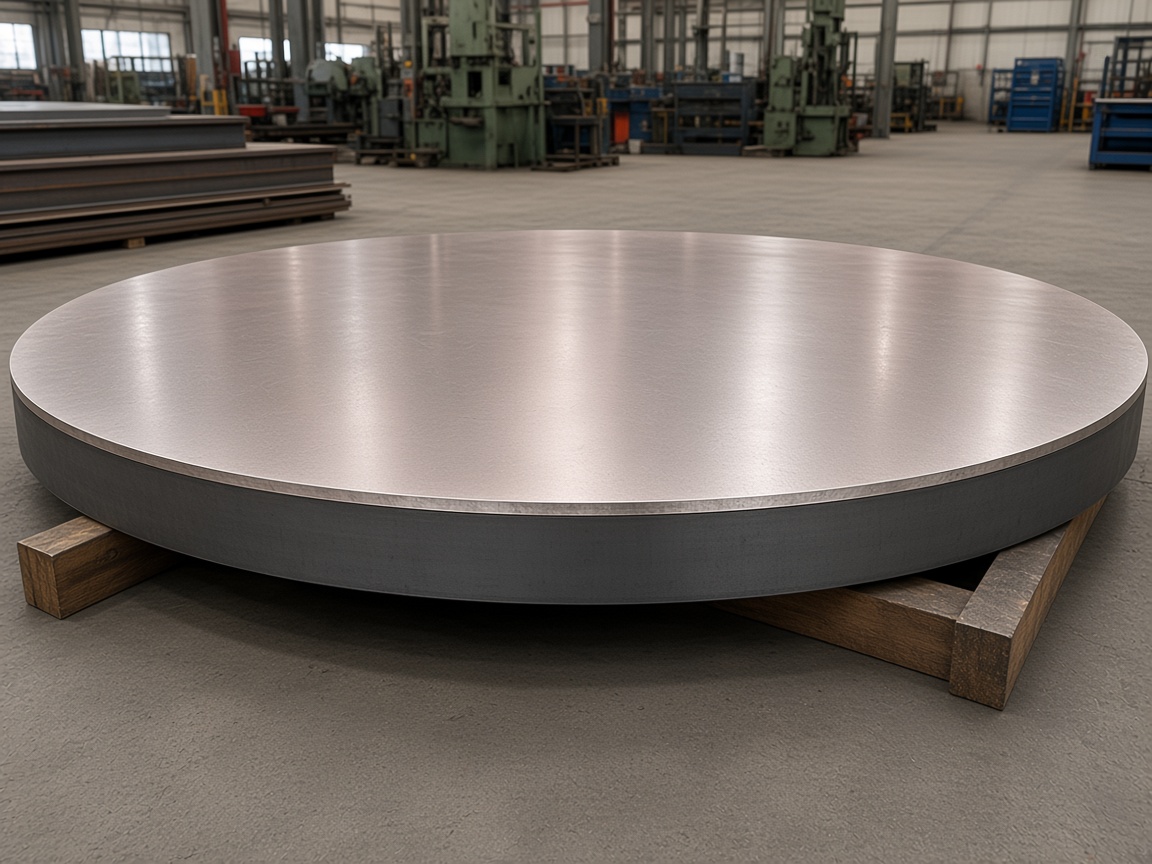
ASTM B432 covers carbon or low-alloy steel plate with copper or a copper-base alloy bonded integrally and continuously on one or both sides. It is mainly used for pressure vessels and heat-exchanger tube sheets where seawater corrosion resistance or the conductivity of copper matters. Gangsteel supplies B432 plate with copper-nickel, copper and other copper-alloy faces against project specifications.
Scope and Edition Basis
ASTM lists B432-25 as the current edition. The clause references on this page were read from the B432-19 text, and the order should name the edition that applies. The term plate in B432 means material 0.188 in. (4.78 mm) and thicker, over 10 in. (254 mm) wide.
| Part | Requirement | Typical selection |
|---|---|---|
| Base metal | Carbon or low-alloy steel to ASTM pressure-vessel or structural plate specifications, or as agreed | A516 Grade 60 or 70; forgings for some tube sheets |
| Cladding metal | Chemistry to B96/B96M, B152/B152M or B171/B171M, or another agreed copper-base specification | 90/10 CuNi C70600 or 70/30 CuNi C71500 (B171); copper (B152) |
| Combination | Any base and cladding combination agreed between purchaser and manufacturer | No fixed list of composite grades |
| Bonding method | Explosion bonding, roll bonding and weld overlay named; others allowed if the product conforms | Explosion bonding for most thick copper-alloy tube sheets |
| Heat treatment | As needed in the cladding operation so both metals meet their specifications and the bond resists disbonding | Agree any post-weld cycle and simulated-cycle testing |
Bond and Mechanical Requirements
| Item | Requirement | Note |
|---|---|---|
| Tensile test | To the base-metal specification | The copper alloy does not add to the certified base strength |
| Interface shear (when specified) | Minimum 12 000 psi (84 MPa) | Lower than the 20 ksi value used in A263/A264/A265 and B898 |
| Shear test limit | Not applicable when the specified minimum cladding thickness is 0.075 in. (1.9 mm) or less | Specify thicker cladding if a shear test is required |
| Alternative bond test | Three bend tests with the cladding in compression | Used instead of shear when specified or agreed |
| Bond integrity | Straight-beam ultrasonic examination; B432-19 references A578/A578M | Agree the scanning coverage and acceptance level on the order |
| Thickness tolerance (nominal ordering) | 0.01 in. (0.25 mm) under for backing or total composite; 0.03 in. (0.76 mm) under for the cladding | Clause 9.3 |
B432 also gives flatness tolerances for tube sheets clad one side only and outside-diameter tolerances for machined tube sheets, covers and blind flanges. Defects in the cladding may be repaired by welding when the specified conditions are met.
Process, Delivery and Heat Treatment
Copper alloys and steel have very different melting points and mix poorly on fusion, which gives an iron-diluted layer. Thick copper-alloy clad plates and tube sheets are therefore mostly explosion bonded, which joins the metals without melting.
| Parameter | Order definition | Engineering note |
|---|---|---|
| Bonding route | Explosion bonding usually; roll bonding or weld overlay if agreed and conforming | Route depends on alloy, thickness ratio and plate size |
| Layer thickness | Backing gage plus minimum facing gage in mm; single- or double-sided | Allow facing margin for grinding, forming and weld restoration; total gage alone does not define the plate. |
| Final thermal condition | As-clad or agreed condition, plus any simulated PWHT | The heat treatment must leave both metals within their specifications |
| Surface and edges | Clean copper-alloy face; tube-sheet faces may be machined flat | Order machined flatness or outside diameter separately |
| Lead time | Confirmed against the enquiry | Depends on plate area, layer gages, quantity, thermal condition and witnessed inspection. |
Inspection and Documentation
Request base-metal and cladding certificates, tensile results for the base metal, shear or bend bond test results when ordered, the ultrasonic bond report with its acceptance level, and thickness and flatness records. Chemical analysis of the finished clad plate is not taken unless the order asks for it; the cladding and steel are sampled under their own specifications.
Frequently Asked Questions
Is B432 the right standard for copper-nickel clad tube sheets?
Yes. B432 covers copper and copper-alloy cladding on carbon or low-alloy steel, including tube sheets, and gives tube-sheet flatness and machined-diameter tolerances.
Why is the B432 shear value lower than for stainless clad plate?
B432 sets 12 000 psi (84 MPa) when shear testing is specified, reflecting the lower strength of copper alloys. Stainless and nickel clad standards use 20 ksi (140 MPa).
Is shear testing mandatory under B432?
Only when the contract or purchase order specifies it. Three bend tests with the cladding in compression are the alternative bond test.
Which copper alloys can be used as cladding?
Alloys to B96 (copper-silicon), B152 (copper) and B171 (copper alloys for pressure vessels, including CuNi 90/10 and 70/30), or another copper-base specification agreed by both parties.
Can 70/30 copper-nickel be supplied instead of 90/10?
Yes. C71500 is covered by B171 with higher nickel content and higher minimum strength than C70600. The selection follows the cooling-water velocity and corrosion review.
Does a copper alloy clad plate count as part of the pressure wall?
Only where the construction code and the design allow it. B432 certifies the base metal to its own tensile requirements.
What is the thinnest plate B432 covers?
Plate in B432 means 0.188 in. (4.78 mm) and over in thickness and over 10 in. (254 mm) in width.
What should a copper-nickel clad enquiry include?
The B432 edition, base specification and grade, cladding alloy and specification, backing and minimum cladding thickness, size or diameter, machining, bond tests, ultrasonic acceptance level and quantity. Lead time is confirmed against the enquiry.
Related Products
A516 Grade 70 + 90/10 CuNi clad steel plate; ASTM A265 nickel-alloy clad plate; all clad steel plate combinations.