


Clad Steel Plate
A516 Grade 70 + 90/10 CuNi C70600 Clad Steel Plate
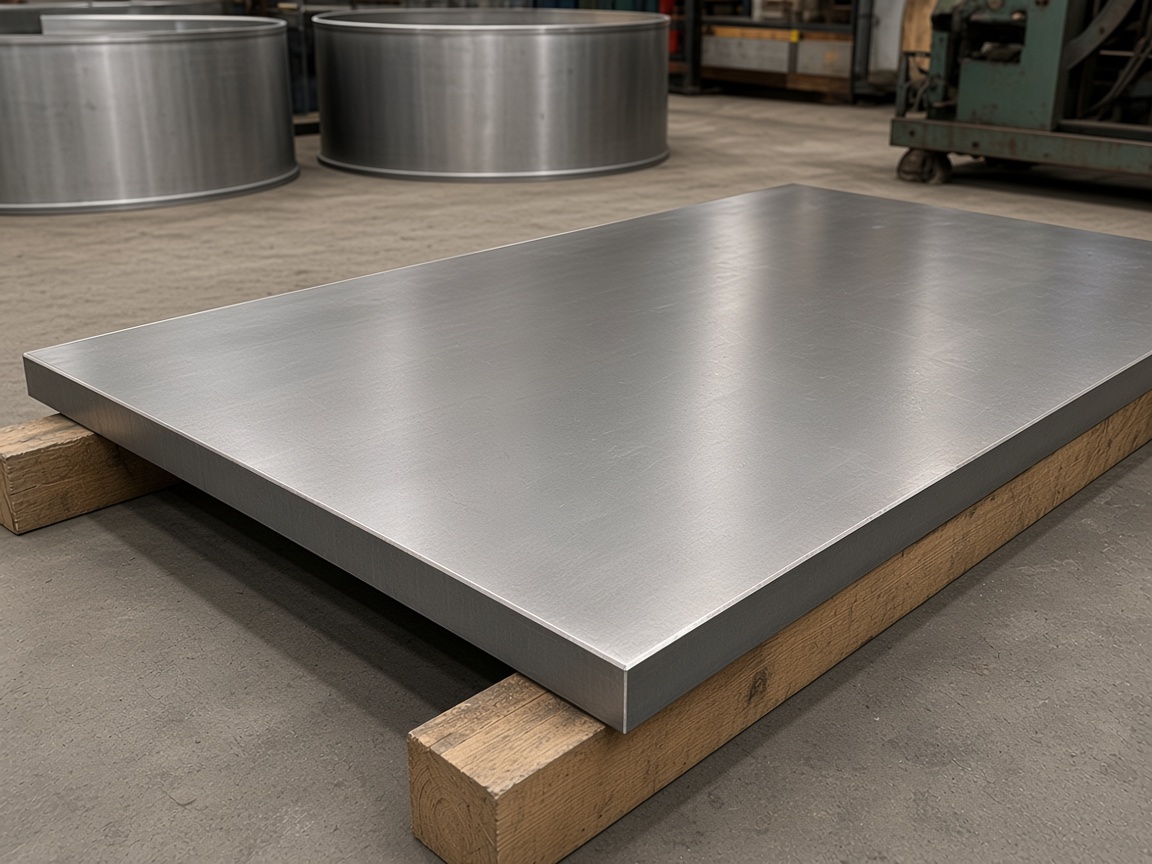
A516 Grade 70 + 90/10 copper-nickel clad steel plate bonds C70600 copper-nickel to a carbon steel pressure backing. Gangsteel supplies it to ASTM B432 for seawater-cooled heat-exchanger tube sheets, water boxes and desalination equipment.
Material Pair and Engineering Use
90/10 copper-nickel resists seawater corrosion and biofouling. As cladding it gives a tube sheet or water box a copper-nickel wetted face while A516 carries the pressure. Where flow velocity is higher, 70/30 copper-nickel (C71500) is the stronger alternative.
| Part | Designation | Role |
|---|---|---|
| Backing | ASTM A516/A516M-25 Grade 70 (Grade 60 by order) | Carries pressure and structural load |
| Cladding | ASTM B171/B171M UNS C70600 (90-10 copper-nickel) | Seawater-resistant face |
| Clad product | ASTM B432 (B432-25 current; clauses from B432-19) | Bond, tests and tolerances |
Backing Steel Chemical Composition
| Backing thickness | C max | Mn | Si | P max | S max |
|---|---|---|---|---|---|
| ≤12.5 mm | 0.27 | 0.85–1.20 | 0.15–0.40 | 0.025 | 0.025 |
| >12.5–50 mm | 0.28 | 0.85–1.20 | 0.15–0.40 | 0.025 | 0.025 |
| >50–100 mm | 0.30 | 0.85–1.20 | 0.15–0.40 | 0.025 | 0.025 |
| >100 mm | 0.31 | 0.85–1.20 | 0.15–0.40 | 0.025 | 0.025 |
The thickness column refers to the steel backing alone. A516/A516M-25 allows 0.06 percentage point more manganese for each 0.01 point of carbon below the maximum, capped at 1.50% (heat) and 1.60% (product). Where Grade 60 backing is ordered instead, its lower carbon maxima and its own 415–550 MPa tensile range apply; the two grades must not be mixed on one certificate.
Cladding Chemical Composition
| Element | Requirement, mass % |
|---|---|
| Cu | Remainder |
| Ni (incl. Co) | 9.0–11.0 |
| Fe | 1.0–1.8 |
| Mn | ≤1.0 |
| Zn | ≤1.0 |
| Pb | ≤0.05 |
The iron addition is essential to the seawater resistance of 90/10 copper-nickel; check it on the certificate. When the cladding will be welded, B171 also offers C70620, the 90-10 grade modified for welding with lower lead and limits on carbon, phosphorus and sulfur. The values were read from B171/B171M-18; B171/B171M-24 is the current edition.
Mechanical Properties of the Layers and the Bond
| Layer / reference | Condition | Yield / Rp0.2 min, MPa | Tensile, MPa | Elongation min |
|---|---|---|---|---|
| A516/A516M-25 Grade 70 [485] backing | Plate as ordered; normalized above 1.5 in. [40 mm] | 260 | 485–620 | 21% in 50 mm; 17% in 200 mm |
| C70600 facing, B171/B171M-18 | Plate to 2.5 in. [60 mm] | 105 | 275 min | 30% |
| C71500 alternative, B171/B171M-18 | Plate to 2.5 in. [60 mm] | 140 | 345 min | 30% |
For ASME boiler and pressure-vessel applications B171 requires the O25 (hot rolled and annealed) or O20 temper. The cladding values describe the copper-nickel stock; the clad plate tensile basis is the steel, and bond shear is a separate interface value.
| Item | Requirement | Order meaning |
|---|---|---|
| Tension test | To the A516 base-metal specification | CuNi does not raise the certified strength |
| Interface shear (when specified) | Minimum 12 000 psi (84 MPa) | Not applicable when the specified minimum cladding is 0.075 in. (1.9 mm) or less |
| Alternative bond test | Three bend tests with the cladding in compression | Used when specified or agreed instead of shear |
| Thickness tolerance (nominal) | Backing or total: 0.01 in. (0.25 mm) under; cladding: 0.03 in. (0.76 mm) under | Clause 9.3 |
| Tube-sheet flatness / diameter | B432 Tables 1 and 2 | Order machining separately |
B432-25 is the current ASTM edition; the clause text used here is from B432-19. Name the edition on the order.
Fabrication Points for This Pair
Copper alloys and steel mix poorly on fusion and give an iron-diluted layer, so seam and nozzle details are designed to restore a copper-nickel surface with a qualified procedure and filler.
Tube sheets are usually machined on the copper-nickel face; order a cladding thickness that still meets the minimum after machining and tube-hole drilling.
Bonding Process, Delivery and Heat Treatment
B432 requires heat treatments performed as needed so both metals meet their specifications and the bond resists disbonding. Thick copper-nickel clad tube sheets are mostly explosion bonded. Any post-weld cycle on the steel side is agreed with the manufacturer and confirmed on test coupons.
| Parameter | Order definition | Engineering note |
|---|---|---|
| Bonding route | Explosion bonding usually | Solid-state bond without melting |
| Layer thickness | Backing gage plus minimum facing gage in mm; single- or double-sided | Allow facing margin for grinding, forming and weld restoration; total gage alone does not define the plate. |
| Final thermal condition | As-clad or agreed condition; simulated PWHT if required | Keep the cladding within B171 after any cycle |
| Surface and edges | Clean face; machined flat for tube sheets if ordered | Machined flatness and diameter ordered separately |
| Lead time | Confirmed against the enquiry | Depends on plate area, layer gages, quantity, thermal condition and witnessed inspection. |
Inspection and Certification
The CuNi clad inspection plan covers the cladding temper and chemistry, the base-metal tensile test and the B432 bond test chosen on the order.
| Check | What to specify | Why it matters |
|---|---|---|
| Layer identity | Separate backing and facing certificates with heat numbers | No blended composite analysis |
| Cladding temper | O25 or O20 for ASME work | B171 requirement |
| Bond test | Shear (12 ksi / 84 MPa) or three bend tests | State which on the order |
| Ultrasonic | Coverage and acceptance level agreed | Bond area |
| Dimensions | Thickness, flatness and diameter per B432 tables | Tube-sheet machining |
Frequently Asked Questions
Why is 90/10 copper-nickel used for condenser tube sheets?
It resists seawater corrosion and biofouling and is compatible with copper-nickel tubes. Cladding it on A516 avoids a solid copper-nickel tube sheet.
When is 70/30 copper-nickel preferred?
C71500 has higher nickel and higher minimum strength and is preferred where water velocity or erosion is higher.
Is shear testing required under B432?
Only when the order specifies it. The minimum is 12 000 psi (84 MPa); three bend tests are the alternative.
Can a 2 mm copper-nickel layer be shear tested?
B432 makes the shear test not applicable when the specified minimum cladding is 0.075 in. (1.9 mm) or less, so a bend test would be used.
What iron content should the C70600 face have?
B171/B171M-18 requires 1.0–1.8% iron, which is important for its seawater resistance.
Does the cladding temper matter for ASME work?
Yes. B171 requires the O25 or O20 temper for ASME boiler and pressure-vessel applications.
Is the clad plate made by roll bonding?
Thick copper-nickel tube sheets are mostly explosion bonded. B432 also allows roll bonding and weld overlay when the product conforms.
What should a copper-nickel clad enquiry include?
B432 edition, C70600 or C71500, backing grade and thickness, minimum cladding thickness after machining, size or diameter, quantity, bond test, ultrasonic level and machining. Lead time is confirmed against the enquiry.
Related Materials
ASTM B432 copper alloy clad plate; A516 Grade 70 + titanium clad plate; all clad steel plate combinations.