


Clad Steel Plate
GB/T 8165 Stainless Clad Steel Plate: 2025 Edition
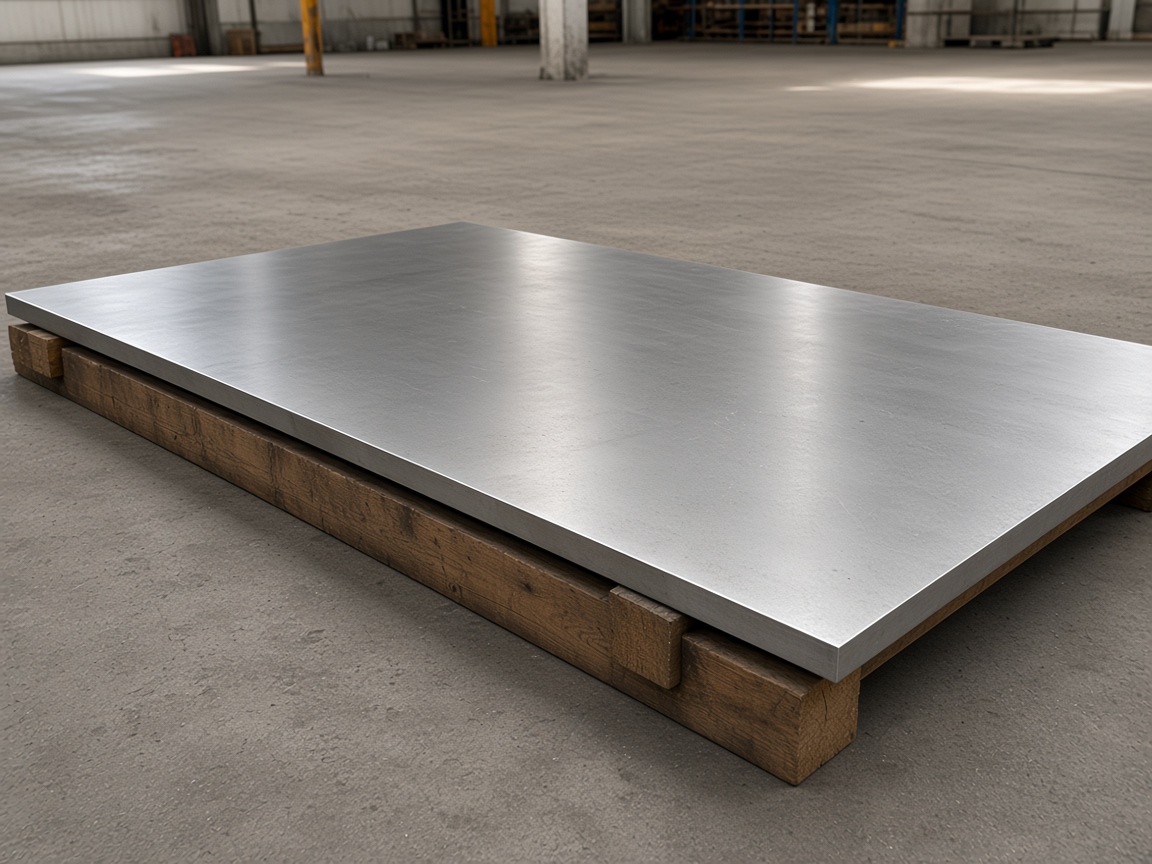
GB/T 8165-2025 covers stainless steel clad plate, sheet and strip made by explosive bonding, explosion followed by rolling, or roll bonding, with stainless facing on carbon, low-alloy or alloy steel backing. Gangsteel uses it to define the finished bonded product separately from the standards for the two constituent layers.
Standard Edition and Material Structure
GB/T 8165-2025 took effect on 1 January 2026 and replaced GB/T 8165-2008. It is not a Q345R-only standard and does not define one exhaustive series of fixed backing-plus-facing grades. Table 2 gives typical facing and backing materials; clause 7.1 permits other grades requested by the purchaser. The 2025 revision removed the earlier scope thickness-range provision, so an old catalogue thickness range should not be presented as the new standard's scope limit.
| Item | Definition | Example |
|---|---|---|
| Finished product | GB/T 8165-2025 plus quality grade and route | Agreed Grade 1, 2 or 3; explosive, combined or rolled route |
| Backing | Product standard, edition, grade and condition | Q345R to GB/T 713.2-2023 with GB/T 713.1 |
| Facing | Product standard, edition and grade | 022Cr19Ni10 / S30403 to GB/T 4237-2015 by purchaser request |
| Dimensions | Facing + backing thickness notation, clad sides and usable size | Minimum facing after specified finishing must be clear |
Chemical Composition Is Specified for Each Layer
| Layer / source | Element | Limit, mass % | Boundary |
|---|---|---|---|
| Q345R; GB/T 713.2-2023 clause 7.1.2 | C | ≤0.20 through 60 mm; ≤0.22 above 60 mm | Backing thickness; other elements follow the ordered standard |
| 022Cr19Ni10 / S30403; GB/T 4237-2015 | C | ≤0.030 | Facing chemistry |
| 022Cr19Ni10 / S30403; GB/T 4237-2015 | Cr | 17.50–19.50 | GB chemistry limits, not the A240 304L range |
| 022Cr19Ni10 / S30403; GB/T 4237-2015 | Ni | 8.00–12.00 | Facing chemistry |
This is a deliberately selected chemistry table. The backing and facing still require their complete material certificates. A matching S30403 code does not make the GB product specification identical to ASTM A240 Type 304L.
Finished-Composite Mechanical Properties
| Property | Requirement / scope | Important distinction |
|---|---|---|
| Interface shear, Grades 1 and 2 | ≥250 MPa | Interface property; not backing or composite tensile strength |
| Interface shear, Grade 3 | ≥210 MPa | Different quality grade; do not substitute ASTM's 140 MPa criterion |
| Yield / proof strength | Reference the applicable backing product-standard thickness requirement and the permitted Table 4 footnote calculation | Record the selected acceptance basis; do not use a universal 345 MPa for every thickness |
| Tensile strength | Backing-product thickness lower limit and no more than 35 MPa above its upper limit, subject to Table 4 footnote provisions | The standard also provides a constituent-thickness calculation for the lower limit; design allowables are separate |
| Elongation | Not less than the relevant backing product-standard requirement | Specimen basis must be stated |
| Impact | Relevant backing product specification; no facing impact test | Where backing standard has no impact requirement, Table 4 allows omission |
| Double-sided plate | Test interface shear for both bonded faces | A result from one face does not certify the other |
The permitted strength calculations in Table 4 use each layer's minimum strength and thickness; they are not permission to average a delivered heat analysis or invent a code design allowable. The test report should identify whether a backing-based limit or the permitted constituent calculation was used.
Bond Integrity and Ultrasonic Examination
| Grade | Bonded-area rate | Reportable individual unbonded area limit |
|---|---|---|
| 1 | 100% under the standard's indication-counting rules | Individual unbonded regions within the Table 3 exclusion (length ≤50 mm and area ≤900 mm²) are not counted; larger reportable regions do not satisfy Grade 1 |
| 2 | ≥99% | Length ≤50 mm and area ≤2000 mm² |
| 3 | ≥95% | Length ≤75 mm and area ≤4500 mm² |
The standard groups adjacent unbonded areas when their minimum separation is not more than 20 mm, using the combined area. Unbonded areas below 900 mm² need not be recorded. Therefore Grade 1 terminology is not a claim that every microscopic point has been demonstrated bonded. For backing thickness above 4 mm, clause 7.2.1 requires 100% ultrasonic examination of each plate under GB/T 7734. For backing at or below 4 mm, ultrasonic examination and sampling are agreed as specified using GB/T 8651.
Why S30403 Must Be Written Explicitly
The 2025 Table 2 lists S30408 and other typical facing codes, but does not explicitly list S30403. A Q345R plus 022Cr19Ni10/S30403 purchase should therefore invoke the purchaser-request provision in clause 7.1 and name the facing product standard and edition. Do not silently substitute S30408, an ASTM UNS code or the generic word "304" for the ordered low-carbon GB grade.
Bonding Process, Delivery and Heat Treatment
Explosion bonding joins prepared metal surfaces by a controlled high-velocity collision. Hot-roll bonding establishes the metallurgical bond during rolling of a prepared assembly; explosion bonding followed by rolling is a separate combined route. These are integrally bonded plates, not loose liners, adhesive laminates or chromium-carbide weld-overlay wear plates.
GB/T 8165-2025 distinguishes explosive bonding, explosion-plus-rolling and roll bonding, and specifies heat-treated delivery, with hot-rolled, normalized-rolled or thermomechanically rolled delivery also permitted. The selected Q345R condition and stainless condition must be agreed as part of one manufacturing route.
| Parameter | Required order definition | Technical note |
|---|---|---|
| Bonding route | Explosion bonded, hot-roll bonded, or combined route | Route capability depends on the material pair, area, layer ratio and final condition. No blanket stock range is implied. |
| Thickness | Backing thickness + minimum facing thickness, in mm; identify one or two clad faces | Reserve facing allowance for grinding, forming and weld restoration. Total thickness alone is insufficient. |
| Final thermal condition | Named delivery condition and any simulated fabrication/PWHT cycle | Test in the representative final condition; agree number and duration of simulated cycles where required. |
| Heat-treatment temperature / hold | Qualified procedure for the selected pair and thickness | No single temperature, hold time or cooling rate is specified here for all clad plates. |
| Surface and cutting | As agreed: pickled, ground or specified finish; edge machining and protection | Prevent carbon-steel contamination of the corrosion-resistant face. |
| Lead time | Confirmed against the enquiry and agreed inspection plan | Not a fixed number of days for every thickness or bonding route. |
An order for Q345R plus S30403 must identify whether the facing product standard is GB/T 4237, GB/T 713.7 or another agreed specification. The code S30403 alone does not define a pressure-equipment plate certificate or a finished-composite delivery condition.
Inspection, Repairs and Traceability
Agree the quality grade, delivery condition, minimum facing thickness, examination reports and any corrosion test before manufacture. The standard permits controlled weld repair of nonconforming bond areas subject to its procedure, examination and documentation provisions; a no-repair project restriction must be explicit. Repair records belong in the quality documentation. Intergranular corrosion and pitting tests are agreed requirements, not automatic claims for every order.
Frequently Asked Questions
Does GB/T 8165-2025 prescribe one unique set of composite steel grades?
No. It combines specified constituent materials with a finished-product quality grade and manufacturing route. Table 2 identifies typical materials and clause 7.1 permits other purchaser-requested grades; this is not a fixed list equivalent to a simple structural-steel grade series.
Can S30403 be used even though it is not explicitly in Table 2?
Yes, through the purchaser-request provision for grades outside the table. Name 022Cr19Ni10/S30403, its product standard and edition, and the Q345R backing specification in the contract instead of presenting S30403 as an explicitly listed Table 2 row.
Does Grade 1 mean absolutely no unbonded indication of any size?
No. The standard's area and reporting rules apply. The Grade 1 bonded-area statement must be read together with its indication-counting provisions; it is not a guarantee about every microscopic point at the interface.
Is 250 MPa the tensile strength of Q345R clad plate?
No. It is the minimum interface shear strength for Grades 1 and 2. Finished-composite yield, tensile, elongation and impact requirements are separately defined by Table 4 and its notes using the constituent product standards.
When is 100% ultrasonic examination required?
For backing thickness greater than 4 mm the cited clause requires every plate to receive 100% examination under GB/T 7734. At backing thickness of 4 mm or less, the standard provides for purchaser/manufacturer agreement and the specified GB/T 8651 approach.
Can I apply ASTM A264 acceptance values to a GB/T 8165 order?
Not automatically. Bond shear, quality classes, specimen rules and examination provisions differ. If a project requires dual compliance, define and demonstrate both sets of requirements; a casual standard cross-reference is not dual certification.
Are corrosion testing and weld repairs always included or always prohibited?
Neither assumption is safe. The standard has agreed corrosion-testing provisions and controlled repair requirements. State the tests, acceptance criteria, repair restrictions and reporting requirements in the order so the manufacturing and inspection plans match the project.
What fixes the delivery date for a GB clad plate enquiry?
Quantity, dimensions, facing availability, route, final condition, examination class, testing and any witnessed inspection all affect the programme. Gangsteel confirms lead time against the enquiry after the material and inspection requirements are defined.
Related Material Pair
Q345R + S30403 stainless clad steel plate; Clad Steel Plate range.