Product List
Gangsteel Material Solution
Email: admin@gangsteel.com
Sales: jack@gangsteel.com
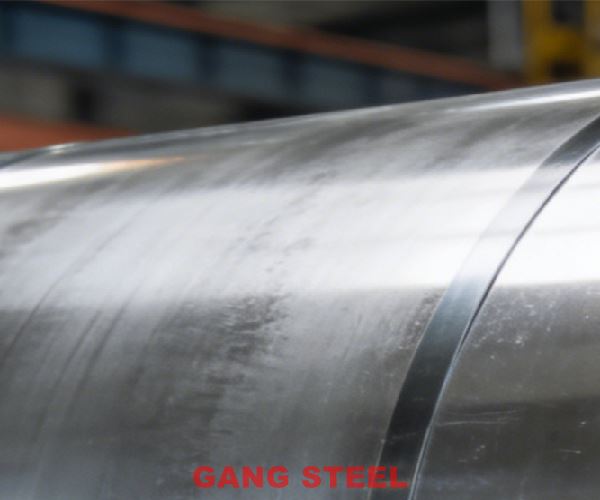
Short answer:No, 430 stainless steel cannot be hardened by heat treatment (quenching and tempering) the way martensitic grades like 410, 420 or 440C can. However, it can be moderately hardened by cold working (cold rolling, drawing, bending, etc.).
Gangsteel supplies 430 stainless steel (AISI 430 / UNS S43000 / SUS430 / 1.4016 / X6Cr17) in the annealed condition for maximum formability. We often explain this exact point to customers who are used to martensitic grades and want to increase hardness.
430 is a classic ferritic stainless steel with a body-centered cubic (BCC) crystal structure that stays ferritic from room temperature all the way up to its melting range (~1425–1510 °C).
Unlike martensitic grades (which form austenite at high temperature and then transform to hard martensite upon rapid cooling), 430 does not form austenite during heating. Therefore:
Typical hardness in the annealed condition:
After attempted heat treatment: almost no increase.
430 responds to cold deformation like most ferritic and austenitic stainless steels — hardness increases as dislocations pile up.
Approximate hardness increase with cold reduction:
|
Cold Reduction % |
Typical Hardness (HRB) |
Approximate Vickers (HV) |
|---|---|---|
|
Annealed (0%) |
80–88 |
180–200 |
|
20% |
92–95 |
200–220 |
|
40% |
95–98 |
220–240 |
|
60% |
98–102 (≈20 HRC) |
240–260 |
Even at heavy cold reduction, maximum hardness remains modest — usually not exceeding 260–280 HV / ~25–28 HRC. This is far below what martensitic grades can achieve after quenching and tempering (40–55 HRC).
Gangsteel supplies 430 in the soft annealed condition so you can form it easily, then let you or your fabricator apply controlled cold work if moderate hardness is needed.
Use 430 when you need:
Use martensitic grades (410, 420, 440C) when you need:
Gangsteel also supplies these martensitic grades when customers need true hardening capability.
For the same high-quality 430 material, please see our product pages:
Can I harden 430 stainless steel by heat treatment?No — it is ferritic and does not form martensite.
How hard can I make 430 by cold working?Up to ~25–28 HRC / 260–280 HV after heavy reduction.
Can I anneal 430 after cold working to soften it again?Yes — full annealing at 760–815 °C restores full softness and ductility.
Is 430 still magnetic after cold working?Yes — it remains strongly magnetic in all conditions.
Does Gangsteel supply pre-hardened 430?No — we supply annealed coil/sheet ready for your own cold working or forming. If you need true hardening, we recommend switching to 410 or 420.
Contact our technical sales team today for current pricing, samples, or advice on achieving the right hardness level with 430 cold rolled stainless steel. Let Gangsteel help you source genuine top Chinese mill material at factory prices.
We look forward to supporting your success.
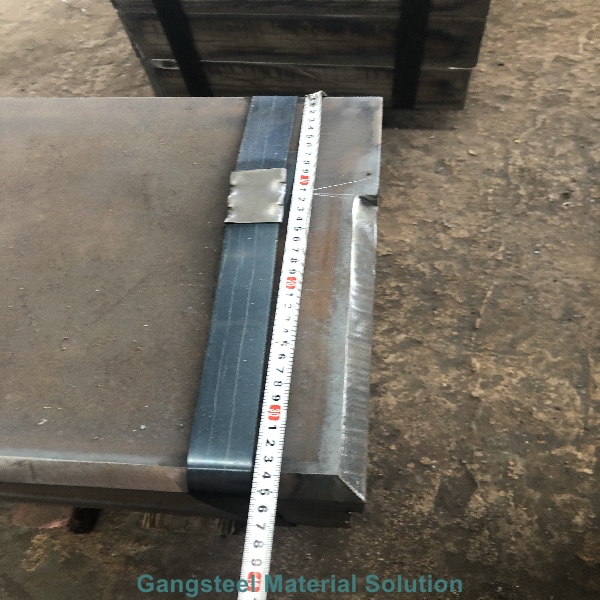
ASTM A516 GR 70 equivalent materials is such as ASME SA516 GR 70, EN 10028 P355GH, and BS1501 224-490 A & B, sh
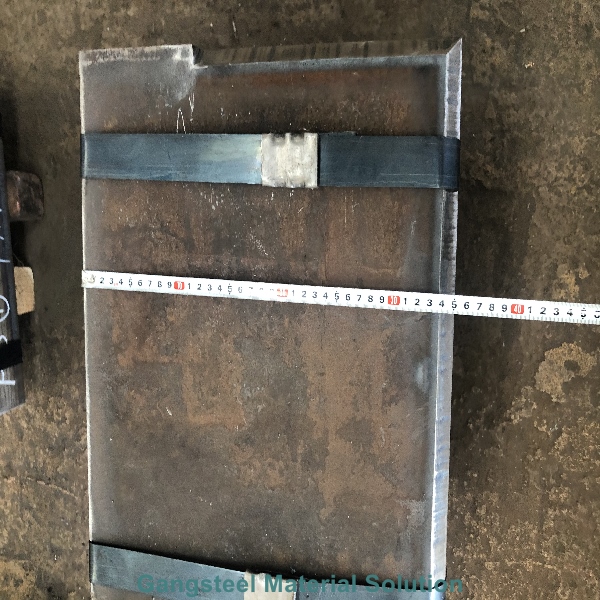
we supply high-quality A516 Gr 70 steel plate for pressure vessel applications and other standards like ASTM A2
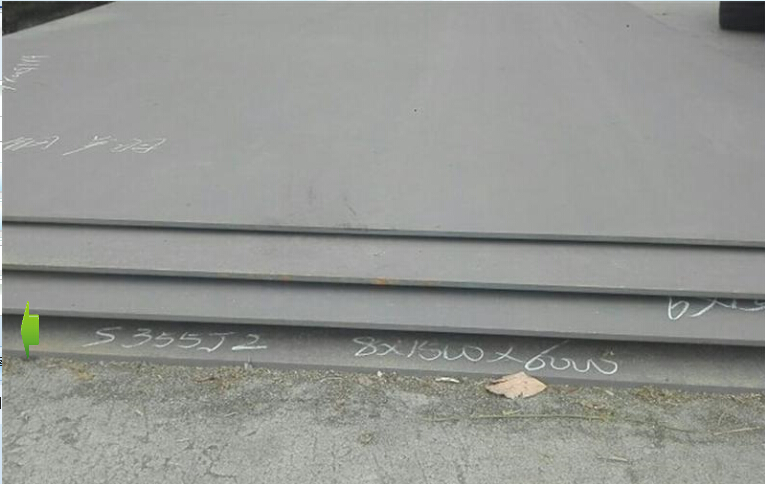
EN10028-2 P355GH for High-Strength Low-Alloy Columbium-Vanadium Structural Steel EN10025-2 S355J2 Structural St

We export A240 304L Stainless Coil 2B, NO.1 No.4 surface, the thickness 0.1mm to 3mm, 3mm to 22mm, Mother mill


