Product List
Gangsteel Material Solution
Email: admin@gangsteel.com
Sales: jack@gangsteel.com
At Gangsteel, as a professional 430 stainless steel supplier and authorized Yongjin 430 agent, we answer this exact question hundreds of times every month from customers across Europe, North America, the Middle East, Southeast Asia, and beyond: “Can 430 stainless steel rust?”
Our answer is always clear, honest, and based on real production data and customer performance: Yes, 430 stainless steel can rust — but only under specific aggressive conditions. In the vast majority of everyday applications (indoor, urban, mild outdoor, kitchen, appliance, furniture, and architectural use), genuine Yongjin Mill 430 stainless steel shows excellent rust resistance and remains bright and stain-free for 10–20+ years with normal care.
We supply millions of tons of 430 stainless steel every year because it delivers reliable, long-term performance at 30–50% lower cost than 304. When customers choose 430 instead of 304 for the right applications, they save significant money without compromising quality or appearance. That is why we confidently say 430 is not only “good enough” — it is often the smartest and most practical choice.
We produce 430 stainless steel in full compliance with all major international standards:
430 is a ferritic stainless steel with 16–18% chromium and no nickel. The chromium forms a thin, invisible, self-healing passive oxide layer on the surface that protects the steel from oxidation (rust) in normal air. This layer is very effective in dry or mildly humid environments.
However, the passive layer on 430 is not as robust as on 304 or 316 because it lacks nickel and molybdenum. In aggressive conditions — high chlorides (salt water, swimming pools, road salt, bleach), strong acids, or prolonged moisture with contaminants — the layer can break down locally, leading to rust spots.
In practice, this means:
From our export experience and customer feedback, over 85% of applications fall into the “normal” category, where 430 performs beautifully and offers outstanding value.
For the same high-quality material, please see our a240 Type_430 stainless steel sheet.
|
Element |
Content (wt%) |
|---|---|
|
Carbon (C) |
≤0.12 |
|
Chromium (Cr) |
16.00–18.00 |
|
Manganese (Mn) |
≤1.00 |
|
Silicon (Si) |
≤1.00 |
|
Phosphorus (P) |
≤0.040 |
|
Sulfur (S) |
≤0.030 |
|
Nickel (Ni) |
≤0.75 |
The 16–18% chromium is the main reason 430 provides good rust resistance in everyday conditions. The absence of nickel keeps the price stable and affordable.
|
Property |
Minimum Value |
Typical Range |
|---|---|---|
|
Yield Strength (0.2% offset) |
≥205 MPa |
220 – 280 MPa |
|
Tensile Strength |
≥450 MPa |
450 – 600 MPa |
|
Elongation (50 mm gauge) |
≥22% |
25 – 35% |
|
Hardness (Rockwell B) |
≤89 HRB |
80 – 88 HRB |
These properties ensure the material remains strong and formable while delivering reliable rust resistance.
For European or DIN-standard projects, please see our EN10088 2 X6Cr17 stainless steel sheet and DIN 1.4016 stainless steel sheet.
Our customers’ long-term results speak louder than theory:
Only in coastal or heavy road-salt environments do we see faster surface rust — and in those cases we always recommend 304 or 316.
For Chinese-standard projects, the identical material is also available under GB/T 10Cr17 1Cr17 stainless steel sheet.
At Gangsteel we always share these simple, proven steps to maximize rust resistance:
Following these steps, 430 stainless steel from Yongjin Mill will remain bright and rust-free for many years in normal environments.
For Japanese-standard requirements, please see our JIS G4305 SUS 430 stainless steel sheet.
We supply 430 stainless steel in the following range optimized for rust resistance:
As a professional 430 stainless steel supplier and 430 stainless steel exporter, Gangsteel offers genuine Yongjin Stainless Steel (Yongjin Mill) material with full traceability, flexible MOQ (from 5 tons), fast delivery (15–30 days), and complete export documentation. We provide technical support to help you get the best rust resistance and longest service life from 430 stainless steel.
Can 430 stainless steel rust?Yes, but only in aggressive chloride or marine environments. In normal use it resists rust very well.
How long does 430 last without rusting?10–20+ years in indoor or mild outdoor conditions with proper care.
Is 430 better than 304 for rust resistance?No — 304 is better in harsh environments. 430 is better for cost and performance in mild conditions.
Can I use 430 outdoors?Yes, in non-coastal urban or rural areas. For coastal use, we recommend 304 or 316.
Does the finish affect rust resistance?No — all finishes have identical corrosion resistance; the base alloy determines performance.
Contact our technical sales team today for current pricing, free samples, or a detailed rust-resistance comparison for your specific application. Tell us your environment and end use — we will give you a clear recommendation and help you choose the right grade and finish to keep your products looking new for years.
At Gangsteel, we don’t just sell stainless steel. We help you choose materials that perform reliably and save you money. Let us prove why 430 stainless steel from Yongjin Mill is good quality and the smart choice for your project.
We look forward to supporting your success.
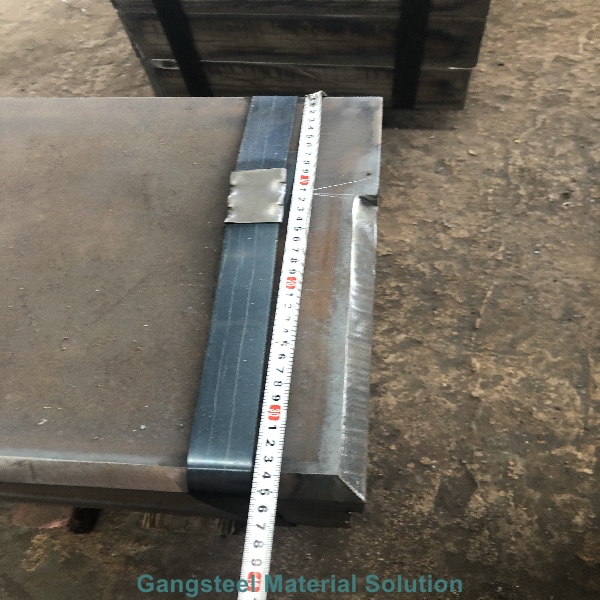
ASTM A516 GR 70 equivalent materials is such as ASME SA516 GR 70, EN 10028 P355GH, and BS1501 224-490 A & B, sh
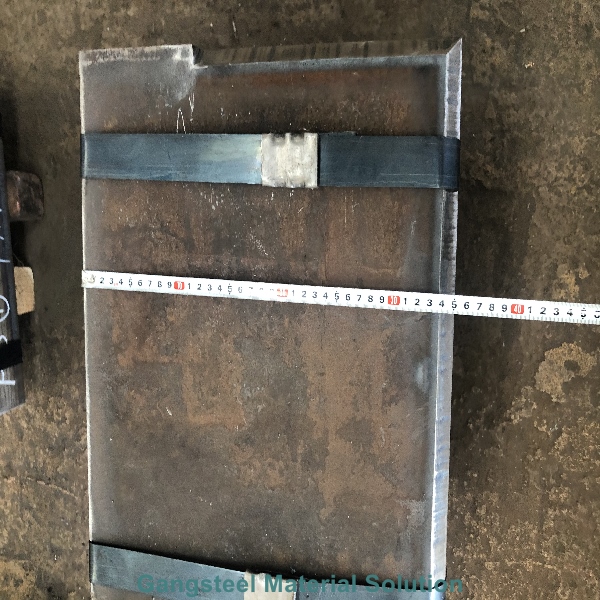
we supply high-quality A516 Gr 70 steel plate for pressure vessel applications and other standards like ASTM A2
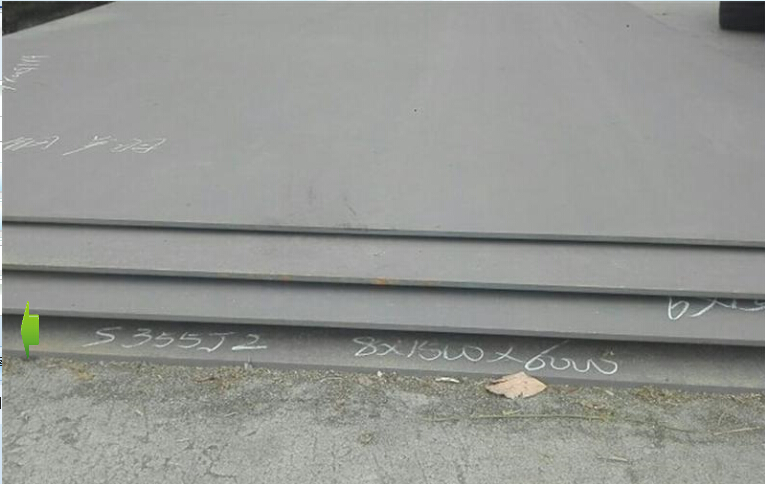
EN10028-2 P355GH for High-Strength Low-Alloy Columbium-Vanadium Structural Steel EN10025-2 S355J2 Structural St

We export A240 304L Stainless Coil 2B, NO.1 No.4 surface, the thickness 0.1mm to 3mm, 3mm to 22mm, Mother mill


