


Clad Steel Plate
A516 Grade 70 + 2205 Duplex Stainless Clad Steel Plate
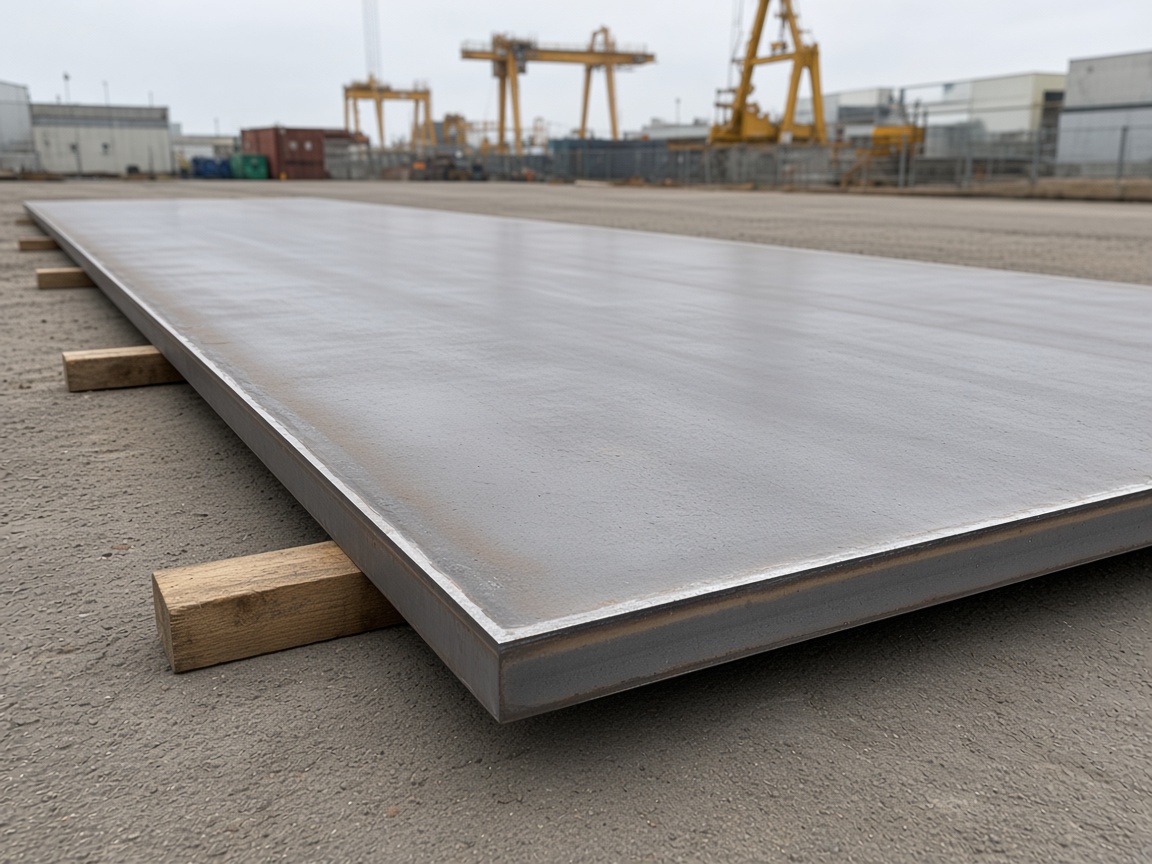
A516 Grade 70 + 2205 duplex clad steel plate bonds austenitic-ferritic stainless (S32205 or S31803) to a carbon steel pressure backing. Gangsteel supplies it to ASTM A264 for chloride-bearing process and seawater-related service.
Material Pair and Engineering Use
Duplex 2205 combines higher chromium, molybdenum and nitrogen than 316L with a two-phase structure, giving better resistance to chloride pitting and stress-corrosion cracking. Clad plate is used for desalination, oil and gas separators, pulp and chemical vessels where a solid duplex wall would be expensive. The order must say whether S32205, S31803 or a plate meeting both is required.
| Part | Designation | Role |
|---|---|---|
| Backing | ASTM A516/A516M-25 Grade 70 (Grade 60 by order) | Carries pressure and structural load |
| Cladding | ASTM A240/A240M-25a 2205 (UNS S32205) or UNS S31803 | Duplex corrosion-resistant face |
| Clad product | ASTM A264 (A264-12(2026) scope; clauses from 12(2019)) | Duplex heat treatment by agreement |
Backing Steel Chemical Composition
| Backing thickness | C max | Mn | Si | P max | S max |
|---|---|---|---|---|---|
| ≤12.5 mm | 0.27 | 0.85–1.20 | 0.15–0.40 | 0.025 | 0.025 |
| >12.5–50 mm | 0.28 | 0.85–1.20 | 0.15–0.40 | 0.025 | 0.025 |
| >50–100 mm | 0.30 | 0.85–1.20 | 0.15–0.40 | 0.025 | 0.025 |
| >100 mm | 0.31 | 0.85–1.20 | 0.15–0.40 | 0.025 | 0.025 |
The thickness column refers to the steel backing alone. A516/A516M-25 allows 0.06 percentage point more manganese for each 0.01 point of carbon below the maximum, capped at 1.50% (heat) and 1.60% (product). Where Grade 60 backing is ordered instead, its lower carbon maxima and its own 415–550 MPa tensile range apply; the two grades must not be mixed on one certificate.
Cladding Chemical Composition
| Element | Requirement, mass % |
|---|---|
| C | ≤0.030 / ≤0.030 |
| Mn | ≤2.00 / ≤2.00 |
| P | ≤0.030 / ≤0.030 |
| S | ≤0.020 / ≤0.020 |
| Si | ≤1.00 / ≤1.00 |
| Cr | 22.0–23.0 / 21.0–23.0 |
| Ni | 4.5–6.5 / 4.5–6.5 |
| Mo | 3.0–3.5 / 2.5–3.5 |
| N | 0.14–0.20 / 0.08–0.20 |
Values are shown as S32205 / S31803. S32205 has the tighter chromium, molybdenum and nitrogen ranges; a heat meeting S32205 also falls inside S31803 for these elements, but the certificate must still state the ordered UNS number.
Mechanical Properties of the Layers and the Bond
| Layer / reference | Condition | Yield / Rp0.2 min, MPa | Tensile, MPa | Elongation min |
|---|---|---|---|---|
| A516/A516M-25 Grade 70 [485] backing | Plate as ordered; normalized above 1.5 in. [40 mm] | 260 | 485–620 | 21% in 50 mm; 17% in 200 mm |
| S32205 facing, A240/A240M-25a | Solution-annealed plate | 450 | 655 min | 25% in 50 mm |
| S31803 facing, A240/A240M-25a | Solution-annealed plate | 450 | 620 min | 25% in 50 mm |
The facing row is the annealed flat-product reference of its own specification. It is not added to the backing strength, and bond shear is not a substitute for backing tensile strength. Cladding strength counts in design only where the construction code allows it. A240 sets a maximum hardness of 293 HBW / 31 HRC for both duplex grades.
| Item | Requirement or condition | Order meaning |
|---|---|---|
| Tensile section | Grade 70 backing minima (485 MPa tensile, 260 MPa yield) fall within the 70 ksi / 40 ksi limits; total gage then decides | Up to 1.5 in. (about 38 mm) total gage, test the composite section unless the facing is declared corrosion allowance only; above that gage, test the backing alone. |
| Composite tensile ceiling | Up to 5 ksi (35 MPa) above the backing maximum | Applies only to the composite-section route; it is not a design strength. |
| Interface shear (when specified) | 20 ksi (140 MPa) minimum | Bond property only. Below or at 0.075 in. (1.9 mm) facing, shear testing needs agreement; three bond bend tests are the alternative route. |
| Bond area | Ultrasonic method, coverage and acceptance class agreed on the order | One shear coupon does not show that the whole 2205 face is bonded. |
| Phase balance / intermetallics | Ferrite measurement or A923 test only if ordered | Detects harmful phases after heat treatment |
Inch-pound values govern in the ASTM clad specifications; metric figures are conversions. The scope of A264 is confirmed against the A264-12(2026) listing, while the clause wording above was read from the 12(2019) text, so the purchase order should name the edition it invokes.
Fabrication Points for This Pair
Duplex faces need a welding procedure controlling heat input and interpass temperature so the weld keeps a sound ferrite-austenite balance; a qualified duplex or over-alloyed filler is used for the cap over a transition layer.
Order a minimum duplex thickness that still leaves corrosion allowance after grinding, and keep the face separate from carbon steel tools.
Bonding Process, Delivery and Heat Treatment
A264-12(2019) does not apply the austenitic heat treatment to duplex facings automatically; the heat-treated condition of a duplex face is agreed between purchaser and manufacturer. The cycle must suit the duplex face, avoid intermetallic phase formation and leave the A516 backing within its normalized requirements.
| Parameter | Order definition | Engineering note |
|---|---|---|
| Bonding route | Explosion bonded or hot-roll bonded | Both are used for duplex; the cooling path after rolling matters |
| Layer thickness | Backing gage plus minimum facing gage in mm; single- or double-sided | Allow facing margin for grinding, forming and weld restoration; total gage alone does not define the plate. |
| Final thermal condition | Agreed solution-annealed condition, plus any simulated PWHT | Duplex is sensitive to time at intermediate temperature |
| Surface and edges | Pickled or as agreed | Face protected from iron |
| Lead time | Confirmed against the enquiry | Depends on plate area, layer gages, quantity, thermal condition and witnessed inspection. |
Post-weld heat treatment of the vessel can affect both the duplex face and the bond. If PWHT is required by the code for the backing, agree the cycle and order simulated-cycle coupons before production.
Inspection and Certification
Duplex clad plate inspection should add microstructure-related checks to the standard bond and tensile tests when the project needs them.
| Check | What to specify | Why it matters |
|---|---|---|
| Layer identity | Separate backing and facing certificates with heat numbers | No blended composite analysis |
| Ferrite content | Method and acceptance range, if ordered | Phase balance |
| A923 test | Method and acceptance, if ordered | Detrimental intermetallic phases |
| Bond tests | Shear or bond bend; ultrasonic acceptance level | Interface and area |
| Tensile | Composite or backing-only per A264 | Section declared on report |
Frequently Asked Questions
Should I order S32205 or S31803 duplex cladding?
S32205 has narrower chromium, molybdenum and nitrogen ranges and higher minimum tensile strength. Many projects specify S32205; others accept S31803. State the UNS number clearly.
Why is the heat treatment of duplex clad plate agreed separately?
A264 treats duplex differently from austenitic grades. The duplex face needs a condition that avoids intermetallic phases, and the backing must still meet A516.
Is 2205 clad plate better than 316L clad plate in chlorides?
Duplex 2205 has higher chromium, molybdenum and nitrogen and generally better chloride pitting and stress-corrosion resistance. Final selection depends on the process conditions.
Can the duplex face be counted in the pressure calculation?
Only where the construction code and design allow it. The certified tensile basis comes from A264 and the backing specification.
What tests show the duplex face was not damaged by heat treatment?
Ferrite measurement and A923 testing can be ordered to check for detrimental phases. They are not automatic under A264.
Does PWHT harm a 2205 clad plate?
It can, if the cycle holds the duplex face in a temperature range where harmful phases form. Agree the cycle and test simulated coupons before production.
What hardness limit applies to the duplex face?
A240/A240M-25a sets 293 HBW or 31 HRC maximum for S32205 and S31803.
What should a 2205 clad enquiry include?
UNS number, A264 edition, backing grade and thickness, minimum duplex thickness, size, quantity, heat-treatment and PWHT requirements, bond, ultrasonic and phase tests. Lead time is confirmed against the enquiry.
Related Materials
ASTM A264 stainless clad plate; Q345R + S22053 duplex clad plate; all clad steel plate combinations.