


Clad Steel Plate
Q345R + S22053 Duplex Stainless Clad Steel Plate
Q345R + S22053 clad steel plate bonds 022Cr23Ni5Mo3N duplex stainless to a Q345R pressure-vessel backing under GB/T 8165-2025. Gangsteel supplies it with the duplex face condition and bond grade agreed on the order.
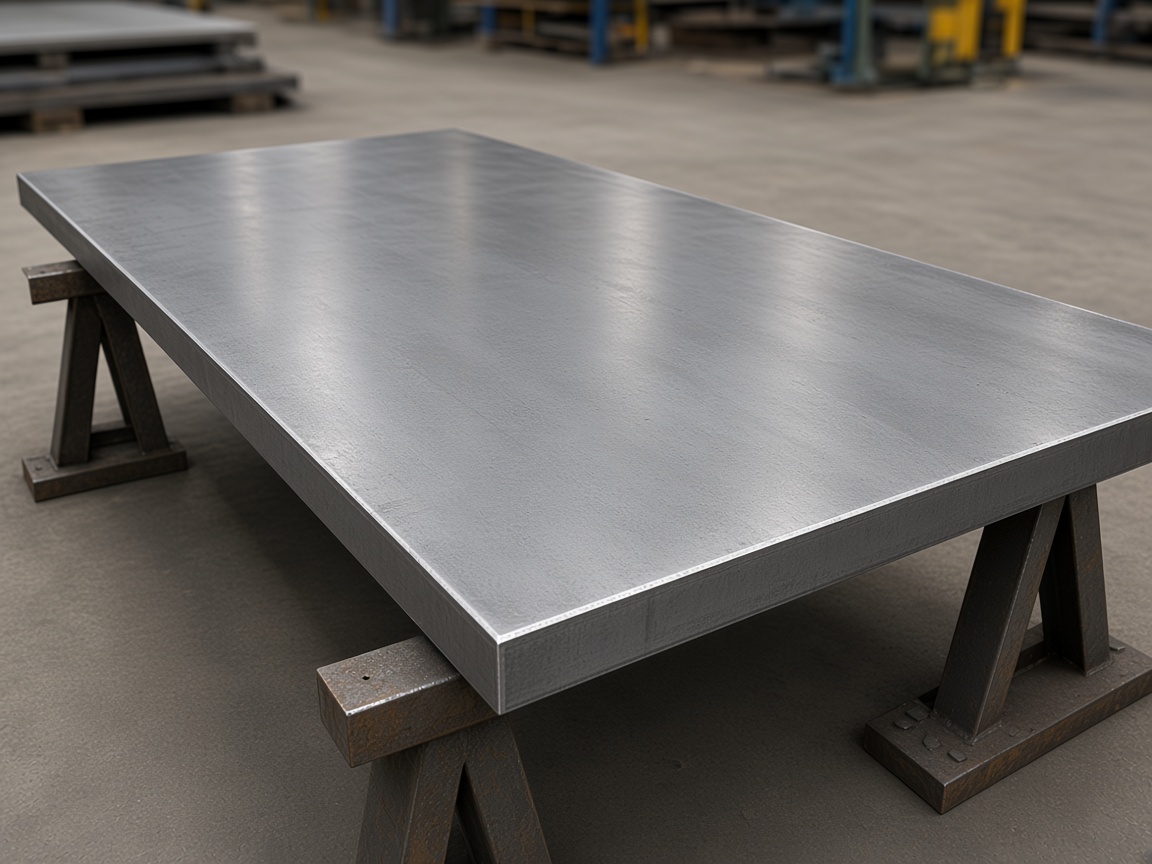
Material Pair and Engineering Use
S22053 (022Cr23Ni5Mo3N) is the GB 2205-type duplex stainless steel. On Q345R it gives a chloride-resistant face for desalination, chemical, and pulp and paper vessels at lower cost than solid duplex. GB/T 8165-2025 lists S22053 among its typical cladding grades.
| Part | Designation | Role |
|---|---|---|
| Backing | Q345R, GB/T 713.2-2023 | Pressure and structural load |
| Cladding | S22053 (022Cr23Ni5Mo3N), GB/T 4237-2015 | Corrosion-resistant face |
| Clad product | GB/T 8165-2025 (effective 2026-01-01); S22053 is a Table 2 typical cladding grade | Bond grade, tests and marking |
Backing Steel Requirements
| Item | Requirement | Boundary |
|---|---|---|
| Carbon (GB/T 713.2-2023, clause 7.1.2) | ≤0.20% up to 60 mm; ≤0.22% above 60 mm | Backing thickness, not total clad gage |
| Strength and impact | Per GB/T 713.2-2023 table for the actual backing thickness and delivery condition | No single 345 MPa figure applies at every thickness |
Q345R is ordered to GB/T 713.2-2023 together with GB/T 713.1. Its strength and impact values depend on backing thickness and delivery condition, so they are taken from the standard table for the actual thickness rather than quoted as one figure.
Cladding Chemical Composition
| Element | Requirement, mass % |
|---|---|
| C | ≤0.030 |
| Si | ≤1.00 |
| Mn | ≤2.00 |
| P | ≤0.030 |
| S | ≤0.020 |
| Ni | 4.50–6.50 |
| Cr | 22.00–23.00 |
| Mo | 3.00–3.50 |
| N | 0.14–0.20 |
Chemistry is from the GB/T 4237-2015 duplex table. The ranges match ASTM S32205 for these elements, but the GB certificate remains the governing document for a GB order.
Mechanical Properties of the Layers and the Bond
The facing strength is taken from the GB/T 4237-2015 table for the ordered grade and condition, and the Q345R strength from GB/T 713.2-2023 for the actual backing thickness. GB/T 8165-2025 then sets the finished-plate requirements below. Bond shear is an interface value and is never used as the tensile strength of the backing.
| Item | Requirement | Note |
|---|---|---|
| Interface shear, bond Grades 1 and 2 | ≥250 MPa | Interface property; not the tensile strength of Q345R or of the composite |
| Interface shear, bond Grade 3 | ≥210 MPa | Lower quality grade; state the grade on the order |
| Composite tensile strength | Not below the backing-standard lower limit; not more than 35 MPa above its upper limit, with the Table 4 footnote calculation permitted | Record which basis was used |
| Bonded area, Grade 1 / 2 / 3 | 100% / ≥99% / ≥95% | Single unbonded area limits ≤50 mm and ≤900 mm² / ≤50 mm and ≤2000 mm² / ≤75 mm and ≤4500 mm²; areas less than 20 mm apart are combined |
| Ultrasonic examination | 100% of each plate to GB/T 7734 when the backing exceeds 4 mm | For thinner backing, examination and sampling are agreed (GB/T 8651) |
| Impact | Per the backing product standard; no impact test of the facing | Specify test temperature only if the backing standard or order requires it |
Fabrication Points for This Pair
Duplex welds need controlled heat input and interpass temperature to keep a sound ferrite-austenite balance; use a qualified duplex or over-alloyed filler over a transition layer.
The duplex face is sensitive to long holds at intermediate temperatures, so agree any PWHT with the manufacturer and test simulated coupons.
Bonding Process, Delivery and Heat Treatment
GB/T 8165-2025 recognizes explosion bonding, explosion plus rolling and roll bonding. Under clause 5.2 the plate is delivered heat treated, or hot rolled, normalized rolled or thermomechanically rolled. The Q345R condition and the S22053 condition are agreed together as one route.
| Parameter | Order definition | Engineering note |
|---|---|---|
| Bonding route | Explosion (B), explosion plus rolling (BR) or rolling (R) | The route code appears in the GB/T 8165 product marking |
| Layer thickness | Backing gage plus minimum facing gage in mm; single- or double-sided | Allow facing margin for grinding, forming and weld restoration; total gage alone does not define the plate. |
| Final thermal condition | Heat treated, or as-rolled / normalized-rolled / TMCP per clause 5.2 | Agree any simulated PWHT testing |
| Surface and edges | Pickled or as agreed | Face protected from iron |
| Lead time | Confirmed against the enquiry | Depends on plate area, layer gages, quantity, thermal condition and witnessed inspection. |
Inspection and Certification
GB/T 8165 inspection combines the bond-grade ultrasonic examination, the Table 4 mechanical tests and the backing and facing certificates.
| Check | What to specify | Why it matters |
|---|---|---|
| Layer identity | Separate backing and facing certificates with heat numbers | No blended composite analysis |
| Bond grade | Grade 1, 2 or 3 stated in the marking | Sets shear and bonded-area limits |
| Ultrasonic | 100% to GB/T 7734 for backing over 4 mm | Bond area |
| Shear and tensile | Table 4 requirements | Interface and composite strength |
| Facing grade | GB/T 4237 certificate for S22053 | Chemistry and condition |
Frequently Asked Questions
Is S22053 the same as 2205?
S22053 is the GB designation of the 2205-type duplex grade; its chromium, molybdenum and nitrogen ranges match S32205, but the GB standard governs a GB order.
Why use a duplex face instead of S31603?
Duplex has higher chromium, molybdenum and nitrogen and generally better resistance to chloride pitting and stress-corrosion cracking.
Can phase balance be tested on the clad face?
Yes, if ordered. Ferrite measurement or intermetallic-phase tests are added to the order with method and acceptance.
How does PWHT affect Q345R + S22053?
Holding the duplex face at intermediate temperatures can form harmful phases, so the cycle must be agreed and qualified on coupons.
Which bond grade is common for duplex clad vessels?
The designer chooses; Grade 1 or 2 is usual for pressure vessels, both with 250 MPa minimum shear.
Is S22053 a typical GB/T 8165 cladding grade?
Yes, it is listed in Table 2 of the 2025 edition.
What ultrasonic coverage applies?
100% of each plate under GB/T 7734 when the backing is over 4 mm.
What should a Q345R + S22053 enquiry include?
GB/T 8165 edition, bond grade, route, layer thicknesses, size, quantity, delivery condition, PWHT and phase tests. Lead time is confirmed against the enquiry.
Related Materials
GB/T 8165 stainless clad plate; A516 Grade 70 + 2205 clad plate (ASTM route); all clad steel plate combinations.