


Clad Steel Plate
A516 Grade 70 + 321 Stainless Clad Steel Plate
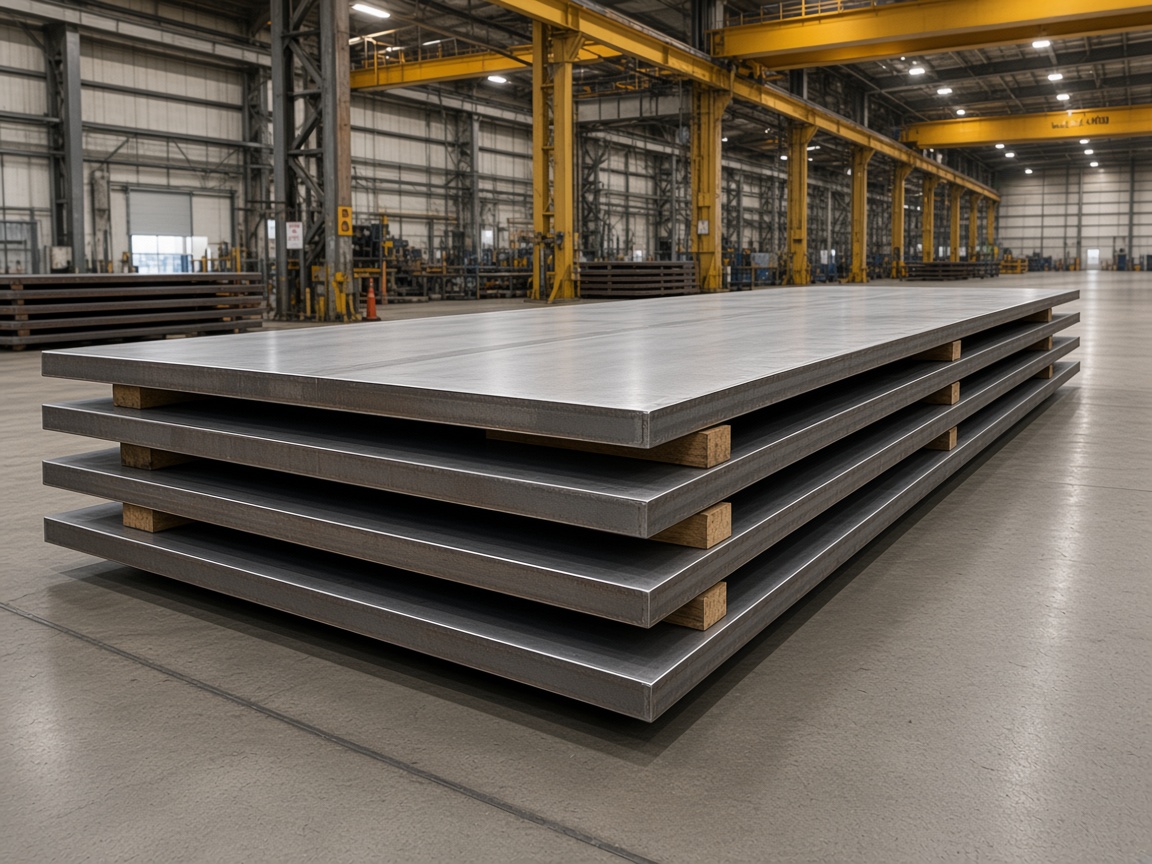
A516 Grade 70 + 321 clad steel plate combines a carbon steel pressure backing with titanium-stabilized 18-8 stainless steel (S32100) on the process side. Gangsteel supplies it to ASTM A264, with the backing and the 321 facing certified separately.
Material Pair and Engineering Use
Type 321 is chosen where the stainless face will see temperatures in the sensitization range during fabrication or service, because titanium ties up carbon that would otherwise form chromium carbides at grain boundaries. Typical uses are heat-exchanger shells, reactors and process vessels in refinery and chemical plant. It is not a molybdenum grade and does not give 316L-level pitting resistance.
| Part | Designation | Role |
|---|---|---|
| Backing | ASTM A516/A516M-25 Grade 70 (Grade 60 by order) | Carries pressure and structural load |
| Cladding | ASTM A240/A240M-25a Type 321 (UNS S32100) | Corrosion-resistant face |
| Clad product | ASTM A264 (A264-12(2026) scope; clauses from 12(2019)) | Bond, tests and tolerances |
Backing Steel Chemical Composition
| Backing thickness | C max | Mn | Si | P max | S max |
|---|---|---|---|---|---|
| ≤12.5 mm | 0.27 | 0.85–1.20 | 0.15–0.40 | 0.025 | 0.025 |
| >12.5–50 mm | 0.28 | 0.85–1.20 | 0.15–0.40 | 0.025 | 0.025 |
| >50–100 mm | 0.30 | 0.85–1.20 | 0.15–0.40 | 0.025 | 0.025 |
| >100 mm | 0.31 | 0.85–1.20 | 0.15–0.40 | 0.025 | 0.025 |
The thickness column refers to the steel backing alone. A516/A516M-25 allows 0.06 percentage point more manganese for each 0.01 point of carbon below the maximum, capped at 1.50% (heat) and 1.60% (product). Where Grade 60 backing is ordered instead, its lower carbon maxima and its own 415–550 MPa tensile range apply; the two grades must not be mixed on one certificate.
Cladding Chemical Composition
| Element | Requirement, mass % |
|---|---|
| C | ≤0.08 |
| Mn | ≤2.00 |
| P | ≤0.045 |
| S | ≤0.030 |
| Si | ≤0.75 |
| Cr | 17.0–19.0 |
| Ni | 9.0–12.0 |
| N | ≤0.10 |
| Ti | 5×(C+N) min, 0.70 max |
The titanium requirement is tied to the actual carbon and nitrogen of the heat, so check it on the facing certificate rather than reading only the nominal grade name.
Mechanical Properties of the Layers and the Bond
| Layer / reference | Condition | Yield / Rp0.2 min, MPa | Tensile, MPa | Elongation min |
|---|---|---|---|---|
| A516/A516M-25 Grade 70 [485] backing | Plate as ordered; normalized above 1.5 in. [40 mm] | 260 | 485–620 | 21% in 50 mm; 17% in 200 mm |
| Type 321 facing, A240/A240M-25a | Annealed plate | 205 | 515 min | 40% in 50 mm |
The facing row is the annealed flat-product reference of its own specification. It is not added to the backing strength, and bond shear is not a substitute for backing tensile strength. Cladding strength counts in design only where the construction code allows it. A240 also limits Type 321 hardness to 217 HBW / 95 HRBW.
| Item | Requirement or condition | Order meaning |
|---|---|---|
| Tensile section | Grade 70 backing minima (485 MPa tensile, 260 MPa yield) fall within the 70 ksi / 40 ksi limits; total gage then decides | Up to 1.5 in. (about 38 mm) total gage, test the composite section unless the facing is declared corrosion allowance only; above that gage, test the backing alone. |
| Composite tensile ceiling | Up to 5 ksi (35 MPa) above the backing maximum | Applies only to the composite-section route; it is not a design strength. |
| Interface shear (when specified) | 20 ksi (140 MPa) minimum | Bond property only. Below or at 0.075 in. (1.9 mm) facing, shear testing needs agreement; three bond bend tests are the alternative route. |
| Bond area | Ultrasonic method, coverage and acceptance class agreed on the order | One shear coupon does not show that the whole 321 face is bonded. |
Inch-pound values govern in the ASTM clad specifications; metric figures are conversions. The scope of A264 is confirmed against the A264-12(2026) listing, while the clause wording above was read from the 12(2019) text, so the purchase order should name the edition it invokes.
Fabrication Points for This Pair
Use 321 or 347-type stainless consumables for the corrosion-side weld cap as qualified, with a transition layer over the carbon steel. Titanium does not transfer well across an arc, so the restoration weld is often specified with a niobium-stabilized filler; this is a welding-procedure decision.
Keep the face free of carbon-steel grinding dust and iron contamination, and order enough minimum facing thickness to survive grinding at the weld preparation.
Bonding Process, Delivery and Heat Treatment
A264-12(2019) calls for solution treatment and individual air cooling of austenitic cladding unless otherwise specified or agreed. On a 321 face this restores corrosion resistance after bonding; the backing condition must still meet A516, which requires normalizing above 1.5 in. [40 mm].
| Parameter | Order definition | Engineering note |
|---|---|---|
| Bonding route | Explosion bonded, hot-roll bonded or explosion plus rolling | Route depends on plate area, layer ratio and thickness |
| Layer thickness | Backing gage plus minimum facing gage in mm; single- or double-sided | Allow facing margin for grinding, forming and weld restoration; total gage alone does not define the plate. |
| Final thermal condition | Named final condition and any simulated PWHT | A stabilizing treatment, if wanted, is an extra agreed requirement |
| Surface and edges | Pickled or as agreed; face protected from iron | Edges and bevels protected during transport |
| Lead time | Confirmed against the enquiry | Depends on plate area, layer gages, quantity, thermal condition and witnessed inspection. |
Inspection and Certification
The inspection plan for 321 clad plate should cover the stabilization chemistry, the bond and, where the process needs it, an intergranular corrosion test on the facing.
| Check | What to specify | Why it matters |
|---|---|---|
| Layer identity | Separate backing and facing certificates with heat numbers | No blended composite analysis |
| Ti / (C+N) check | Facing heat analysis against the A240 Ti formula | Confirms stabilization |
| Intergranular corrosion | A262 practice and acceptance, only if ordered | Not automatic |
| Bond tests | Shear or bond bend per A264; ultrasonic method and acceptance level | Area and interface checks |
| Tensile | Composite or backing-only section per A264 | State specimen section |
Frequently Asked Questions
Why choose 321 facing instead of 304L?
Type 321 is stabilized with titanium, which helps resist sensitization during exposure in the carbide-precipitation temperature range. 304L relies on low carbon instead. The choice follows the service temperature and the fabrication thermal history.
Does 321 clad plate resist chloride pitting better than 316L?
No. Type 321 contains no specified molybdenum, so it is not a substitute for 316L where pitting or crevice corrosion is the main concern.
How is the titanium content of the 321 face checked?
A240/A240M-25a requires titanium of at least 5×(C+N) and not more than 0.70%. Compare the certificate titanium against the actual carbon and nitrogen of that heat.
Can 321H be supplied instead of 321?
Only if ordered. Type 321H (S32109) has a controlled 0.04–0.10% carbon range for high-temperature strength and is a separate grade.
What test section applies to a 30 mm thick A516-70 + 321 plate?
At total gage up to 1.5 in. (about 38 mm), A264 uses the composite tensile section for this backing unless the facing is declared corrosion allowance only.
Which filler is used to restore the 321 face at seams?
That is set by the qualified welding procedure. Niobium-stabilized 347-type filler is common for the cap because titanium transfers poorly across the arc.
Is an intergranular corrosion test always included?
No. It is performed only when specified, with the A262 practice and acceptance criteria stated on the order.
What details are needed for a 321 clad quotation?
A264 edition, A516 grade, backing and minimum 321 thickness, plate size, quantity, final condition, bond and ultrasonic requirements and any corrosion test. Lead time is confirmed against the enquiry.
Related Materials
ASTM A264 stainless clad plate; A516 Grade 70 + 347 clad plate; all clad steel plate combinations.