


Clad Steel Plate
A516 Grade 70 + 347 Stainless Clad Steel Plate
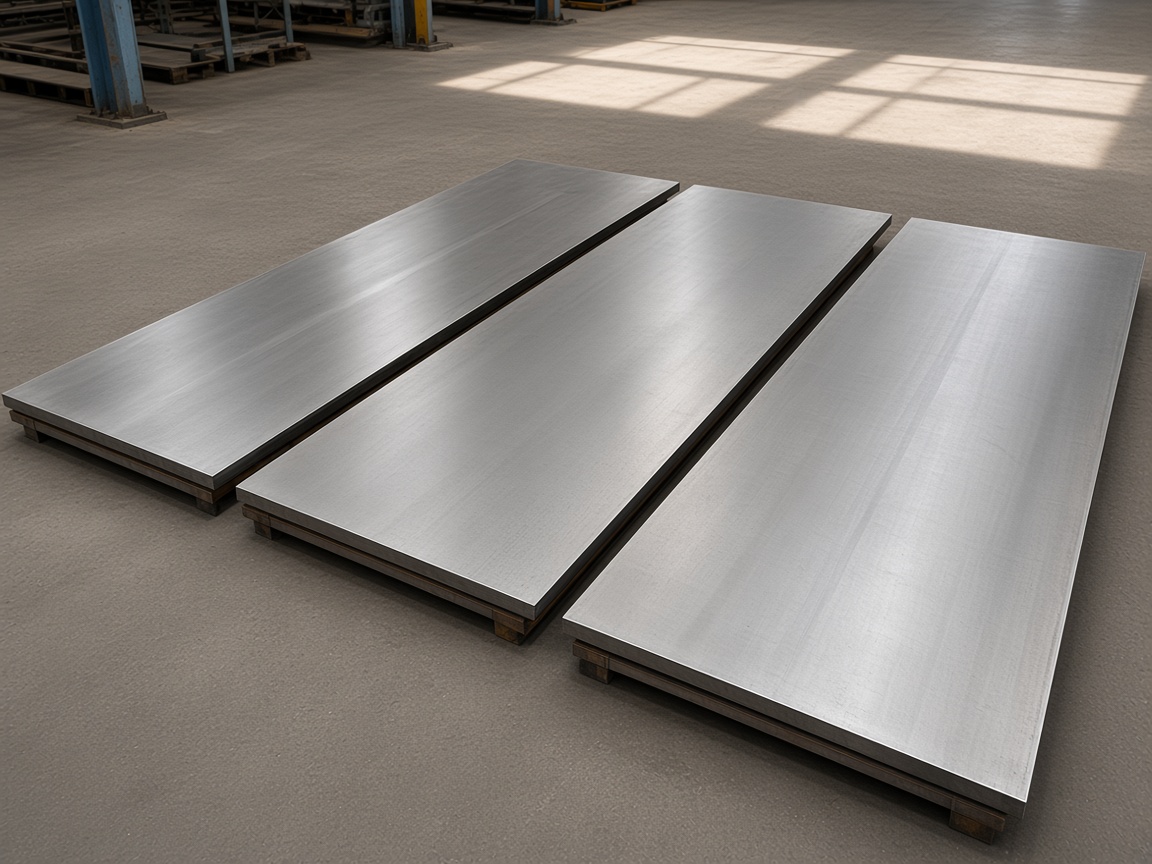
A516 Grade 70 + 347 clad steel plate places niobium-stabilized austenitic stainless (S34700) on a carbon steel pressure backing. Gangsteel supplies the plate under ASTM A264 for refinery and high-temperature process equipment.
Material Pair and Engineering Use
Type 347 is stabilized with niobium rather than titanium. It is often specified for hot hydroprocessing and other services where polythionic-acid stress corrosion or sensitization during long exposure is a concern, and its niobium carries across the weld arc better than titanium. Corrosion suitability still depends on the medium and the full equipment design.
| Part | Designation | Role |
|---|---|---|
| Backing | ASTM A516/A516M-25 Grade 70 (Grade 60 by order) | Carries pressure and structural load |
| Cladding | ASTM A240/A240M-25a Type 347 (UNS S34700) | Stabilized corrosion-resistant face |
| Clad product | ASTM A264 (A264-12(2026) scope; clauses from 12(2019)) | Bond, tests and tolerances |
Backing Steel Chemical Composition
| Backing thickness | C max | Mn | Si | P max | S max |
|---|---|---|---|---|---|
| ≤12.5 mm | 0.27 | 0.85–1.20 | 0.15–0.40 | 0.025 | 0.025 |
| >12.5–50 mm | 0.28 | 0.85–1.20 | 0.15–0.40 | 0.025 | 0.025 |
| >50–100 mm | 0.30 | 0.85–1.20 | 0.15–0.40 | 0.025 | 0.025 |
| >100 mm | 0.31 | 0.85–1.20 | 0.15–0.40 | 0.025 | 0.025 |
The thickness column refers to the steel backing alone. A516/A516M-25 allows 0.06 percentage point more manganese for each 0.01 point of carbon below the maximum, capped at 1.50% (heat) and 1.60% (product). Where Grade 60 backing is ordered instead, its lower carbon maxima and its own 415–550 MPa tensile range apply; the two grades must not be mixed on one certificate.
Cladding Chemical Composition
| Element | Requirement, mass % |
|---|---|
| C | ≤0.08 |
| Mn | ≤2.00 |
| P | ≤0.045 |
| S | ≤0.030 |
| Si | ≤0.75 |
| Cr | 17.0–19.0 |
| Ni | 9.0–13.0 |
| Nb | 10×C min, 1.00 max |
The niobium minimum scales with the actual carbon of the heat. Type 347H (S34709) is a separate grade with 0.04–0.10% carbon and its own niobium rule.
Mechanical Properties of the Layers and the Bond
| Layer / reference | Condition | Yield / Rp0.2 min, MPa | Tensile, MPa | Elongation min |
|---|---|---|---|---|
| A516/A516M-25 Grade 70 [485] backing | Plate as ordered; normalized above 1.5 in. [40 mm] | 260 | 485–620 | 21% in 50 mm; 17% in 200 mm |
| Type 347 facing, A240/A240M-25a | Annealed plate | 205 | 515 min | 40% in 50 mm |
The facing row is the annealed flat-product reference of its own specification. It is not added to the backing strength, and bond shear is not a substitute for backing tensile strength. Cladding strength counts in design only where the construction code allows it. A240 limits Type 347 hardness to 201 HBW / 92 HRBW.
| Item | Requirement or condition | Order meaning |
|---|---|---|
| Tensile section | Grade 70 backing minima (485 MPa tensile, 260 MPa yield) fall within the 70 ksi / 40 ksi limits; total gage then decides | Up to 1.5 in. (about 38 mm) total gage, test the composite section unless the facing is declared corrosion allowance only; above that gage, test the backing alone. |
| Composite tensile ceiling | Up to 5 ksi (35 MPa) above the backing maximum | Applies only to the composite-section route; it is not a design strength. |
| Interface shear (when specified) | 20 ksi (140 MPa) minimum | Bond property only. Below or at 0.075 in. (1.9 mm) facing, shear testing needs agreement; three bond bend tests are the alternative route. |
| Bond area | Ultrasonic method, coverage and acceptance class agreed on the order | One shear coupon does not show that the whole 347 face is bonded. |
Inch-pound values govern in the ASTM clad specifications; metric figures are conversions. The scope of A264 is confirmed against the A264-12(2026) listing, while the clause wording above was read from the 12(2019) text, so the purchase order should name the edition it invokes.
Fabrication Points for This Pair
Restore the corrosion side at seams with a qualified 347-type cap over a suitable transition layer, and protect the stainless face from carbon steel contamination during cutting and rolling.
For hot service, check the stainless and carbon steel thermal expansion difference in the design of attachments and nozzles; the clad plate certificate does not cover this.
Bonding Process, Delivery and Heat Treatment
A264-12(2019) specifies solution treatment with individual air cooling for austenitic facings unless otherwise agreed. Some refinery specifications also ask for a stabilizing heat treatment of 347; that is an additional agreed cycle and must be compatible with the A516 backing properties.
| Parameter | Order definition | Engineering note |
|---|---|---|
| Bonding route | Explosion bonded, hot-roll bonded or combined route | Selected for size and layer ratio |
| Layer thickness | Backing gage plus minimum facing gage in mm; single- or double-sided | Allow facing margin for grinding, forming and weld restoration; total gage alone does not define the plate. |
| Final thermal condition | Final condition named; stabilizing or simulated PWHT only by agreement | Test coupons in the representative condition |
| Surface and edges | Pickled or as agreed | Face protected from iron pickup |
| Lead time | Confirmed against the enquiry | Depends on plate area, layer gages, quantity, thermal condition and witnessed inspection. |
Inspection and Certification
For 347 clad plate the plan should confirm the niobium-to-carbon ratio of the facing, the bond and any project-required corrosion tests.
| Check | What to specify | Why it matters |
|---|---|---|
| Layer identity | Separate backing and facing certificates with heat numbers | No blended composite analysis |
| Nb / C check | Facing heat analysis against 10×C min, 1.00 max | Confirms stabilization |
| Simulated PWHT | Coupons after the agreed cycle, if ordered | Backing and bond properties after fabrication |
| Bond tests | Shear or bond bend; ultrasonic acceptance level | Interface and area |
| Tensile | Composite or backing-only per A264 | Section declared on report |
Frequently Asked Questions
What is the difference between 321 and 347 clad faces?
Both are stabilized 18-8 stainless grades. Type 321 uses titanium and Type 347 uses niobium. Niobium survives welding better, so 347 is often preferred where weld metal and plate should match.
Is 347 clad plate used in hydroprocessing reactors?
It is used in refinery hydroprocessing equipment, though thick reactors may also use weld overlay. The choice is made by the equipment designer.
Does the A516 backing limit the service temperature?
Yes. The backing must be suitable for the design temperature under the construction code; the stainless face does not raise the allowable temperature of the backing.
Can a stabilizing heat treatment be applied to the finished plate?
Only by agreement. The cycle must keep the A516 backing within its requirements and be represented on test coupons.
How much niobium must the 347 facing contain?
A240/A240M-25a requires niobium of at least ten times the carbon content and not more than 1.00%.
Is the composite tensile test always used?
No. It applies only at total gage up to 1.5 in. (about 38 mm) for this backing, unless the facing is treated as corrosion allowance only; otherwise the backing is tested alone.
Is 347H the same as 347 for cladding?
No. Type 347H is a separate grade with a controlled carbon range for high-temperature strength.
What information is needed to quote 347 clad plate?
A264 edition, backing grade and thickness, minimum 347 thickness, size, quantity, final heat treatment, bond and ultrasonic requirements and any corrosion testing. Lead time is confirmed against the enquiry.
Related Materials
ASTM A264 stainless clad plate; A516 Grade 70 + 321 clad plate; all clad steel plate combinations.