


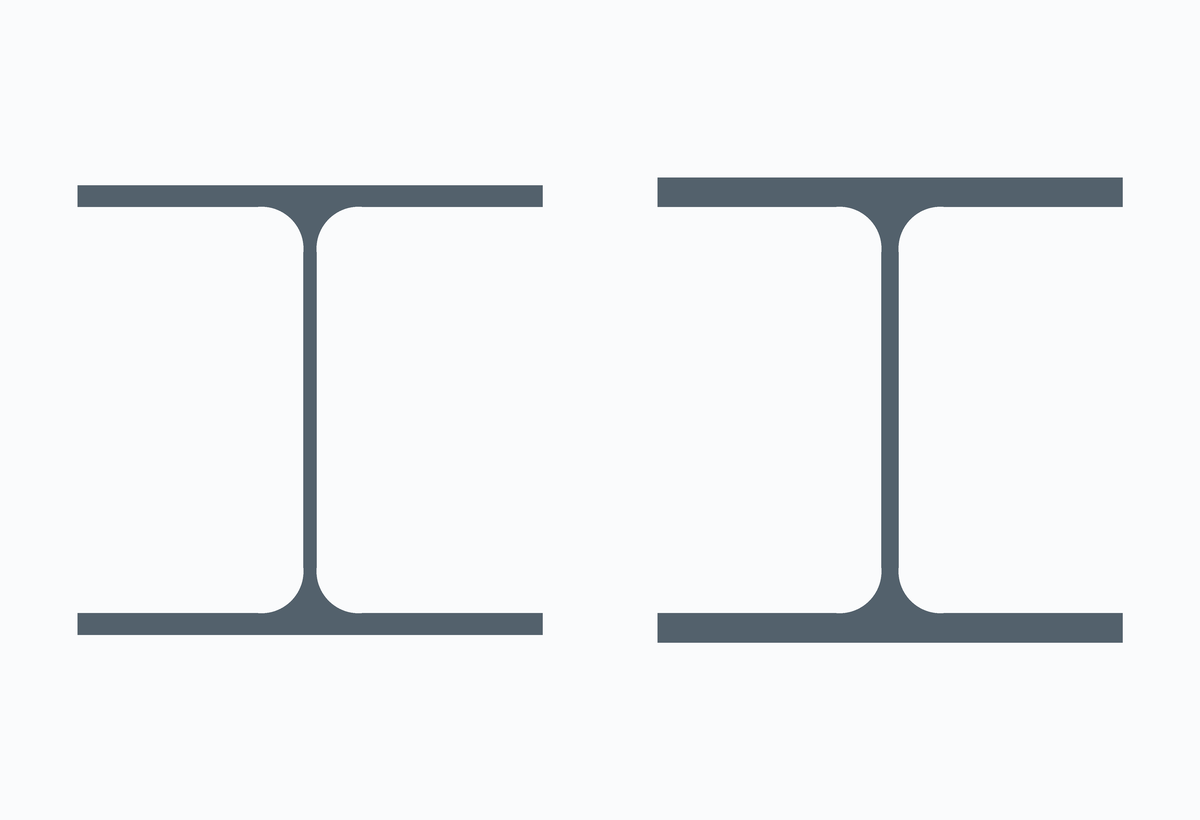
What an S235JR HE Beam Order Specifies
An S235JR HE beam combines two separate specifications: a European wide-flange section from the HE A or HE B series, and the lowest-strength non-alloy grade of EN 10025-2 with a +20 °C impact quality. Enquiries to Gangsteel should name both, for example “HE 240 A, EN 10025-2 S235JR”, with lengths, quantity and the inspection document required.
S235JR is chosen where strength demand is modest and simple fabrication matters more than weight saving: secondary framing, platforms, supports and stiff columns that are governed by deflection rather than stress. Because the yield strength is the lowest in the EN 10025-2 series, the same HE size carries noticeably less design resistance than S275 or S355; a substitution in either direction has to be checked by the design engineer.
| Item | Value for this product | Comment |
|---|---|---|
| Material standard | EN 10025-2:2019 | Non-alloy structural steel, hot-rolled products |
| Steel name / number | S235JR / 1.0038 | Quality JR: impact test temperature in the table below |
| Section series and dimensions | HE A and HE B to EN 10365:2017 | Geometry and nominal mass only; no strength content |
| Shape and dimensional tolerances | EN 10034 | Acceptance of depth, width, thickness, squareness and straightness |
| General delivery requirements | EN 10025-1 | Testing, inspection documents and marking rules shared by the EN 10025 parts |
| Former national designation | St 37-2 (DIN 17100, withdrawn) | Historical reference only; order to the current standard |
HE A and HE B Sizes Read Through the S235JR Thickness Bands
EN 10365 fixes the geometry; EN 10025-2 fixes how strong the material must be at a given product thickness. For sections, tensile test pieces are normally taken from the flange, so the flange thickness tf is the practical reference for choosing the applicable S235JR band. The tables combine both: nominal HE A or HE B dimensions on the left, and on the right the minimum upper yield strength that the S235JR table requires at that flange thickness. The rows are reference geometry, not a stock list.
| Section | h mm | b mm | tw mm | tf mm | kg/m | Min. ReH MPa |
|---|---|---|---|---|---|---|
| HE 100 A | 96 | 100 | 5 | 8 | 16.7 | 235 |
| HE 120 A | 114 | 120 | 5 | 8 | 19.9 | 235 |
| HE 140 A | 133 | 140 | 5.5 | 8.5 | 24.7 | 235 |
| HE 160 A | 152 | 160 | 6 | 9 | 30.4 | 235 |
| HE 180 A | 171 | 180 | 6 | 9.5 | 35.5 | 235 |
| HE 200 A | 190 | 200 | 6.5 | 10 | 42.3 | 235 |
| HE 220 A | 210 | 220 | 7 | 11 | 50.5 | 235 |
| HE 240 A | 230 | 240 | 7.5 | 12 | 60.3 | 235 |
| HE 260 A | 250 | 260 | 7.5 | 12.5 | 68.2 | 235 |
| HE 280 A | 270 | 280 | 8 | 13 | 76.4 | 235 |
| HE 300 A | 290 | 300 | 8.5 | 14 | 88.3 | 235 |
| HE 320 A | 310 | 300 | 9 | 15.5 | 97.6 | 235 |
| HE 340 A | 330 | 300 | 9.5 | 16.5 | 105 | 225 |
| HE 360 A | 350 | 300 | 10 | 17.5 | 112 | 225 |
| HE 400 A | 390 | 300 | 11 | 19 | 125 | 225 |
| HE 450 A | 440 | 300 | 11.5 | 21 | 140 | 225 |
| HE 500 A | 490 | 300 | 12 | 23 | 155 | 225 |
| HE 550 A | 540 | 300 | 12.5 | 24 | 166 | 225 |
| HE 600 A | 590 | 300 | 13 | 25 | 178 | 225 |
| HE 650 A | 640 | 300 | 13.5 | 26 | 190 | 225 |
| HE 700 A | 690 | 300 | 14.5 | 27 | 204 | 225 |
| HE 800 A | 790 | 300 | 15 | 28 | 224 | 225 |
| HE 900 A | 890 | 300 | 16 | 30 | 252 | 225 |
| HE 1000 A | 990 | 300 | 16.5 | 31 | 272 | 225 |
| Section | h mm | b mm | tw mm | tf mm | kg/m | Min. ReH MPa |
|---|---|---|---|---|---|---|
| HE 100 B | 100 | 100 | 6 | 10 | 20.4 | 235 |
| HE 120 B | 120 | 120 | 6.5 | 11 | 26.7 | 235 |
| HE 140 B | 140 | 140 | 7 | 12 | 33.7 | 235 |
| HE 160 B | 160 | 160 | 8 | 13 | 42.6 | 235 |
| HE 180 B | 180 | 180 | 8.5 | 14 | 51.2 | 235 |
| HE 200 B | 200 | 200 | 9 | 15 | 61.3 | 235 |
| HE 220 B | 220 | 220 | 9.5 | 16 | 71.5 | 235 |
| HE 240 B | 240 | 240 | 10 | 17 | 83.2 | 225 |
| HE 260 B | 260 | 260 | 10 | 17.5 | 93.0 | 225 |
| HE 280 B | 280 | 280 | 10.5 | 18 | 103 | 225 |
| HE 300 B | 300 | 300 | 11 | 19 | 117 | 225 |
| HE 320 B | 320 | 300 | 11.5 | 20.5 | 127 | 225 |
| HE 340 B | 340 | 300 | 12 | 21.5 | 134 | 225 |
| HE 360 B | 360 | 300 | 12.5 | 22.5 | 142 | 225 |
| HE 400 B | 400 | 300 | 13.5 | 24 | 155 | 225 |
| HE 450 B | 450 | 300 | 14 | 26 | 171 | 225 |
| HE 500 B | 500 | 300 | 14.5 | 28 | 187 | 225 |
| HE 550 B | 550 | 300 | 15 | 29 | 199 | 225 |
| HE 600 B | 600 | 300 | 15.5 | 30 | 212 | 225 |
| HE 650 B | 650 | 300 | 16 | 31 | 225 | 225 |
| HE 700 B | 700 | 300 | 17 | 32 | 241 | 225 |
| HE 800 B | 800 | 300 | 17.5 | 33 | 262 | 225 |
| HE 900 B | 900 | 300 | 18.5 | 35 | 291 | 225 |
| HE 1000 B | 1000 | 300 | 19 | 36 | 314 | 225 |
h is overall depth, b flange width, tw web thickness and tf flange thickness; kg/m is nominal mass. HE A is the lighter series for the same serial size and HE B the heavier one: HE 300 A is 290 mm deep with a 14 mm flange, while HE 300 B is 300 mm deep with a 19 mm flange. Order the full designation, because a drawing note such as “H300” does not distinguish them.
For S235JR the yield band changes at a flange thickness of 16 mm. In the HE A series every size up to HE 320 A (tf 15.5 mm) is in the 235 MPa band, and HE 340 A onwards (tf 16.5 mm and above) falls to 225 MPa. In the HE B series HE 220 B (tf 16 mm) is the last 235 MPa size, and HE 240 B onwards is 225 MPa. The carbon maximum of 0.17% and CEV of 0.35% apply to every HE A and HE B row because no flange exceeds 40 mm.
S235JR Chemical Composition for HE Sections
| Element | Maximum | How it applies to HE A / HE B |
|---|---|---|
| C | 0.17 | 0.17 up to 40 mm; 0.20 above 40 mm (not reached by HE A/HE B) |
| Mn | 1.40 | — |
| Si | — | No maximum in this grade row; a range may be agreed for galvanizing |
| P | 0.040 | 0.035 may be agreed with the galvanizing silicon option |
| S | 0.040 | — |
| N | 0.012 | Does not apply with total Al ≥ 0.020% or sufficient other nitrogen-binding elements, which must be reported |
| Cu | 0.55 | — |
| CEV | 0.35 | Up to 40 mm; 0.38 above 40 mm (not reached by HE A/HE B) |
S235JR has no silicon maximum in the grade row, which is one reason heats intended for hot-dip galvanizing should carry the agreed silicon range of 0.14–0.25% with P ≤ 0.035%. The nitrogen limit is relaxed only when the steel contains enough aluminium or other nitrogen-binding elements and these are reported.
CEV = C + Mn/6 + (Cr + Mo + V)/5 + (Cu + Ni)/15, using heat-analysis values. Additional elements, if added, must be stated on the inspection document. These are limits for acceptance, not the composition of any particular heat.
S235JR Mechanical Properties by Flange Thickness
| Property | tf ≤ 16 mm | 16 mm < tf ≤ 40 mm |
|---|---|---|
| Minimum upper yield strength ReH | 235 MPa | 225 MPa |
| Tensile strength Rm | 360–510 MPa | 360–510 MPa |
| Minimum elongation A, L0 = 5.65√S0 | 26% | 26% |
| Charpy V-notch, minimum | 27 J at +20 °C | 27 J at +20 °C |
The 26% minimum elongation is the highest in the EN 10025-2 non-alloy series and reflects the lower strength level. The JR impact quality means a test at +20 °C; it is not evidence of toughness at sub-zero service temperatures. Where the structure is exposed to low temperatures, the designer may require S235J0 or S235J2 instead, which is a different grade and must be ordered as such.
How S235JR Differs from Neighbouring EN 10025-2 Grades
| Grade | Key difference from S235JR | Ordering consequence |
|---|---|---|
| S235J0 / S235J2 | Same strength; impact test at 0 °C or −20 °C; J2 is fully killed with P and S ≤ 0.030% | A JR certificate does not satisfy a J0 or J2 order |
| S275JR | Yield 275/265 MPa; C up to 0.21%; CEV 0.40% | Higher resistance per HE size, slightly higher CEV |
| S355JR | Yield 355/345 MPa; CEV 0.45/0.47% | Different design values; not a like-for-like swap without recalculation |
Upgrading an S235JR member to a higher grade without checking connections and stability is not automatically conservative: connections, welds and stiffness may have been sized around the original grade, and deflection does not improve with strength.
Welding, Cutting and Galvanizing Notes
With a CEV maximum of 0.35%, S235JR HE beams are among the easiest structural sections to weld; preheat is rarely required for normal flange thicknesses, though the welding procedure should still follow the applicable fabrication standard and consumable data. Flame and plasma cutting, drilling and sawing present no grade-specific difficulty. For galvanized members, specify the galvanizing-suitable chemistry option at order stage rather than after delivery.
Delivery Condition, Heat Treatment and Inspection
| Item | What to specify | Why it matters |
|---|---|---|
| Delivery condition | As-rolled (+AR) or normalized / normalizing rolled (+N) where the order requires it | The grade name alone does not fix the delivery condition; +N must be ordered explicitly |
| Heat treatment after delivery | Normally none for rolled HE beams; any hot forming or stress relief needs an agreed procedure | Uncontrolled heating can alter the certified properties |
| Impact verification | State whether the 27 J at +20 °C test is to be verified and reported | Avoids a certificate that lists the grade but no Charpy result |
| Inspection document | EN 10204 type, typically 3.1 when specific test results are required | Results must be traceable to the heat and the delivered pieces |
| Dimensional acceptance | EN 10034 tolerances, length tolerance and cut-length list | Nominal table values are not tolerance limits |
If a JR impact test result is needed on the certificate, specify it; otherwise the certificate may show only chemistry and tensile results. Request 3.1 documentation where the project requires heat-specific evidence.
RFQ Checklist for S235JR HEA and HEB Beams
- Full section designation, for example HE 300 B, not “H300”.
- Material as EN 10025-2 S235JR, with delivery condition and any options such as galvanizing chemistry.
- Lengths, quantities and total mass basis (theoretical or weighed).
- Impact verification, EN 10204 document type and heat traceability.
- Cutting, drilling, blasting or coating drawings, packing and destination.
Typical lead time is about 35 days for mill orders; sizes available from stock can ship in 1-3 days. Stock availability by size is confirmed at enquiry; the tables on this page are reference geometry, not a stock list.
For flat components in the same structure, order EN 10025-2 S235JR steel plate separately; plate and section certificates are issued per product. For the narrow-flange alternative see the EN 10365 IPE beam range with EN 10025-2 grades, and for heavier column sections the universal column (UC) range. The structural steel sections selection guide compares the families.
Other EN 10025-2 grades in the same HE A / HE B series: S275JR HEA and HEB beams, S355JR HEA and HEB beams, S355J2 HEA and HEB beams.
Frequently Asked Questions
Is S235JR suitable for HEB columns in buildings?
It can be, where the design engineer has sized the member with S235 design values. HE B columns are often governed by buckling and stiffness, so the low yield strength may not be the limiting factor. The decision depends on the design code, loads, buckling length and service temperature, not on the section shape alone.
Which HE sizes drop to 225 MPa in S235JR?
Any HE section whose flange is thicker than 16 mm: from HE 340 A in the A series and from HE 240 B in the B series. Using 235 MPa for those sizes would overstate the guaranteed yield. The table on this page marks the applicable band for each listed size.
Is S235JR the same as the old St 37-2?
S235JR is the current EN designation broadly corresponding to the withdrawn DIN 17100 St 37-2. The current EN 10025-2 requirements govern chemistry, impact testing and documentation, so orders and certificates should state S235JR to the current standard rather than the old name.
Does S235JR guarantee toughness below zero degrees Celsius?
No. JR denotes a 27 J impact requirement at +20 °C. For structures exposed to low temperatures, the engineer may specify S235J0 or S235J2, or a higher grade with a lower test temperature. A JR certificate cannot be reinterpreted as evidence for a colder test.
Can S235JR HE beams be hot-dip galvanized?
Yes, but reactive silicon levels can cause thick, brittle zinc coatings. EN 10025-2 allows an agreed silicon range of 0.14 to 0.25% with phosphorus not above 0.035% for galvanizing suitability. State this option in the order so the heat is selected accordingly.
Should I replace S235JR with S355JR to save weight?
A higher grade can allow a lighter HE size, but the substitution must be checked for buckling, deflection, connections and welding. Stiffness depends on section geometry, not strength, so a lighter S355 section may deflect more. Never substitute grades silently on a certified project.
What documents should accompany S235JR HE beams?
Typically an EN 10204 3.1 inspection certificate listing EN 10025-2 S235JR, the heat number, chemical analysis including CEV, tensile results and any ordered impact tests, plus the section designation. Each piece should be identifiable to the certificate.