Product List
Gangsteel Material Solution
Email: admin@gangsteel.com
Sales: jack@gangsteel.com
Gangsteel produces both 430 and 316 stainless steel plate with premium NO.4 finish in full compliance with the leading international standards. We can manufacture to any of the following major specifications to meet your exact project requirements:
Whether you need 430 or 316 (or both for side-by-side comparison), Gangsteel delivers consistent quality, full traceability, and competitive pricing from our advanced Chinese production facilities.
The NO.4 finish is a satin brushed surface created by mechanically polishing the annealed and pickled plate with 150–320 grit abrasives. It produces a fine, directional brushed texture that effectively hides fingerprints, light scratches, and everyday wear while delivering a modern, low-reflectivity matte appearance (Ra 0.2–0.8 μm). This finish is widely preferred for high-touch architectural, kitchen, and decorative applications.
|
Element |
430 (wt%) |
316 (wt%) |
|---|---|---|
|
Carbon (C) |
≤0.12 |
≤0.08 |
|
Chromium (Cr) |
16.00–18.00 |
16.00–18.00 |
|
Manganese (Mn) |
≤1.00 |
≤2.00 |
|
Silicon (Si) |
≤1.00 |
≤0.75 |
|
Phosphorus (P) |
≤0.040 |
≤0.045 |
|
Sulfur (S) |
≤0.030 |
≤0.030 |
|
Nickel (Ni) |
≤0.75 |
10.00–14.00 |
|
Molybdenum (Mo) |
- |
2.00–3.00 |
430 is nickel-free, keeping costs low and stable. 316’s nickel and molybdenum additions provide superior corrosion resistance.
|
Property |
430 |
316 |
|---|---|---|
|
Yield Strength (0.2% offset) |
≥205 MPa |
≥205 MPa |
|
Tensile Strength |
≥450 MPa |
≥515 MPa |
|
Elongation (50 mm gauge) |
≥22% |
≥40% |
|
Hardness (Rockwell B) |
≤89 HRB |
≤95 HRB |
304 offers better ductility for severe deep drawing, while 430 is easier to form in simpler operations and remains fully magnetic.
For mild indoor or dry outdoor use, 430 NO.4 is often sufficient and much more economical. For coastal, chemical, or food-processing exposure, 316 NO.4 is the better long-term choice.
430 has a clear advantage:
This makes 430 NO.4 preferred for heat exchangers, appliance panels, and parts that must stay dimensionally stable when heated.
Both grades are highly formable in NO.4 finish.
430 NO.4 plate is typically 35–55% cheaper than 316 NO.4 due to the absence of nickel and molybdenum. Pricing is also more stable over time. Both are readily available from Gangsteel in plate and coil form.
Choose 430 NO.4 when you need:
Choose 316 NO.4 when you need:
For detailed product pages, please see our:
Contact our technical sales team today for current pricing, samples, or application-specific advice. Let Gangsteel be your reliable partner for 430 and 316 stainless steel plate NO.4 finish.
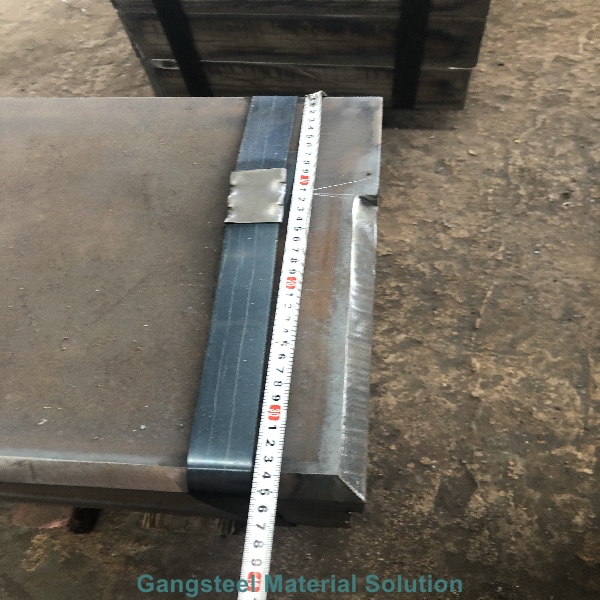
ASTM A516 GR 70 equivalent materials is such as ASME SA516 GR 70, EN 10028 P355GH, and BS1501 224-490 A & B, sh
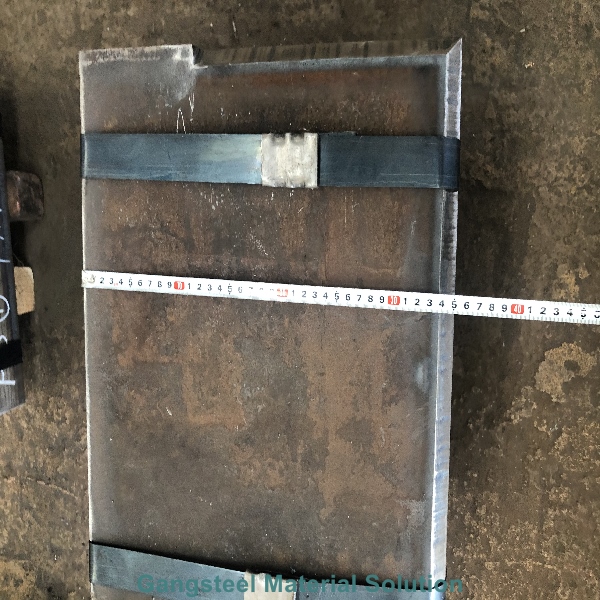
we supply high-quality A516 Gr 70 steel plate for pressure vessel applications and other standards like ASTM A2
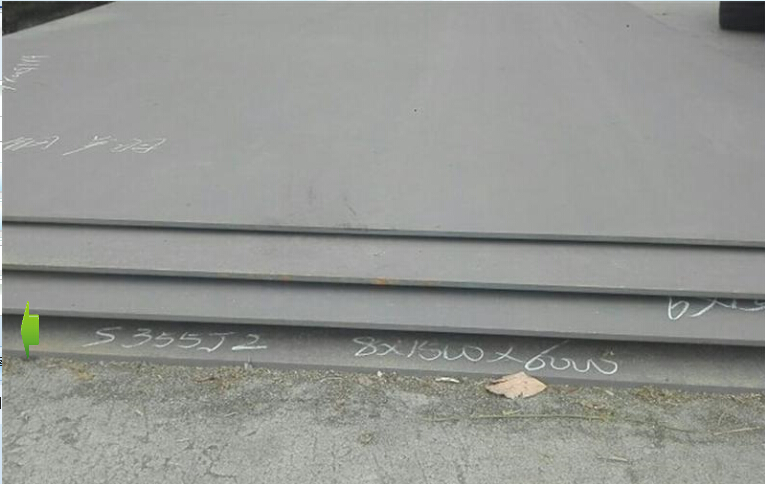
EN10028-2 P355GH for High-Strength Low-Alloy Columbium-Vanadium Structural Steel EN10025-2 S355J2 Structural St

We export A240 304L Stainless Coil 2B, NO.1 No.4 surface, the thickness 0.1mm to 3mm, 3mm to 22mm, Mother mill


