Product List
Gangsteel Material Solution
Email: admin@gangsteel.com
Sales: jack@gangsteel.com
Gangsteel, a leading Chinese exporter of high-quality cold-rolled stainless steel coils and sheets, provides an expert comparison between 10Cr17 and 430 stainless steel.
Grade 430 (AISI 430 or UNS S43000) is a widely recognized ferritic stainless steel known for its cost-effectiveness, magnetic properties, and good corrosion resistance in mild environments. 10Cr17, an older Chinese designation under GB/T standards (now often referred to as 1Cr17 in modern contexts), is essentially the equivalent grade to 430, sharing the same ferritic structure and performance characteristics. This article explores their similarities and any subtle differences arising from standard variations, covering composition, properties, equivalents, resistance, fabrication, applications, and more. As specialists in ferritic steels, Gangsteel offers premium products like our JIS G4305 SUS 430 stainless steel sheet, which aligns with both 430 and its Chinese counterparts for global use.
While 10Cr17 and 430 are interchangeable in most applications, differences may stem from regional specifications, such as tolerances or testing methods under GB/T versus ASTM. Both are nickel-free ferritics with 16-18% chromium, providing excellent thermal conductivity and oxidation resistance up to 815°C intermittent. Gangsteel's exports, including the a240 Type_430 stainless steel sheet, ensure compliance with multiple standards for seamless substitution.
The compositions of 10Cr17 and 430 are virtually identical, as they represent the same ferritic alloy under different naming conventions. Minor variations may occur due to standard allowances, but they do not significantly impact performance.
Based on GB/T 3280 for 10Cr17 and ASTM A240 for 430 (weight %):
|
Element |
10Cr17 (GB/T) |
430 (ASTM) |
|---|---|---|
|
Carbon (C) |
≤0.12 |
≤0.12 |
|
Chromium (Cr) |
16.0-18.0 |
16.0-18.0 |
|
Manganese (Mn) |
≤1.0 |
≤1.0 |
|
Nickel (Ni) |
≤0.60 |
≤0.75 |
|
Silicon (Si) |
≤0.75 |
≤1.0 |
|
Phosphorus (P) |
≤0.040 |
≤0.040 |
|
Sulfur (S) |
≤0.030 |
≤0.030 |
|
Iron (Fe) |
Balance |
Balance |
The chromium content forms a protective oxide layer for corrosion resistance, while low carbon prevents excessive hardening. GB/T may allow slightly tighter nickel limits, but in practice, both are nickel-free for cost savings. For European-compliant versions, our EN10088 2 X6Cr17 stainless steel sheet mirrors these specs under EN 1.4016.
Mechanical properties are highly similar, reflecting their equivalence, though testing methods (e.g., GB/T vs. ASTM) might yield minor variances in reported values.
From respective standards:
|
Property |
10Cr17 (GB/T) |
430 (ASTM) |
|---|---|---|
|
Yield Strength (0.2% offset) |
≥205 MPa |
≥205 MPa (30 ksi) |
|
Tensile Strength |
≥420 MPa |
≥450 MPa (65 ksi) |
|
Elongation (in 50 mm) |
≥22% |
≥22% |
|
Hardness (Rockwell B) |
≤88 HRB |
≤89 HRB |
|
Modulus of Elasticity |
200 GPa |
200 GPa |
|
Density |
7.70 g/cm³ |
7.70 g/cm³ |
Both exhibit moderate strength with good ductility for forming, though 430 under ASTM may report slightly higher tensile due to specification differences. They share excellent thermal conductivity (26 W/m·K) and low expansion (10.5 × 10⁻⁶/°C). Gangsteel's DIN 1.4016 stainless steel sheet provides consistent properties aligning with both grades.
10Cr17 is directly equivalent to 430, as confirmed by international cross-references, allowing interchangeable use.
|
Standard/Region |
10Cr17 Equivalent |
430 Equivalent |
|---|---|---|
|
GB (China) |
10Cr17 / 1Cr17 |
1Cr17 / 10Cr17 |
|
AISI/UNS (USA) |
430 / S43000 |
430 / S43000 |
|
EN/DIN (Europe) |
1.4016 / X6Cr17 |
1.4016 / X6Cr17 |
|
JIS (Japan) |
SUS430 |
SUS430 |
|
BS (UK) |
430S17 |
430S17 |
|
AFNOR (France) |
Z8C17 |
Z8C17 |
|
ISO |
X6Cr17 |
X6Cr17 |
|
GOST (Russia) |
12X17 |
12X17 |
This table underscores their identity across standards. Our GB/T 10Cr17 1Cr17 stainless steel sheet is produced to GB/T specs, fully equivalent to 430.
As equivalents, both offer identical resistance: good in atmospheric, freshwater, and mild chemical environments, but vulnerable to chlorides and strong acids due to no nickel or molybdenum. The chromium oxide layer provides passivation, resisting rust in non-aggressive settings.
Pitting and crevice corrosion risks are similar, with neither suited for marine or chloride-heavy applications (use 304/316 instead). For oxidation, both withstand 815°C intermittent and 760°C continuous without scaling, outperforming carbon steels but embrittling over time at 400-600°C (475°C embrittlement).
No significant differences; both excel in dry, oxidizing conditions but require care in welding to avoid sensitization. Choose based on standard compliance rather than performance.
Weldability is comparable: both weld well with TIG/MIG but sensitize in the heat-affected zone (HAZ) due to carbon, risking intergranular corrosion. Preheating (150-200°C) and post-weld annealing (790-815°C) restore properties. Use austenitic fillers (e.g., 308L) for better ductility.
Fabrication: Excellent formability for stamping and bending, though ferritic nature limits deep drawing compared to austenitics. Magnetic for easy handling. Machinability is fair (54% rating), with sulfur variants for better cutting but reduced corrosion.
GB/T 10Cr17 may have slight tolerance variations, but practical differences are negligible. Gangsteel's processing ensures high-quality finishes like BA for both.
Given their equivalence, applications overlap completely, with selection often based on regional standards or availability.
In China, 10Cr17 is preferred for domestic compliance; internationally, 430 for ASTM adherence. No performance-based preference—both deliver cost savings over nickel grades like 304.
As the same material, costs are identical: 1200-1400 USD/MT FOB China, stable due to no nickel. Availability is high globally, with Chinese production (like Gangsteel's) dominating supply for 10Cr17/430. Minor price variations may arise from certification (e.g., ASTM vs. GB/T) or finishes.
Trends: Both benefit from ferritic demand in cost-sensitive markets, with 430 more common in exports.
Since they are equivalents, choose based on required standards: 10Cr17 for GB/T compliance in China-focused projects; 430 for ASTM/UNS in international ones. For dual-certification, Gangsteel's products bridge both. If no standard preference, opt for local availability to minimize costs.
Yes, 10Cr17 is the older Chinese equivalent to AISI 430, with identical composition and properties.
Equivalent—both good in mild environments but not for chlorides.
None significant; both require annealing to prevent sensitization.
Both excel; use 10Cr17 in China, 430 globally, like our JIS G4305 SUS 430 stainless steel sheet.
We supply both as equivalents; contact for customized coils/sheets.
In conclusion, 10Cr17 and 430 are the same ferritic stainless steel under different names—Gangsteel ensures quality for either.
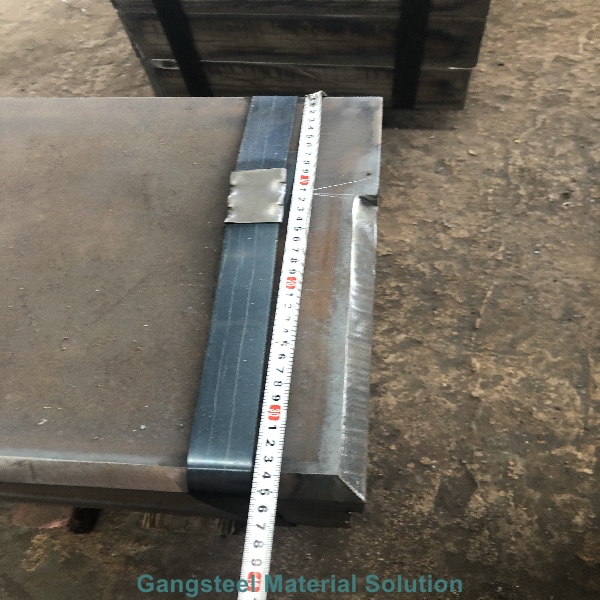
ASTM A516 GR 70 equivalent materials is such as ASME SA516 GR 70, EN 10028 P355GH, and BS1501 224-490 A & B, sh
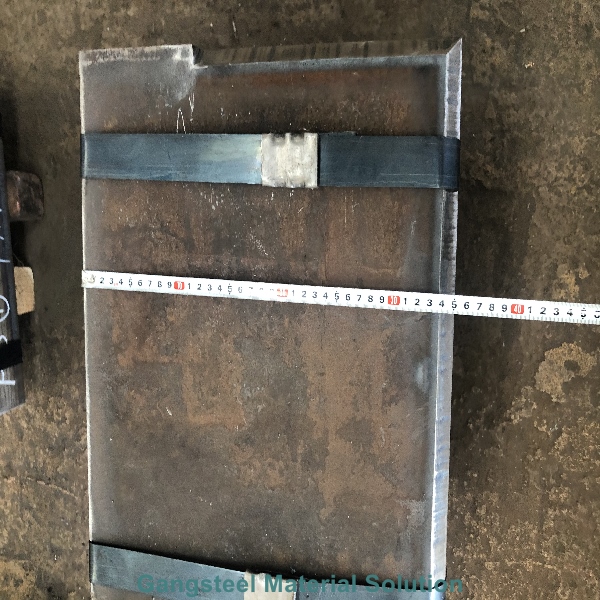
we supply high-quality A516 Gr 70 steel plate for pressure vessel applications and other standards like ASTM A2
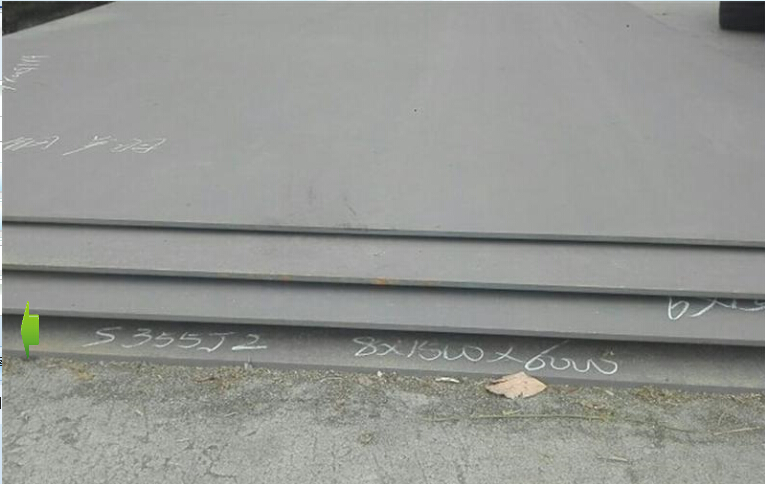
EN10028-2 P355GH for High-Strength Low-Alloy Columbium-Vanadium Structural Steel EN10025-2 S355J2 Structural St

We export A240 304L Stainless Coil 2B, NO.1 No.4 surface, the thickness 0.1mm to 3mm, 3mm to 22mm, Mother mill


