Product List
Gangsteel Material Solution
Email: admin@gangsteel.com
Sales: jack@gangsteel.com
Gangsteel, a leading Chinese exporter of premium cold-rolled stainless steel products, offers detailed insights into comparing the 300 series stainless steels with grade 430.
The 300 series, primarily austenitic grades like 304, 316, and 321, are renowned for their excellent corrosion resistance, formability, and non-magnetic properties, making them staples in diverse industries. In contrast, 430 is a ferritic stainless steel known for its cost-effectiveness, magnetic characteristics, and good performance in mild environments. This comparison focuses on 304 as a representative of the 300 series, as it's the most common, versus 430, to highlight key differences in composition, properties, and applications. Understanding these can guide material selection for projects in appliances, automotive, construction, and more. Gangsteel's expertise includes high-quality ferritic options like our JIS G4305 SUS 430 stainless steel sheet, ideal for budget-conscious applications.
The 300 series derives its austenitic structure from nickel and chromium, providing versatility and durability, while 430 relies on chromium alone in a ferritic matrix, emphasizing economy and thermal efficiency. Both contain 16-18% chromium for basic passivation, but the addition of nickel (8-10% in 304) in the 300 series enhances resistance to harsher conditions. Gangsteel's exports, such as the a240 Type_430 stainless steel sheet, comply with ASTM standards for reliable global use.
Composition dictates corrosion resistance, strength, and microstructure, with the 300 series incorporating austenite stabilizers like nickel, unlike 430's simpler formula.
Based on ASTM A240 specifications (using 304 for 300 series):
|
Element |
304 (300 Series) (wt%) |
430 (wt%) |
|---|---|---|
|
Carbon (C) |
≤0.08 |
≤0.12 |
|
Chromium (Cr) |
18.0-20.0 |
16.0-18.0 |
|
Manganese (Mn) |
≤2.0 |
≤1.0 |
|
Nickel (Ni) |
8.0-10.5 |
≤0.75 (minimal) |
|
Silicon (Si) |
≤0.75 |
≤1.0 |
|
Nitrogen (N) |
≤0.10 |
- |
|
Phosphorus (P) |
≤0.045 |
≤0.040 |
|
Sulfur (S) |
≤0.030 |
≤0.030 |
|
Iron (Fe) |
Balance |
Balance |
304's nickel stabilizes the austenitic phase, improving ductility and corrosion resistance, while higher chromium boosts passivation. 430's lack of nickel keeps costs low but limits performance in aggressive media. For European equivalents, our EN10088 2 X6Cr17 stainless steel sheet aligns with 430's composition under EN standards.
Mechanical attributes affect formability, strength, and application suitability, with the 300 series offering superior ductility due to its austenitic nature.
From ASTM A240 and typical values (304 representing 300 series):
|
Property |
304 (300 Series) |
430 |
|---|---|---|
|
Yield Strength (0.2% offset) |
≥205 MPa (30 ksi) |
≥205 MPa (30 ksi) |
|
Tensile Strength |
≥515 MPa (75 ksi) |
≥450 MPa (65 ksi) |
|
Elongation (in 50 mm) |
≥40% |
≥22% |
|
Hardness (Rockwell B) |
≤92 HRB |
≤89 HRB |
|
Modulus of Elasticity |
193 GPa |
200 GPa |
|
Density |
8.00 g/cm³ |
7.70 g/cm³ |
304 provides higher tensile strength and elongation, enabling deep drawing without cracking, and it work-hardens effectively for added toughness. 430, with moderate values, is less ductile but sufficient for stamping; its ferritic structure resists distortion better under thermal stress. Gangsteel's DIN 1.4016 stainless steel sheet ensures consistent mechanical performance for 430 applications.
Both have global cross-references, facilitating international procurement.
|
Standard/Region |
304 (300 Series) Equivalent |
430 Equivalent |
|---|---|---|
|
AISI/UNS (USA) |
304 / S30400 |
430 / S43000 |
|
EN/DIN (Europe) |
1.4301 / X5CrNi18-10 |
1.4016 / X6Cr17 |
|
JIS (Japan) |
SUS304 |
SUS430 |
|
GB (China) |
0Cr18Ni9 / 06Cr19Ni10 |
1Cr17 / 10Cr17 |
|
BS (UK) |
304S31 |
430S17 |
|
AFNOR (France) |
Z7CN18-09 |
Z8C17 |
|
ISO |
X5CrNi18-10 |
X6Cr17 |
|
GOST (Russia) |
08Х18Н10 |
12X17 |
304's equivalents are widespread austenitics, while 430's are ferritics. Our GB/T 10Cr17 1Cr17 stainless steel sheet offers a Chinese-standard match for 430.
Corrosion performance is where the 300 series excels, thanks to nickel.
304 resists pitting and crevice corrosion in chlorides, acids, and marine environments, with a PREN (Pitting Resistance Equivalent Number) around 20. It's non-susceptible to stress corrosion cracking in most cases. 430 offers fair atmospheric and freshwater resistance but pits easily in chlorides or acids, limiting it to mild conditions.
For oxidation: 304 scales at 925°C continuous, suitable for food and chemical processing. 430 handles 815°C intermittent, better for dry heat but prone to embrittlement. Choose 300 series for corrosive settings, 430 for oxidizing/dry ones like our JIS G4305 SUS 430 stainless steel sheet.
Fabrication varies by structure.
304 welds excellently with TIG/MIG, remaining non-magnetic and ductile; no preheating needed, but fillers like 308L prevent carbide precipitation. It polishes to a mirror finish and forms complex shapes.
430 welds well but sensitizes in the HAZ, requiring annealing to restore corrosion resistance; preheating avoids cracking. Magnetic and less formable, it's suited for simpler bends. Both machine comparably, but 304's austenite reduces galling.
For intricate work, 300 series; for basic, 430 as in a240 Type_430 stainless steel sheet.
Ideal for harsh environments.
Suits cost-sensitive, mild uses like EN10088 2 X6Cr17 stainless steel sheet.
300 series costs more (1800-2200 USD/MT) due to nickel, fluctuating with markets. 430 is cheaper (1200-1400 USD/MT), stable as nickel-free. Gangsteel's production ensures affordability for 430 variants like DIN 1.4016 stainless steel sheet.
Trends: 300 series for premium; 430 for volume.
Select 300 for corrosion/formability; 430 for cost/thermal/magnetic. Evaluate environment and budget.
300 series austenitic (non-magnetic, corrosion-resistant); 430 ferritic (magnetic, economical).
300 series in chlorides/acids; 430 in dry oxidation.
Both good; 300 easier without sensitization.
300 series for versatility; 430 for basic, as in GB/T 10Cr17 1Cr17 stainless steel sheet.
We specialize in 430; contact for 300 series.
In conclusion, 300 series offers premium performance, 430 value—Gangsteel supports informed choices.
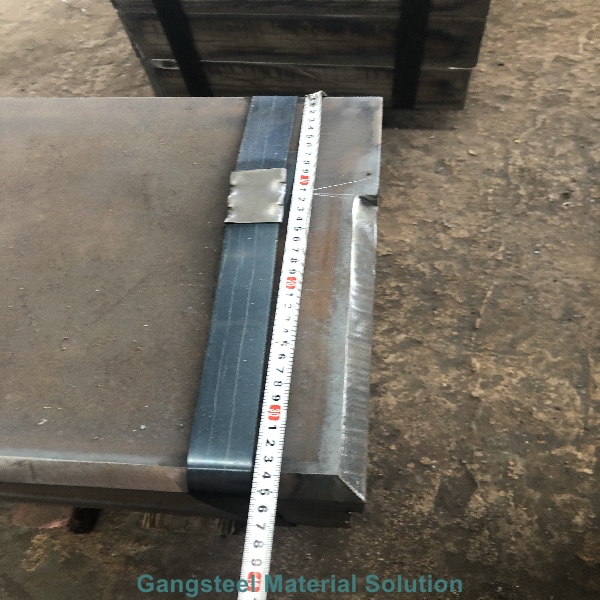
ASTM A516 GR 70 equivalent materials is such as ASME SA516 GR 70, EN 10028 P355GH, and BS1501 224-490 A & B, sh
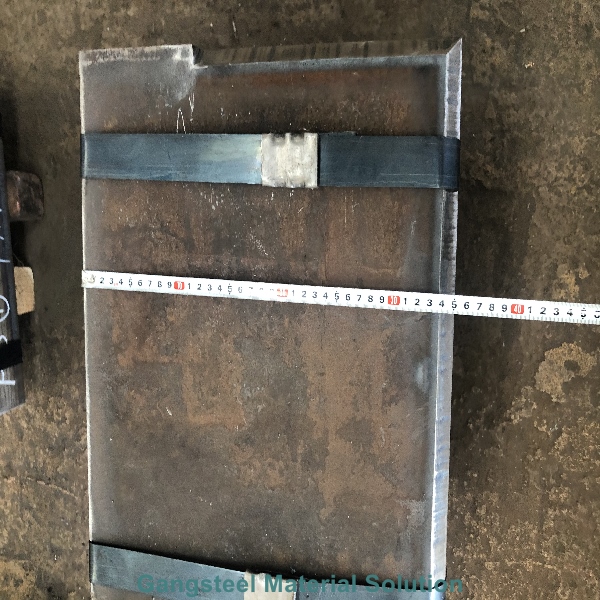
we supply high-quality A516 Gr 70 steel plate for pressure vessel applications and other standards like ASTM A2
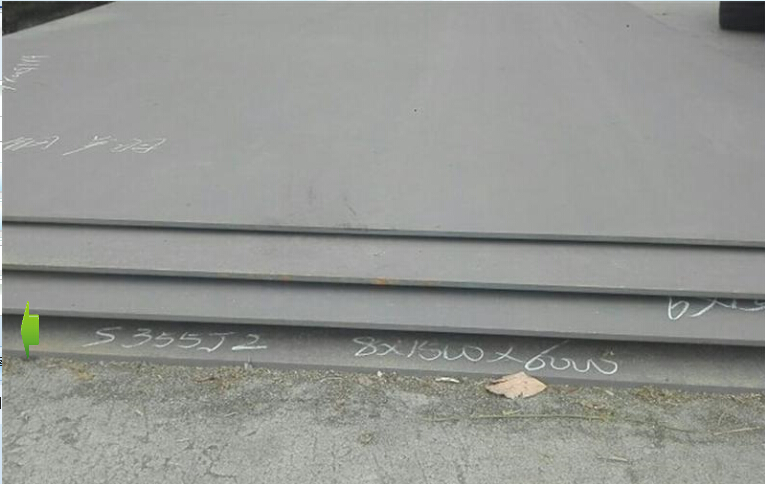
EN10028-2 P355GH for High-Strength Low-Alloy Columbium-Vanadium Structural Steel EN10025-2 S355J2 Structural St

We export A240 304L Stainless Coil 2B, NO.1 No.4 surface, the thickness 0.1mm to 3mm, 3mm to 22mm, Mother mill


