Product List
Gangsteel Material Solution
Email: admin@gangsteel.com
Sales: jack@gangsteel.com
Gangsteel, a leading Chinese exporter of high-quality cold-rolled stainless steel coils and sheets, provides a thorough comparison between 316 and 430 stainless steel grades to assist in material selection.
Grade 316 (AISI 316 or UNS S31600) is a molybdenum-bearing austenitic stainless steel renowned for its exceptional corrosion resistance, particularly in chloride-rich and acidic environments, making it ideal for marine, chemical, and medical applications. Grade 430 (AISI 430 or UNS S43000), a ferritic stainless steel, offers affordability, magnetic properties, and good performance in mildly corrosive or oxidizing conditions, commonly used in decorative and household items. While both contain chromium for basic passivation, 316's austenitic structure (face-centered cubic) with added molybdenum and nickel provides superior durability and formability compared to 430's ferritic (body-centered cubic) economy-focused design. This analysis explores composition, properties, equivalents, resistance, fabrication, applications, and more. As ferritic specialists, Gangsteel supplies reliable 430 options like our JIS G4305 SUS 430 stainless steel sheet, while noting 316's premium role in harsh settings.
The primary differences stem from alloying and microstructure: 316's nickel (10-14%) and molybdenum (2-3%) enhance pitting resistance (PREN ~25-28), while 430 relies on 16-18% chromium alone, prioritizing thermal conductivity and cost savings. Gangsteel's exports, including the a240 Type_430 stainless steel sheet, comply with ASTM standards for global versatility.
Composition is key to their performance divergence: 316's Mo addition boosts chloride resistance, while 430's simplicity reduces costs.
Per ASTM A240 specifications (weight %):
|
Element |
316 (wt%) |
430 (wt%) |
|---|---|---|
|
Carbon (C) |
≤0.08 |
≤0.12 |
|
Chromium (Cr) |
16.0-18.0 |
16.0-18.0 |
|
Manganese (Mn) |
≤2.0 |
≤1.0 |
|
Nickel (Ni) |
10.0-14.0 |
≤0.75 (minimal) |
|
Silicon (Si) |
≤0.75 |
≤1.0 |
|
Molybdenum (Mo) |
2.0-3.0 |
- |
|
Nitrogen (N) |
≤0.10 |
- |
|
Phosphorus (P) |
≤0.045 |
≤0.040 |
|
Sulfur (S) |
≤0.030 |
≤0.030 |
|
Iron (Fe) |
Balance |
Balance |
316's Mo and higher Ni improve austenite stability and corrosion resistance, with low C preventing sensitization. 430 lacks these, making it prone to pitting but economical. For European standards, our EN10088 2 X6Cr17 stainless steel sheet reflects 430's composition.
Mechanical attributes favor 316's ductility and strength in austenitic form, while 430 offers moderate values suitable for less demanding uses.
From ASTM A240 and typical values:
|
Property |
316 |
430 |
|---|---|---|
|
Yield Strength (0.2% offset) |
≥205 MPa (30 ksi) |
≥205 MPa (30 ksi) |
|
Tensile Strength |
≥515 MPa (75 ksi) |
≥450 MPa (65 ksi) |
|
Elongation (in 50 mm) |
≥40% |
≥22% |
|
Hardness (Rockwell B) |
≤95 HRB |
≤89 HRB |
|
Modulus of Elasticity |
193 GPa |
200 GPa |
|
Density |
8.00 g/cm³ |
7.70 g/cm³ |
316 exhibits higher tensile and elongation for deep forming, work-hardening to over 1000 MPa. 430 is less ductile but maintains strength at moderate temps. Both have low thermal expansion, but 316's is slightly higher (16 × 10⁻⁶/°C vs. 10.5 for 430). Gangsteel's DIN 1.4016 stainless steel sheet ensures dependable 430 properties.
Equivalents facilitate global sourcing, with 316 having molybdenum-austenitic parallels and 430 basic ferritics.
|
Standard/Region |
316 Equivalent |
430 Equivalent |
|---|---|---|
|
AISI/UNS (USA) |
316 / S31600 |
430 / S43000 |
|
EN/DIN (Europe) |
1.4401 / X5CrNiMo17-12-2 |
1.4016 / X6Cr17 |
|
JIS (Japan) |
SUS316 |
SUS430 |
|
GB (China) |
0Cr17Ni12Mo2 / 06Cr17Ni12Mo2 |
1Cr17 / 10Cr17 |
|
BS (UK) |
316S31 |
430S17 |
|
AFNOR (France) |
Z7CND17-11-02 |
Z8C17 |
|
ISO |
X5CrNiMo17-12-2 |
X6Cr17 |
|
GOST (Russia) |
08Х17Н13М2 |
12X17 |
316's equivalents emphasize Mo for pitting resistance; 430's are straightforward. Our GB/T 10Cr17 1Cr17 stainless steel sheet provides a Chinese-standard 430 option.
Corrosion resistance is 316's strength, driven by Mo.
316 excels in pitting/crevice corrosion (PREN 24-28), chlorides, acids, and marine settings, resisting stress cracking. Ideal for seawater, chemicals, and food with halogens.
430 provides fair atmospheric and freshwater resistance but pits in chlorides or humidity, unsuitable for aggressive media.
Oxidation: 316 scales at 925°C continuous; 430 at 815°C intermittent, better for dry heat but embrittles. Choose 316 for corrosive/wet; 430 for mild/dry, like our JIS G4305 SUS 430 stainless steel sheet.
316 welds superbly (TIG/MIG), no preheating, using 316L fillers to avoid sensitization. Highly formable, polishable, non-magnetic.
430 welds but sensitizes, requiring annealing; preheating prevents cracks. Less formable, magnetic.
For complex or corrosive fabrication: 316; basic: 430 as in a240 Type_430 stainless steel sheet.
316 for harsh, corrosive environments.
430 for cost-sensitive, mild uses like EN10088 2 X6Cr17 stainless steel sheet.
316 costs more (2000-2500 USD/MT) due to Ni/Mo, volatile with markets. 430 cheaper (1200-1400 USD/MT), stable. Gangsteel's production keeps 430 affordable, e.g., DIN 1.4016 stainless steel sheet.
316 for superior corrosion in chlorides/acids/marine; 430 for economy in mild/oxidizing. Factor environment, magnetism, cost.
316 austenitic with Mo (resistant, non-magnetic); 430 ferritic (economical, magnetic).
316 in chlorides/acids; 430 dry oxidation.
316 easier, no sensitization.
Specialize in 430 like GB/T 10Cr17 1Cr17 stainless steel sheet; inquire 316.
316 premium resistance, 430 value—Gangsteel assists.
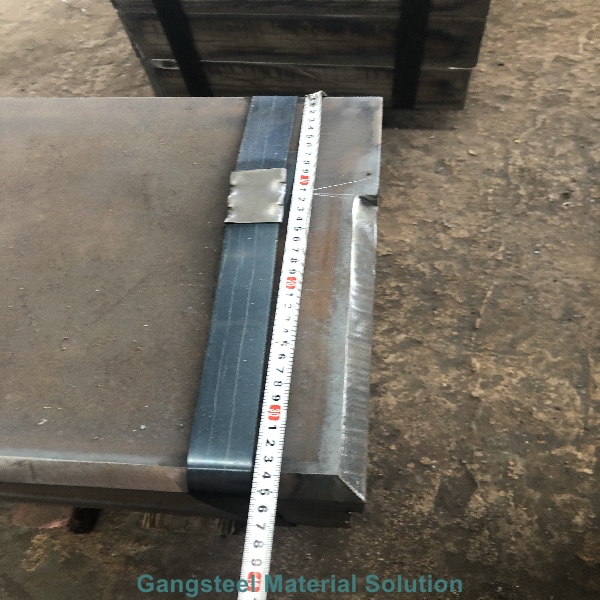
ASTM A516 GR 70 equivalent materials is such as ASME SA516 GR 70, EN 10028 P355GH, and BS1501 224-490 A & B, sh
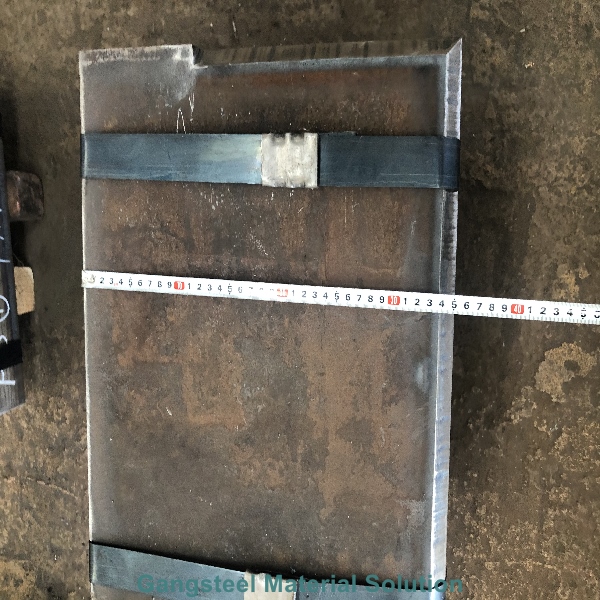
we supply high-quality A516 Gr 70 steel plate for pressure vessel applications and other standards like ASTM A2
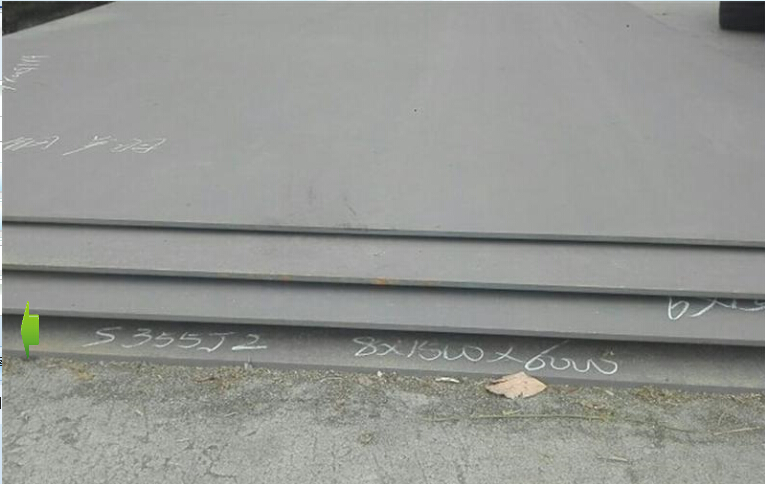
EN10028-2 P355GH for High-Strength Low-Alloy Columbium-Vanadium Structural Steel EN10025-2 S355J2 Structural St

We export A240 304L Stainless Coil 2B, NO.1 No.4 surface, the thickness 0.1mm to 3mm, 3mm to 22mm, Mother mill


