Product List
Gangsteel Material Solution
Email: admin@gangsteel.com
Sales: jack@gangsteel.com
Gangsteel, a premier Chinese exporter of high-quality cold-rolled stainless steel coils and sheets, offers in-depth insights into ferritic stainless steels like grades 441 and 430. Both are popular choices in the 400-series family, known for their cost-effectiveness, magnetic properties, and suitability for mild corrosive environments. However, understanding their differences is crucial for selecting the right material for applications in appliances, automotive, architecture, and more. This article delves into the chemical compositions, mechanical properties, corrosion resistance, weldability, applications, and market considerations of 441 versus 430 stainless steel. As experts in exporting ferritic grades compliant with standards like ASTM, EN, DIN, GB, and JIS, Gangsteel ensures our products meet global demands. For instance, our JIS G4305 SUS 430 stainless steel sheet provides a reliable baseline for comparisons.
Ferritic stainless steels, including 441 and 430, derive their structure from a body-centered cubic (BCC) crystal lattice, which imparts excellent thermal conductivity and low thermal expansion compared to austenitic grades like 304. Grade 430, often referred to as AISI 430 or UNS S43000, is a straight-chromium alloy with 16-18% chromium, making it economical and widely used. Grade 441 (AISI 441 or UNS S44100), on the other hand, is an enhanced version with stabilizers like niobium (Nb) and sometimes titanium (Ti), offering improved performance in welded applications. While both share over 98% compositional similarity, the additions in 441 address specific limitations of 430, such as sensitization during welding. Gangsteel's inventory includes equivalents like our a240 Type_430 stainless steel sheet, which aligns with ASTM standards for versatile use.
The chemical makeup is the foundation of any stainless steel's performance, influencing corrosion resistance, strength, and fabricability.
Grade 430 typically contains:
This straightforward composition relies on chromium for its passive oxide layer, providing basic corrosion protection. The low carbon content helps prevent excessive hardening, but without stabilizers, 430 can be prone to intergranular corrosion if exposed to high temperatures during welding or service. Gangsteel's offerings, such as the DIN 1.4016 stainless steel sheet, mirror this profile under European norms.
Grade 441 builds on 430 with enhancements:
The key differentiators are the lower carbon and the addition of Nb and Ti, which bind carbon and nitrogen to prevent carbide precipitation at grain boundaries. This stabilization makes 441 more resistant to sensitization, a common issue in unstabilized ferritics like 430. In comparison, 441's higher chromium content marginally boosts oxidation resistance, while the stabilizers enhance long-term durability in cyclic heating environments.
Overall, 430 is simpler and cheaper to produce, but 441's refined alloying provides a performance edge in demanding conditions. For Chinese-standard equivalents, Gangsteel's GB/T 10Cr17 1Cr17 stainless steel sheet offers a cost-effective 430-like option.
Mechanical attributes determine how these steels behave under stress, forming, and service.
For 430 in annealed condition:
430 exhibits moderate strength with good ductility, allowing for deep drawing and bending without rapid work hardening. Its ferritic nature keeps it soft, but it can become brittle if overheated.
For 441:
441's stabilizers prevent grain growth during heat exposure, preserving toughness and reducing embrittlement risks. Both grades have similar density (7.7-7.8 g/cm³) and modulus of elasticity (200 GPa), but 441 often shows superior fatigue resistance in welded structures.
Both excel in thermal conductivity (≈26 W/m·K), about 50% higher than austenitics, and low expansion coefficients (10.5 × 10⁻⁶/°C). However, 441 handles higher temperatures better (up to 850°C intermittent) without scaling, thanks to its composition. 430 caps at around 815°C, making 441 preferable for exhaust systems or heat exchangers.
In summary, while 430 suffices for general use, 441's enhancements make it more robust for fabrication-intensive applications. Our EN10088 2 X6Cr17 stainless steel sheet provides a European-compliant 430 variant for reference.
Corrosion performance is a primary differentiator in stainless steels.
Both grades offer good resistance in atmospheric, fresh water, and mild chemical environments due to their chromium content. 430 performs well against nitric acid and organics but struggles in chlorides, leading to pitting. 441, with higher Cr and lower C, provides marginally better general corrosion resistance, especially in humid or polluted settings.
430 is susceptible to intergranular corrosion post-welding if carbon precipitates as carbides. 441's Nb and Ti stabilizers tie up carbon, mitigating this, making it "weld-stabilized." Neither is prone to stress corrosion cracking like austenitics, but 441 edges out in chloride-free cyclic exposures.
At elevated temperatures, both form protective scales, but 441's refinements allow better performance in oxidizing atmospheres, resisting scaling up to 900°C in some cases versus 430's 800°C limit.
For mildly corrosive applications, 430 is adequate and economical; for welded or heat-cycled parts, 441 is superior.
Weldability often decides between these grades.
430 has good weldability with TIG, MIG, or resistance methods, but requires post-weld annealing to restore ductility and corrosion resistance, as it can sensitize in the heat-affected zone (HAZ). Preheating (150-200°C) helps avoid cracking.
441 shines here: Its stabilizers prevent HAZ sensitization, allowing as-welded use without annealing in many cases. This reduces processing costs and distortion. Both are formable, but 441 maintains properties better after severe deformation.
Machinability is similar, with sulfur additions possible for free-machining variants, though this may compromise corrosion resistance.
430's affordability makes it ideal for high-volume, non-welded parts.
441 is preferred where welding or thermal cycling is involved, offering longer service life.
In overlap areas like appliances, 441 may replace 430 for premium products, but 430 dominates in cost-driven markets.
Both grades have global equivalents for international sourcing.
For 430:
For 441:
These allow substitution, but verify for stabilizers in 441 equivalents.
430 is more affordable (typically 1200-1400 USD/MT) due to simpler alloying, with wide availability. 441 costs 10-20% more (1300-1600 USD/MT) from Nb/Ti additions but saves on processing. Gangsteel's Chinese production keeps prices competitive; e.g., our a240 Type_430 stainless steel sheet offers value.
Market trends favor 441 for automotive due to emissions standards requiring durable exhausts.
Select 430 for basic, non-welded applications where cost is key. Opt for 441 in welded, heat-exposed scenarios for reliability. Consult standards and test for specific environments.
441 has stabilizers (Nb/Ti) for better weldability and heat resistance; 430 is simpler and cheaper.
Slightly, due to higher Cr and lower C, but both suit mild conditions.
Yes, but may need annealing; 441 is better as-welded.
441, for its stabilization against sensitization.
We specialize in 430 equivalents like DIN 1.4016 stainless steel sheet; contact for 441 inquiries.
In conclusion, while 430 remains a staple for economy, 441's advancements make it the choice for enhanced performance. Gangsteel supports your selection with quality exports—reach out today.
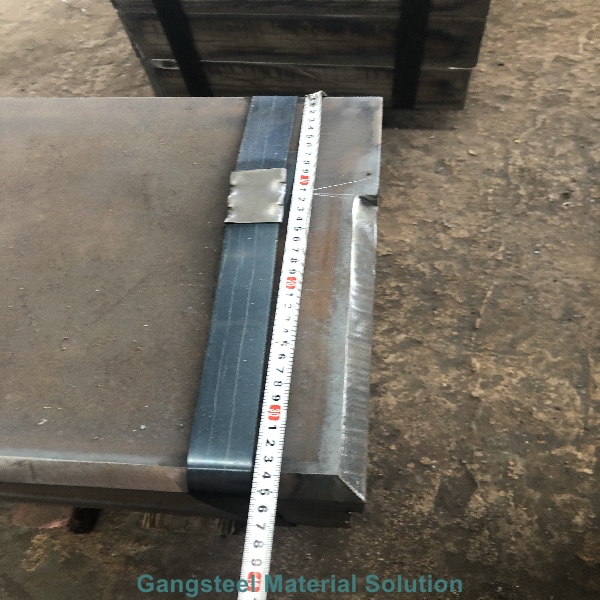
ASTM A516 GR 70 equivalent materials is such as ASME SA516 GR 70, EN 10028 P355GH, and BS1501 224-490 A & B, sh
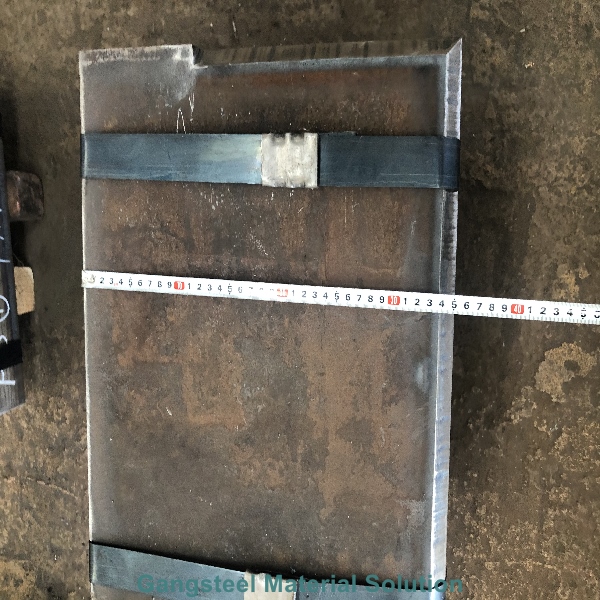
we supply high-quality A516 Gr 70 steel plate for pressure vessel applications and other standards like ASTM A2
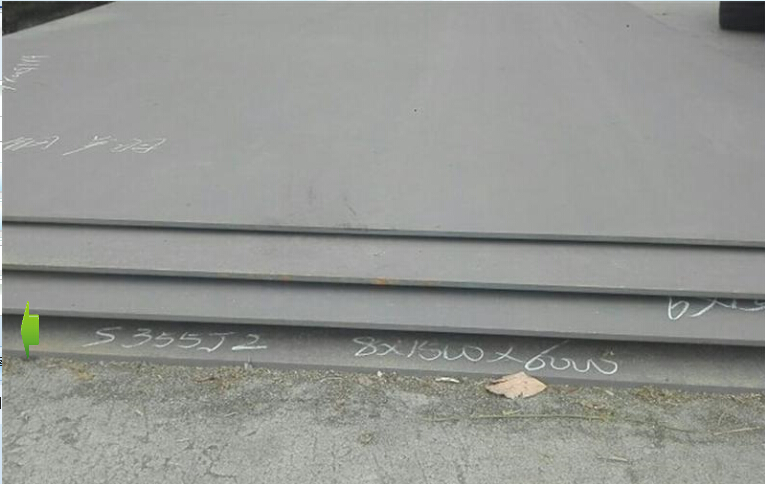
EN10028-2 P355GH for High-Strength Low-Alloy Columbium-Vanadium Structural Steel EN10025-2 S355J2 Structural St

We export A240 304L Stainless Coil 2B, NO.1 No.4 surface, the thickness 0.1mm to 3mm, 3mm to 22mm, Mother mill


