Product List
Gangsteel Material Solution
Email: admin@gangsteel.com
Sales: jack@gangsteel.com
Gangsteel, a leading Chinese exporter of high-quality cold-rolled stainless steel coils and sheets, provides an expert comparison between 439 and 430 stainless steel coils.
Both are ferritic stainless steels, magnetic and nickel-free, offering cost-effective alternatives to austenitic grades like 304 for applications requiring moderate corrosion resistance and excellent thermal properties. Grade 430 (AISI 430 or UNS S43000) is a standard straight-chromium ferritic alloy, valued for its affordability, formability, and use in decorative and mild industrial settings. Grade 439 (AISI 439 or UNS S43035), a titanium-stabilized variant, enhances oxidation resistance and weldability, making it suitable for high-temperature environments like automotive exhaust systems.
Coils of both grades are produced via cold rolling for superior surface finishes (e.g., 2B, BA) and precision, with typical thicknesses from 0.3 mm to 3.0 mm and widths up to 1500 mm. While sharing a body-centered cubic (BCC) ferritic structure for high thermal conductivity (approximately 26 W/m·K) and low thermal expansion (10.5 × 10⁻⁶/°C), 439's titanium addition (0.1-0.5%) addresses 430's limitations in weld sensitization and high-heat scaling. This analysis covers chemical composition, mechanical properties, equivalent materials, corrosion resistance, weldability, fabrication, applications, cost, and more to guide your selection. Gangsteel's ferritic expertise includes premium 430 coils, such as our JIS G4305 SUS 430 stainless steel sheet (available in coil form) and a240 Type_430 stainless steel sheet, compliant with global standards.
Ferritic stainless steels like 439 and 430 are magnetic, with superior thermal properties compared to austenitics, minimizing distortion in heat-exposed coil applications. However, 439 is an upgraded version of 430, with stabilization for better performance in cyclic oxidation and welding, often used in exhaust manifolds and tubing. Gangsteel's coils undergo advanced annealing and rolling processes for uniform thickness, flatness, and surface quality, ensuring reliability in downstream operations like slitting, stamping, and deep drawing.
The chemical compositions are similar, but 439 includes titanium for stabilization against carbide precipitation, with slightly higher chromium in some variants for enhanced resistance.
Based on ASTM A240 specifications (weight %):
|
Element |
439 (wt%) |
430 (wt%) |
|---|---|---|
|
Carbon (C) |
≤0.07 |
≤0.12 |
|
Chromium (Cr) |
17.0-19.0 |
16.0-18.0 |
|
Manganese (Mn) |
≤1.00 |
≤1.00 |
|
Silicon (Si) |
≤1.00 |
≤1.00 |
|
Phosphorus (P) |
≤0.040 |
≤0.040 |
|
Sulfur (S) |
≤0.015 |
≤0.030 |
|
Titanium (Ti) |
0.20-0.50 |
- |
|
Nickel (Ni) |
≤0.50 |
≤0.75 |
|
Aluminum (Al) |
≤0.15 (optional) |
- |
|
Iron (Fe) |
Balance |
Balance |
439's titanium (and optional aluminum) binds carbon and nitrogen, preventing sensitization during welding or high-heat service, while its chromium range supports better oxidation. 430 lacks stabilization, making it more susceptible to intergranular corrosion in heated zones. For European standards, our EN10088 2 X6Cr17 stainless steel sheet provides a 430 equivalent in coil form.
Mechanical properties are comparable in annealed conditions, but 439's stabilization maintains ductility better post-weld or in heat cycles, with slightly higher strength.
From ASTM A240 and typical values:
|
Property |
439 |
430 |
|---|---|---|
|
Yield Strength (0.2% offset) |
≥205 MPa (30 ksi) |
≥205 MPa (30 ksi) |
|
Tensile Strength |
≥415 MPa (60 ksi) |
≥450 MPa (65 ksi) |
|
Elongation (in 50 mm) |
≥22% |
≥22% |
|
Hardness (Rockwell B) |
≤89 HRB |
≤89 HRB |
|
Modulus of Elasticity |
200 GPa |
200 GPa |
|
Density |
7.70 g/cm³ |
7.70 g/cm³ |
439 offers similar strength but superior formability and toughness in welded coils, resisting embrittlement up to 850°C intermittent service. 430 is ductile for stamping but risks brittleness in prolonged heat (475°C embrittlement). Both grades exhibit low work-hardening, facilitating coil uncoiling and processing. Gangsteel's DIN 1.4016 stainless steel sheet ensures reliable 430 coil mechanics.
Both have global equivalents, with 439 linked to stabilized high-Cr ferritics and 430 to standard ones.
|
Standard/Region |
439 Equivalent |
430 Equivalent |
|---|---|---|
|
AISI/UNS (USA) |
439 / S43035 |
430 / S43000 |
|
EN/DIN (Europe) |
1.4510 / X3CrTi17 |
1.4016 / X6Cr17 |
|
JIS (Japan) |
SUS439 |
SUS430 |
|
GB (China) |
00Cr18Ti / 019Cr19 |
1Cr17 / 10Cr17 |
|
BS (UK) |
- |
430S17 |
|
AFNOR (France) |
Z4CT17 |
Z8C17 |
|
ISO |
X3CrTi17 |
X6Cr17 |
|
GOST (Russia) |
08X17T |
12X17 |
439's equivalents emphasize Ti-stabilized 18% Cr ferritics; 430's are basic. Our GB/T 10Cr17 1Cr17 stainless steel sheet serves as a Chinese 430 coil match.
Corrosion and oxidation resistance favor 439 in high-heat scenarios due to stabilization.
430 provides good atmospheric, freshwater, and mild acid resistance but pits in chlorides or humidity, unsuitable for aggressive media.
439 offers comparable ambient corrosion to 430 but superior oxidation and scaling resistance up to 850°C intermittent, with titanium preventing intergranular attack in welded or heated coils. It resists sulfurous gases better, making it ideal for exhausts. Both are vulnerable to stress corrosion but outperform carbon steels.
For high-temperature or welded coils: 439; mild decorative: 430, as in our JIS G4305 SUS 430 stainless steel sheet.
Weldability is 439's strength: titanium stabilization and low carbon allow excellent fusion welding (TIG/MIG) without preheating or annealing in thin coils, minimizing distortion and cracking.
430 welds adequately but sensitizes in the HAZ, requiring post-weld annealing for corrosion restoration; preheating prevents cracks in thicker sections.
Fabrication: Both form well, but 439's ductility suits deep drawing for exhaust parts; 430 polishes better for aesthetics. Both magnetic, with low work-hardening for easy coil processing.
For welded, heat-exposed coils: 439; general stamping: 430 like our a240 Type_430 stainless steel sheet.
430 coils for high-volume, decorative uses.
439 coils for demanding, high-temperature applications.
430 is more affordable (1200-1400 USD/MT) and widely available as a standard grade. 439 costs 10-15% more (1300-1500 USD/MT) due to titanium but offers value in longevity. Gangsteel's production ensures competitive pricing for 430 coils like EN10088 2 X6Cr17 stainless steel sheet, with 439 options for specialized orders.
Trends: 439 growing in automotive for emissions compliance.
Choose 439 for superior weldability and oxidation in high-heat or welded applications like exhausts; select 430 for economy and aesthetics in mild, decorative uses. Assess temperature exposure, fabrication requirements, and budget—439 for durability, 430 for cost savings.
439 is titanium-stabilized for better weldability and high-temperature oxidation; 430 is standard for general mild corrosion and aesthetics.
439 in high-heat and welded scenarios; 430 in ambient mild atmospheres.
439 is excellent without annealing; 430 requires post-weld treatment.
439, for its stabilization and heat resistance.
We specialize in 430 coils like our DIN 1.4016 stainless steel sheet; contact us for 439 inquiries and customizations.
In conclusion, 439 upgrades 430 for demanding heat-exposed coil applications, while 430 offers versatile economy for everyday uses—Gangsteel is your partner for quality stainless solutions.
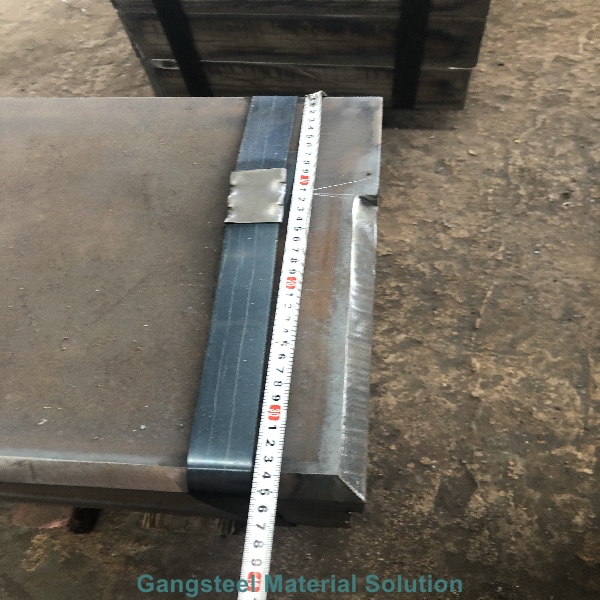
ASTM A516 GR 70 equivalent materials is such as ASME SA516 GR 70, EN 10028 P355GH, and BS1501 224-490 A & B, sh
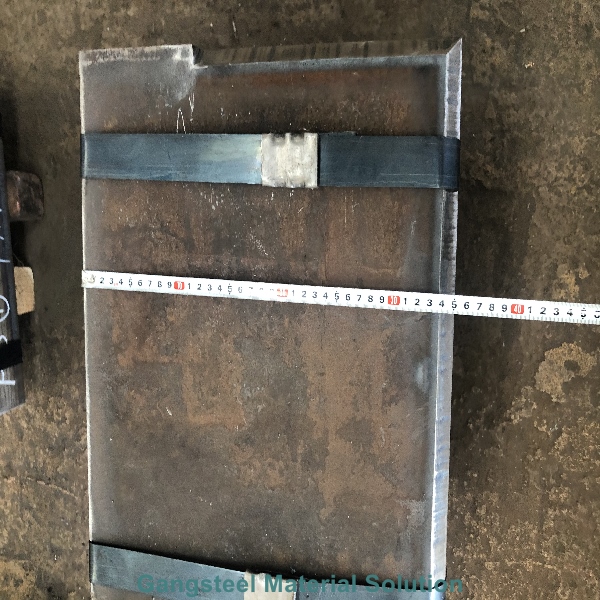
we supply high-quality A516 Gr 70 steel plate for pressure vessel applications and other standards like ASTM A2
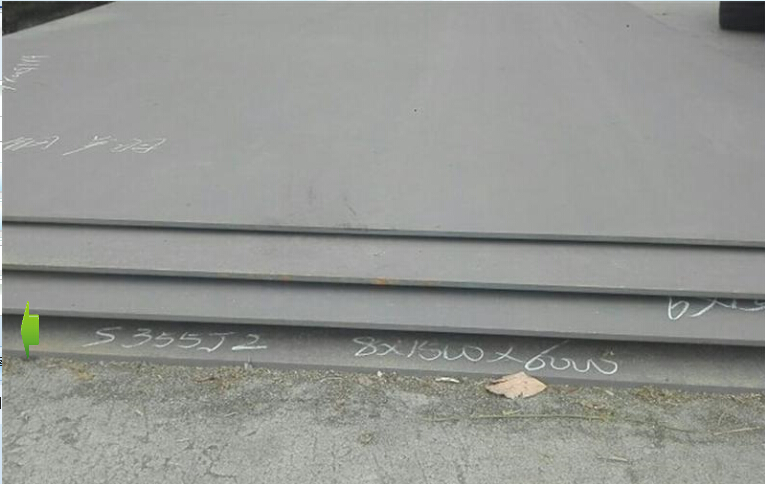
EN10028-2 P355GH for High-Strength Low-Alloy Columbium-Vanadium Structural Steel EN10025-2 S355J2 Structural St

We export A240 304L Stainless Coil 2B, NO.1 No.4 surface, the thickness 0.1mm to 3mm, 3mm to 22mm, Mother mill


