Product List
Gangsteel Material Solution
Email: admin@gangsteel.com
Sales: jack@gangsteel.com
Gangsteel, a leading Chinese exporter of high-quality cold-rolled stainless steel coils and sheets, offers an in-depth comparison between 409 and 430 stainless steel coils.
Grade 430 (AISI 430 or UNS S43000) is a ferritic stainless steel known for its cost-effectiveness, magnetic properties, and moderate corrosion resistance in mild environments, commonly used in decorative and household applications. Grade 409 (AISI 409 or UNS S40900), also ferritic, is a low-chromium, titanium-stabilized alloy designed for high-temperature oxidation resistance and weldability, making it a staple in automotive exhaust systems. Both grades are nickel-free, providing economical alternatives to austenitic steels like 304, and are supplied in coil form for efficient processing such as slitting, stamping, and forming.
Typical coil specifications include thicknesses from 0.3 mm to 3.0 mm, widths up to 1500 mm, and finishes like 2B or BA. While sharing a body-centered cubic (BCC) ferritic structure for excellent thermal conductivity (approximately 23-26 W/m·K) and low thermal expansion (10.5 × 10⁻⁶/°C), 409's lower chromium (10.5-11.75%) and titanium stabilization target exhaust durability, whereas 430's higher chromium (16-18%) enhances general atmospheric resistance. This article explores chemical composition, mechanical properties, equivalent materials, corrosion resistance, weldability, applications, cost, and more to guide your selection. Gangsteel's ferritic expertise includes premium 430 coils, such as our JIS G4305 SUS 430 stainless steel sheet (available in coil form) and a240 Type_430 stainless steel sheet, compliant with global standards.
Ferritic stainless steels like 409 and 430 are magnetic and offer better thermal properties than austenitics, reducing warping in heat-exposed coil applications. However, 409 is optimized for sulfurous, high-temperature environments like vehicle exhausts, while 430 suits decorative uses where aesthetics and mild corrosion resistance are key. Gangsteel's coils undergo advanced cold rolling and annealing for uniform thickness and surface quality, ensuring reliability in downstream processing.
The chemical compositions reflect their specialized roles: 409 includes titanium for stabilization against sensitization, with lower chromium to balance cost and performance in oxidizing gases; 430 has higher chromium for improved passivation in ambient conditions.
Based on ASTM A240 specifications (weight %):
|
Element |
409 (wt%) |
430 (wt%) |
|---|---|---|
|
Carbon (C) |
≤0.08 |
≤0.12 |
|
Chromium (Cr) |
10.5-11.75 |
16.0-18.0 |
|
Manganese (Mn) |
≤1.00 |
≤1.00 |
|
Silicon (Si) |
≤1.00 |
≤1.00 |
|
Phosphorus (P) |
≤0.045 |
≤0.040 |
|
Sulfur (S) |
≤0.045 |
≤0.030 |
|
Titanium (Ti) |
8×(C+N)-0.75 |
- |
|
Nickel (Ni) |
≤0.50 |
≤0.75 |
|
Iron (Fe) |
Balance |
Balance |
409's titanium (typically 0.1-0.5%) binds carbon and nitrogen, preventing carbide precipitation during welding or high-heat exposure, while its lower chromium keeps costs down. 430 lacks stabilization but benefits from higher chromium for a stronger passive layer. For European standards, our EN10088 2 X6Cr17 stainless steel sheet provides a 430 equivalent in coil form.
Mechanical properties show similarities in annealed states, but 409's stabilization and lower alloying make it slightly softer and more ductile for forming exhaust components from coils.
From ASTM A240 and typical values:
|
Property |
409 |
430 |
|---|---|---|
|
Yield Strength (0.2% offset) |
≥170 MPa (25 ksi) |
≥205 MPa (30 ksi) |
|
Tensile Strength |
≥380 MPa (55 ksi) |
≥450 MPa (65 ksi) |
|
Elongation (in 50 mm) |
≥20% |
≥22% |
|
Hardness (Rockwell B) |
≤88 HRB |
≤89 HRB |
|
Modulus of Elasticity |
200 GPa |
200 GPa |
|
Density |
7.70 g/cm³ |
7.70 g/cm³ |
409 offers lower strength but maintains ductility at high temperatures (up to 800°C service), ideal for exhaust coils that undergo bending and welding. 430 has higher tensile strength for general structural trim but risks embrittlement in prolonged heat. Both grades exhibit low work-hardening, facilitating coil processing like uncoiling and stamping. Gangsteel's DIN 1.4016 stainless steel sheet delivers consistent mechanical performance for 430 coils.
Both grades have international equivalents, enabling global sourcing for coil production.
|
Standard/Region |
409 Equivalent |
430 Equivalent |
|---|---|---|
|
AISI/UNS (USA) |
409 / S40900 |
430 / S43000 |
|
EN/DIN (Europe) |
1.4512 / X2CrTi12 |
1.4016 / X6Cr17 |
|
JIS (Japan) |
SUH409 |
SUS430 |
|
GB (China) |
0Cr11Ti / 022Cr11Ti |
1Cr17 / 10Cr17 |
|
BS (UK) |
- |
430S17 |
|
AFNOR (France) |
Z3CT12 |
Z8C17 |
|
ISO |
X2CrTi12 |
X6Cr17 |
|
GOST (Russia) |
08X11T |
12X17 |
409's equivalents emphasize Ti-stabilized low-Cr ferritics; 430's are standard high-Cr. Our GB/T 10Cr17 1Cr17 stainless steel sheet serves as a Chinese equivalent for 430 coils.
Corrosion and oxidation profiles differ based on alloying: 430's higher chromium provides better general atmospheric resistance, while 409's titanium and lower carbon excel in high-temperature oxidizing gases like exhaust.
430 offers good protection in dry urban atmospheres, fresh water, and mild organics but is prone to pitting in chlorides, salt spray, or humidity, limiting it to indoor or protected uses.
409 provides superior oxidation resistance in sulfurous, high-heat environments (up to 815°C intermittent), with titanium preventing intergranular corrosion during welding or service. Its lower chromium makes ambient corrosion slightly inferior to 430, but it resists scaling and embrittlement better in cyclic temperatures. Neither is suitable for strong acids or marine exposure (use 316 for that).
For high-temperature exhaust coils: 409; for mild decorative: 430, as in our JIS G4305 SUS 430 stainless steel sheet.
Weldability sets them apart: 430 can sensitize in the heat-affected zone (HAZ), requiring post-weld annealing to restore corrosion resistance, with preheating recommended for thicker coils to prevent cracking.
409 excels in weldability due to titanium stabilization and low carbon, allowing fusion welding (TIG/MIG) without preheating or annealing in many cases, minimizing distortion in coil-derived parts like exhaust pipes.
Fabrication: Both are formable, but 409's ductility suits deep drawing and bending for automotive components; 430 polishes better for aesthetic finishes like BA or No.4. Both are magnetic, aiding handling during uncoiling and processing.
For welded, high-heat coils: 409; general forming: 430 like our a240 Type_430 stainless steel sheet.
430 coils are ideal for high-volume, decorative applications where cost and formability are priorities.
409 coils dominate in exhaust and heat-exposed uses, leveraging stabilization for longevity.
430 is more affordable (approximately 1200-1400 USD/MT FOB China) and widely available due to its standard status. 409 costs slightly less or similar (1100-1300 USD/MT) thanks to lower chromium, but its specialized use in exhausts ensures steady supply from automotive-focused mills. Gangsteel's Chinese production keeps prices competitive for 430 coils, such as our EN10088 2 X6Cr17 stainless steel sheet, with 409 options available for bulk orders.
Market trends favor 409 in emissions-regulated automotive sectors, while 430 remains a staple for consumer goods.
Select 409 for high-temperature, weldable applications like exhaust systems where oxidation resistance is critical; choose 430 for cost-sensitive, decorative or mild-corrosion uses like appliances and trim. Evaluate operating temperature, environmental exposure, and fabrication needs—409 for heat cycles, 430 for ambient aesthetics.
409 is low-chromium with titanium stabilization for high-temperature weldability and oxidation resistance; 430 has higher chromium for better general corrosion in mild environments.
430 in atmospheric and mild conditions; 409 in high-temperature oxidizing gases like exhaust.
409 is superior due to stabilization, requiring less post-processing; 430 may need annealing to avoid sensitization.
409, for its heat and sulfur resistance.
We specialize in 430 coils like our DIN 1.4016 stainless steel sheet; contact us for 409 inquiries and customizations.
In conclusion, 409 excels in demanding high-heat coil applications, while 430 offers versatile economy for everyday uses—Gangsteel is your partner for quality stainless solutions.
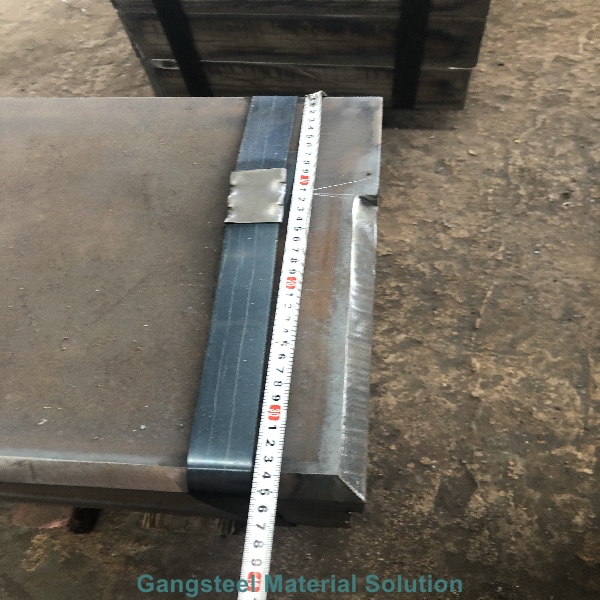
ASTM A516 GR 70 equivalent materials is such as ASME SA516 GR 70, EN 10028 P355GH, and BS1501 224-490 A & B, sh
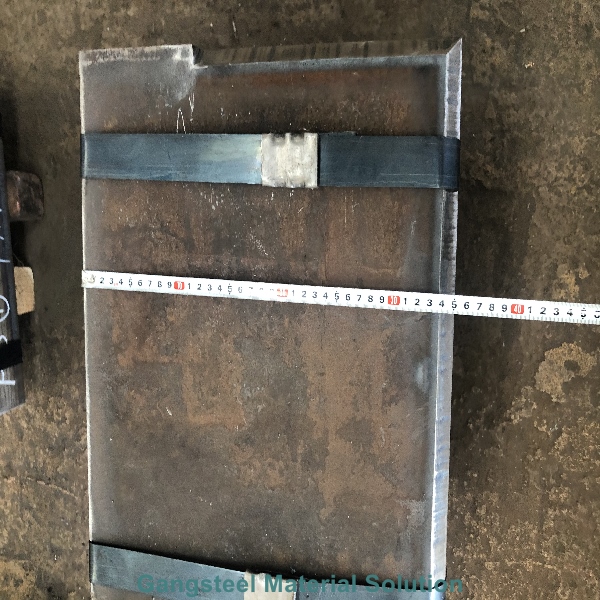
we supply high-quality A516 Gr 70 steel plate for pressure vessel applications and other standards like ASTM A2
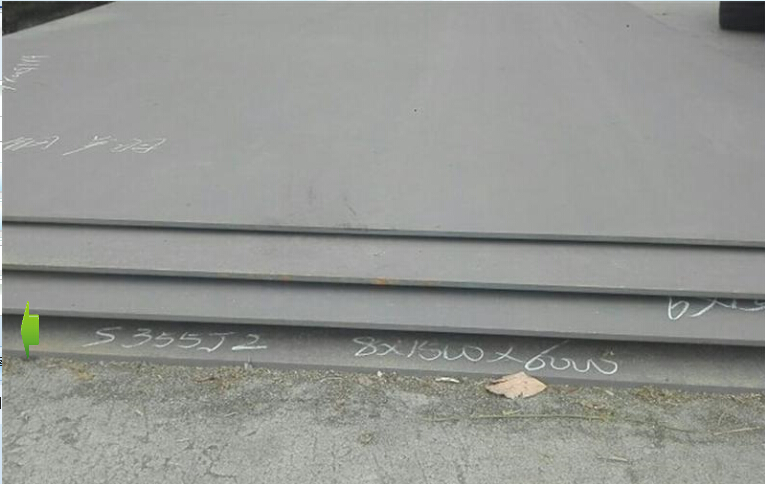
EN10028-2 P355GH for High-Strength Low-Alloy Columbium-Vanadium Structural Steel EN10025-2 S355J2 Structural St

We export A240 304L Stainless Coil 2B, NO.1 No.4 surface, the thickness 0.1mm to 3mm, 3mm to 22mm, Mother mill


