Product List
Gangsteel Material Solution
Email: admin@gangsteel.com
Sales: jack@gangsteel.com
Gangsteel, a trusted Chinese exporter specializing in premium cold-rolled stainless steel coils and sheets, provides expert analysis on comparing grades like 201 and 430.
These two stainless steels represent different families: 201 is an austenitic grade with manganese substitution for nickel, offering a budget-friendly alternative to 304, while 430 is a ferritic grade known for its magnetic properties and cost-effectiveness in mild environments. Understanding their differences is essential for applications in appliances, automotive, construction, and food processing. This article examines chemical composition, mechanical properties, equivalent materials, corrosion resistance, weldability, applications, and more. As specialists in ferritic steels, Gangsteel stocks high-quality options like our JIS G4305 SUS 430 stainless steel sheet, which exemplifies 430's versatility.
Austenitic 201 (AISI 201 or UNS S20100) was developed to conserve nickel, using manganese and nitrogen for stabilization, resulting in good formability and corrosion resistance. Ferritic 430 (AISI 430 or UNS S43000), a straight-chromium alloy, prioritizes thermal conductivity and oxidation resistance but lacks nickel entirely. While both contain 16-18% chromium for basic passivation, their microstructures—face-centered cubic (FCC) for 201 (non-magnetic) versus body-centered cubic (BCC) for 430 (magnetic)—lead to distinct behaviors. Gangsteel's exports, including the a240 Type_430 stainless steel sheet, cater to global standards for reliable performance.
The alloying elements define each grade's core characteristics, with 201 emphasizing austenite stabilizers and 430 focusing on simplicity.
Below is a side-by-side comparison based on ASTM A240 specifications:
|
Element |
201 (wt%) |
430 (wt%) |
|---|---|---|
|
Carbon (C) |
≤0.15 |
≤0.12 |
|
Chromium (Cr) |
16.0-18.0 |
16.0-18.0 |
|
Manganese (Mn) |
5.5-7.5 |
≤1.0 |
|
Nickel (Ni) |
3.5-5.5 |
≤0.75 (often minimal) |
|
Silicon (Si) |
≤1.0 |
≤1.0 |
|
Nitrogen (N) |
≤0.25 |
- |
|
Phosphorus (P) |
≤0.060 |
≤0.040 |
|
Sulfur (S) |
≤0.030 |
≤0.030 |
|
Iron (Fe) |
Balance |
Balance |
201's higher manganese and nitrogen compensate for lower nickel, maintaining austenitic structure and enhancing strength. 430's minimal additions keep costs low but limit ductility. For European-compliant ferritics, our EN10088 2 X6Cr17 stainless steel sheet matches 430's profile.
Mechanical traits influence formability, strength, and service life, with 201 showing work-hardening potential and 430 offering moderate values.
Data from ASTM A240 and typical values:
|
Property |
201 |
430 |
|---|---|---|
|
Yield Strength (0.2% offset) |
≥310 MPa (45 ksi) |
≥205 MPa (30 ksi) |
|
Tensile Strength |
≥655 MPa (95 ksi) |
≥450 MPa (65 ksi) |
|
Elongation (in 50 mm) |
≥40% |
≥22% |
|
Hardness (Rockwell B) |
≤100 HRB |
≤89 HRB |
|
Modulus of Elasticity |
200 GPa |
200 GPa |
|
Density |
7.80 g/cm³ |
7.70 g/cm³ |
201 exhibits higher strength due to nitrogen and manganese, with excellent ductility for deep drawing. It work-hardens rapidly, achieving up to 1200 MPa tensile in cold-worked states. 430, softer and less ductile, suits stamping but risks brittleness at low temperatures. Gangsteel's DIN 1.4016 stainless steel sheet delivers consistent 430 properties.
Both grades have international counterparts for global sourcing.
|
Standard/Region |
201 Equivalent |
430 Equivalent |
|---|---|---|
|
AISI/UNS (USA) |
201 / S20100 |
430 / S43000 |
|
EN/DIN (Europe) |
1.4372 / X12CrMnNiN17-7-5 |
1.4016 / X6Cr17 |
|
JIS (Japan) |
SUS201 |
SUS430 |
|
GB (China) |
1Cr17Mn6Ni5N / 12Cr17Mn6Ni5N |
1Cr17 / 10Cr17 |
|
BS (UK) |
- |
430S17 |
|
AFNOR (France) |
- |
Z8C17 |
|
ISO |
- |
X6Cr17 |
|
GOST (Russia) |
12Х17Г9АН4 |
12X17 |
201's equivalents emphasize manganese-austenitics, while 430's are straight-chromium ferritics. Our GB/T 10Cr17 1Cr17 stainless steel sheet provides a Chinese-standard 430 option.
Corrosion behavior varies by microstructure and environment.
201 offers good general corrosion resistance in mild acids, alkalis, and atmospheres, similar to 304 but with risks of pitting in chlorides due to lower nickel. Its nitrogen boosts resistance to localized attack. 430 provides adequate protection in dry, oxidizing conditions but is prone to rust in humid or chloride-exposed areas, lacking nickel's stabilization.
For oxidation: 201 scales at 900°C, suitable for moderate heat; 430 resists up to 815°C intermittent, better for dry heat but susceptible to embrittlement. In food/contact applications, both meet standards, but 201's austenitic nature handles acids better. Choose 201 for wet environments, 430 for dry/oxidizing ones like our JIS G4305 SUS 430 stainless steel sheet.
Fabrication differs significantly.
201 welds well with TIG/MIG, non-magnetic and ductile, but may need fillers like 308L to prevent hot cracking. It work-hardens, requiring annealing for multi-pass welds. 430 welds adequately but sensitizes in HAZ, risking intergranular corrosion; preheating and annealing mitigate this, though it's magnetic and less formable.
Both machine similarly, with 201's austenite allowing better polishing. 430's ferritic structure suits magnetic handling. For complex forms, 201 excels; for simple stamping, 430 suffices, as in Gangsteel's a240 Type_430 stainless steel sheet.
201 suits cost-driven, form-intensive uses.
430 thrives in mild, heat-exposed settings, like our EN10088 2 X6Cr17 stainless steel sheet.
201 costs less than 304 (1200-1500 USD/MT) due to manganese substitution, widely available. 430 is even cheaper (1100-1400 USD/MT) as nickel-free, abundant in ferritic markets. Gangsteel's Chinese sourcing ensures competitive pricing for 430 variants like DIN 1.4016 stainless steel sheet.
Trends: 201 gains in volatile nickel markets; 430 steady for magnetic needs.
Opt for 201 in corrosive, formable applications; 430 for thermal, magnetic, or budget-dry uses. Test for specifics.
201 is austenitic (non-magnetic, ductile); 430 ferritic (magnetic, thermal).
201 in wet/acidic; 430 in dry/oxidizing.
Yes, but 201 easier without sensitization.
201 for strength; 430 for panels, as in GB/T 10Cr17 1Cr17 stainless steel sheet.
We excel in 430 equivalents; inquire for 201.
In summary, 201 offers versatility, 430 economy—Gangsteel aids your choice.
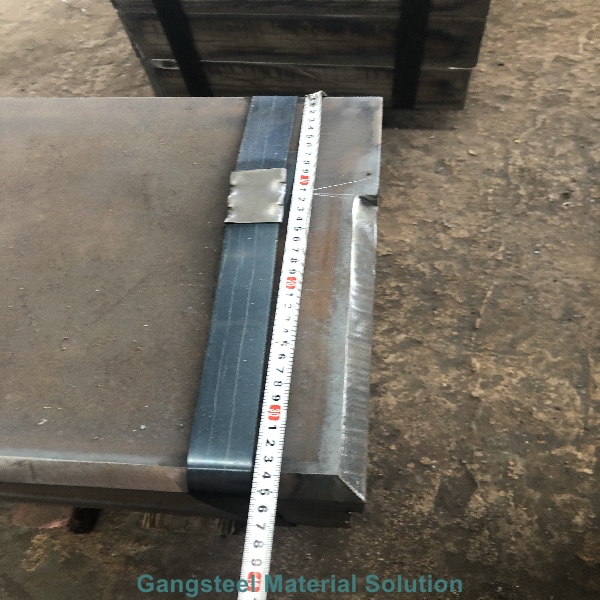
ASTM A516 GR 70 equivalent materials is such as ASME SA516 GR 70, EN 10028 P355GH, and BS1501 224-490 A & B, sh
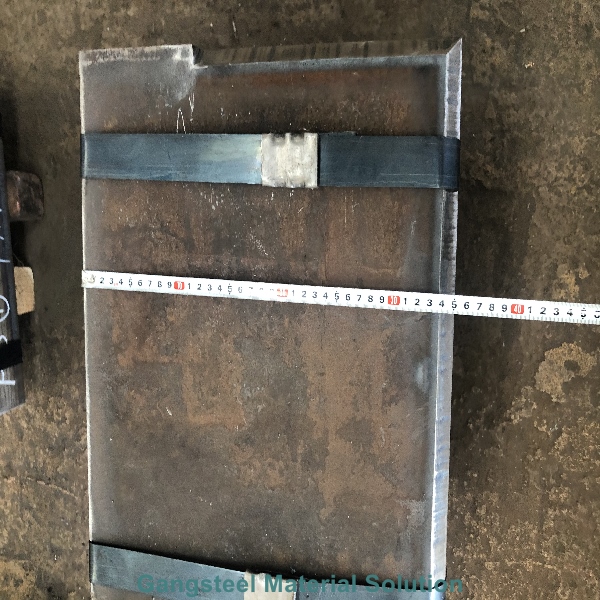
we supply high-quality A516 Gr 70 steel plate for pressure vessel applications and other standards like ASTM A2
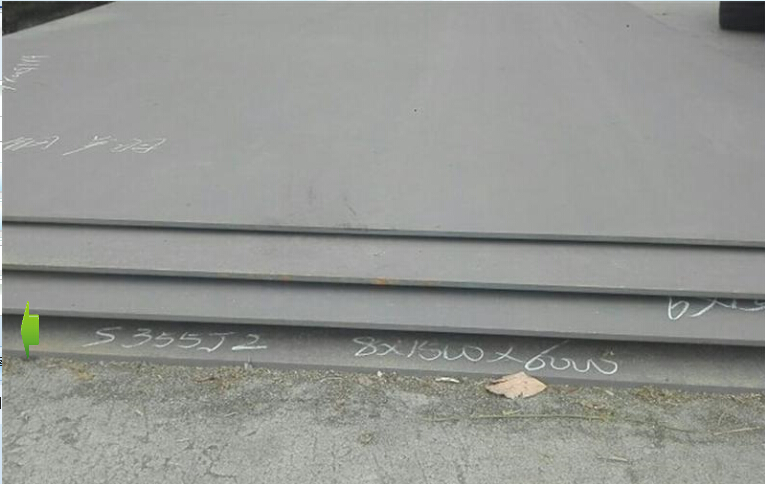
EN10028-2 P355GH for High-Strength Low-Alloy Columbium-Vanadium Structural Steel EN10025-2 S355J2 Structural St

We export A240 304L Stainless Coil 2B, NO.1 No.4 surface, the thickness 0.1mm to 3mm, 3mm to 22mm, Mother mill


