Product List
Gangsteel Material Solution
Email: admin@gangsteel.com
Sales: jack@gangsteel.com
Gangsteel, a leading Chinese exporter of high-quality cold-rolled stainless steel coils and sheets, offers a detailed comparison between 420 and 430 stainless steel coils to help manufacturers and buyers select the right material.
Grade 430 (AISI 430 or UNS S43000) is a ferritic stainless steel prized for its affordability, magnetic properties, and moderate corrosion resistance in mild environments, making it ideal for decorative and household coil applications.
Grade 420 (AISI 420 or UNS S42000), a martensitic stainless steel with higher carbon content, delivers superior hardness and strength through heat treatment, suitable for wear-resistant and cutting applications while retaining decent corrosion resistance. Both are supplied in coil form for efficient slitting, stamping, and forming, with typical thicknesses from 0.3 mm to 3.0 mm and widths up to 1500 mm. While sharing chromium-based passivation, 420’s martensitic structure allows hardening (up to 50 HRC), whereas 430 remains soft and ferritic for superior formability. This guide examines chemical composition, mechanical properties, equivalent materials, corrosion resistance, weldability, applications, cost, and more. As ferritic specialists, Gangsteel supplies premium 430 coils such as our JIS G4305 SUS 430 stainless steel sheet (available in coil form) and a240 Type_430 stainless steel sheet.
Coils of both grades are cold-rolled for uniform thickness and excellent surface finishes (2B, BA, No.4). Their magnetic nature and thermal conductivity (~24–26 W/m·K) make them suitable for heat dissipation or magnetic handling. However, 420 is chosen for high-hardness cutting tools, while 430 prioritizes cost and ductility. Gangsteel’s advanced annealing and rolling ensure defect-free coils ready for downstream processing.
The compositions highlight 420’s higher minimum carbon for hardenability and 430’s elevated chromium for better passivation.
Based on ASTM A240 (weight %):
|
Element |
420 |
430 |
|---|---|---|
|
Carbon (C) |
0.15 min |
≤0.12 |
|
Chromium (Cr) |
12.0-14.0 |
16.0-18.0 |
|
Manganese (Mn) |
≤1.00 |
≤1.00 |
|
Silicon (Si) |
≤1.00 |
≤1.00 |
|
Phosphorus (P) |
≤0.040 |
≤0.040 |
|
Sulfur (S) |
≤0.030 |
≤0.030 |
|
Nickel (Ni) |
≤0.75 |
≤0.75 |
|
Iron (Fe) |
Balance |
Balance |
420’s minimum 0.15% carbon enables martensitic transformation and high hardness after quenching and tempering. 430’s higher chromium forms a stronger passive layer for corrosion resistance. For European equivalents, our EN10088 2 X6Cr17 stainless steel sheet matches 430 coil specifications.
Mechanical properties differ significantly: 420 can be heat-treated for extreme hardness; 430 is used annealed for ductility.
From ASTM A240 and typical values:
|
Property |
420 (annealed) |
430 (annealed) |
|---|---|---|
|
Yield Strength (0.2% offset) |
≥275 MPa |
≥205 MPa |
|
Tensile Strength |
≥485 MPa |
≥450 MPa |
|
Elongation (in 50 mm) |
≥20% |
≥22% |
|
Hardness (Rockwell B) |
≤95 HRB |
≤89 HRB |
|
Modulus of Elasticity |
200 GPa |
200 GPa |
|
Density |
7.70 g/cm³ |
7.70 g/cm³ |
In hardened/tempered condition, 420 reaches 1500–1800 MPa tensile and 48–52 HRC for cutting-edge coils. 430 remains softer for easy forming. Gangsteel’s DIN 1.4016 stainless steel sheet guarantees consistent 430 coil performance.
Both have international cross-references for global coil sourcing.
|
Standard/Region |
420 Equivalent |
430 Equivalent |
|---|---|---|
|
AISI/UNS (USA) |
420 / S42000 |
430 / S43000 |
|
EN/DIN (Europe) |
1.4021 / X20Cr13 |
1.4016 / X6Cr17 |
|
JIS (Japan) |
SUS420J1 |
SUS430 |
|
GB (China) |
2Cr13 / 20Cr13 |
1Cr17 / 10Cr17 |
|
BS (UK) |
420S29 |
430S17 |
Our GB/T 10Cr17 1Cr17 stainless steel sheet is a direct Chinese 430 coil equivalent.
Corrosion resistance favors 430 in mild atmospheres; 420 offers moderate protection with heat-treatment benefits.
430 resists atmospheric corrosion, fresh water, and mild acids well but pits in chlorides.
420 provides fair resistance in hardened condition (better than 410 in some oxidizing media) and scales up to 650°C. Neither suits heavy chlorides (use 316 instead).
For oxidizing or decorative coils: 430; high-hardness cutting applications: 420.
Weldability: 420 is difficult due to high carbon, requiring preheating (200–300°C) and post-weld annealing to prevent cracking; 430 needs annealing for sensitization.
Fabrication: 430 excels in deep drawing and polishing for coils; 420 suits machining and grinding after hardening. Both are magnetic.
For welded structural coils: 420 (with care); decorative forming: 430 like our JIS G4305 SUS 430 stainless steel sheet.
430 for cost-effective decorative coil uses.
420 for high-hardness, cutting-edge coil applications.
430 is cheaper (1200-1400 USD/MT) and widely available. 420 is similar or slightly higher (1300-1500 USD/MT) due to martensitic processing. Gangsteel’s production ensures competitive 430 coil pricing like our a240 Type_430 stainless steel sheet.
Select 420 for applications requiring high hardness and wear resistance via heat treatment; choose 430 for economy, formability, and better mild corrosion resistance. Evaluate hardness needs, environment, and fabrication method.
420 is martensitic and heat-hardenable for high hardness; 430 is ferritic, softer, cheaper, and more corrosion-resistant in mild atmospheres.
430 in atmospheric and mild conditions; 420 in hardened oxidizing environments.
430 simpler (annealing only); 420 requires pre- and post-heat treatment.
420 (hardenable edges).
We specialize in 430 coils like our DIN 1.4016 stainless steel sheet; contact us for 420 inquiries.
In conclusion, 420 delivers hardness and strength for demanding coils, while 430 offers versatile economy for general use—Gangsteel is your trusted partner for quality stainless coils.
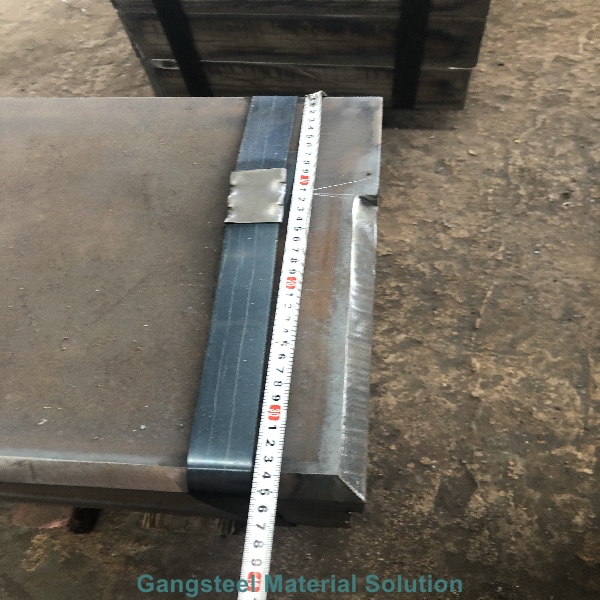
ASTM A516 GR 70 equivalent materials is such as ASME SA516 GR 70, EN 10028 P355GH, and BS1501 224-490 A & B, sh
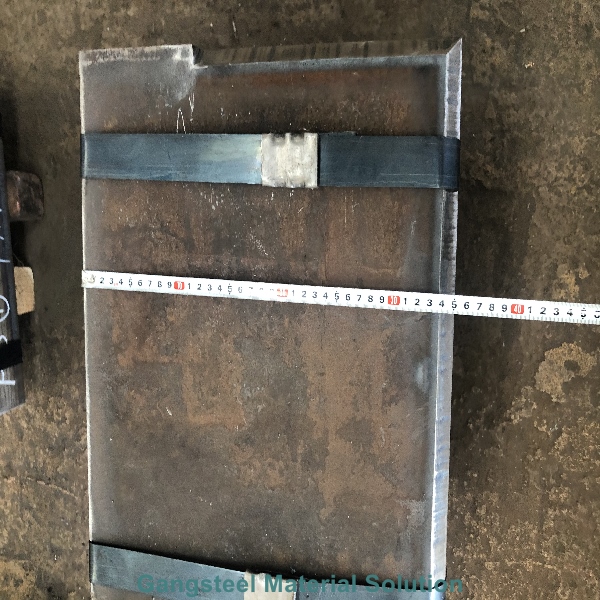
we supply high-quality A516 Gr 70 steel plate for pressure vessel applications and other standards like ASTM A2
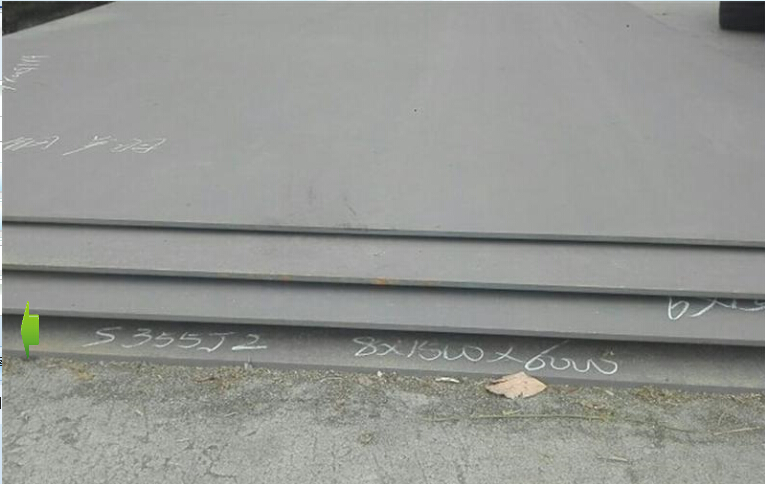
EN10028-2 P355GH for High-Strength Low-Alloy Columbium-Vanadium Structural Steel EN10025-2 S355J2 Structural St

We export A240 304L Stainless Coil 2B, NO.1 No.4 surface, the thickness 0.1mm to 3mm, 3mm to 22mm, Mother mill


