Product List
Gangsteel Material Solution
Email: admin@gangsteel.com
Sales: jack@gangsteel.com
Gangsteel, a leading Chinese exporter of premium cold-rolled stainless steel coils and sheets, offers a detailed comparison between 304 and 430 stainless steel to help you decide which is best for your needs.
Grade 304 (AISI 304 or UNS S30400) is a versatile austenitic stainless steel from the 300 series, prized for its excellent corrosion resistance, formability, and non-magnetic properties, making it a go-to material across industries. Grade 430 (AISI 430 or UNS S43000), a ferritic stainless steel, stands out for its affordability, magnetic characteristics, and solid performance in mildly corrosive or high-temperature environments. This analysis covers composition, properties, equivalents, resistance, fabrication, applications, and more. As ferritic specialists, Gangsteel provides high-quality 430 options like our JIS G4305 SUS 430 stainless steel sheet, while noting 304's widespread use.
The key distinction lies in microstructure: 304's austenitic (face-centered cubic) structure, stabilized by nickel, delivers superior ductility and resistance to harsh conditions, whereas 430's ferritic (body-centered cubic) relies on chromium for economy and thermal efficiency. Both feature 16-20% chromium for passivation, but 304's 8-10% nickel elevates its performance. Gangsteel's products, such as the a240 Type_430 stainless steel sheet, adhere to ASTM standards for global reliability.
Composition influences corrosion, strength, and cost, with 304 including nickel for enhanced properties.
Per ASTM A240:
|
Element |
304 (wt%) |
430 (wt%) |
|---|---|---|
|
Carbon (C) |
≤0.08 |
≤0.12 |
|
Chromium (Cr) |
18.0-20.0 |
16.0-18.0 |
|
Manganese (Mn) |
≤2.0 |
≤1.0 |
|
Nickel (Ni) |
8.0-10.5 |
≤0.75 (minimal) |
|
Silicon (Si) |
≤0.75 |
≤1.0 |
|
Nitrogen (N) |
≤0.10 |
- |
|
Phosphorus (P) |
≤0.045 |
≤0.040 |
|
Sulfur (S) |
≤0.030 |
≤0.030 |
|
Iron (Fe) |
Balance |
Balance |
304's nickel and lower carbon improve weldability and resistance, while 430's simplicity reduces costs. Our EN10088 2 X6Cr17 stainless steel sheet matches 430 under European standards.
Mechanical traits affect usability, with 304 excelling in ductility.
From ASTM A240:
|
Property |
304 |
430 |
|---|---|---|
|
Yield Strength (0.2% offset) |
≥205 MPa (30 ksi) |
≥205 MPa (30 ksi) |
|
Tensile Strength |
≥515 MPa (75 ksi) |
≥450 MPa (65 ksi) |
|
Elongation (in 50 mm) |
≥40% |
≥22% |
|
Hardness (Rockwell B) |
≤92 HRB |
≤89 HRB |
|
Modulus of Elasticity |
193 GPa |
200 GPa |
|
Density |
8.00 g/cm³ |
7.70 g/cm³ |
304 offers higher tensile and elongation for forming, work-hardening to 1100 MPa. 430 is adequate for stamping but less ductile. Gangsteel's DIN 1.4016 stainless steel sheet ensures consistent 430 mechanics.
Global equivalents enable substitution.
|
Standard/Region |
304 Equivalent |
430 Equivalent |
|---|---|---|
|
AISI/UNS (USA) |
304 / S30400 |
430 / S43000 |
|
EN/DIN (Europe) |
1.4301 / X5CrNi18-10 |
1.4016 / X6Cr17 |
|
JIS (Japan) |
SUS304 |
SUS430 |
|
GB (China) |
0Cr18Ni9 / 06Cr19Ni10 |
1Cr17 / 10Cr17 |
|
BS (UK) |
304S31 |
430S17 |
|
AFNOR (France) |
Z7CN18-09 |
Z8C17 |
|
ISO |
X5CrNi18-10 |
X6Cr17 |
|
GOST (Russia) |
08Х18Н10 |
12X17 |
304's are austenitic staples; 430's ferritic basics. Our GB/T 10Cr17 1Cr17 stainless steel sheet is a Chinese 430 match.
304 superior in corrosion due to nickel.
304 resists pitting (PREN ~20), chlorides, acids, and stress cracking, ideal for marine/chemical. 430 handles atmospheres and water but pits in chlorides.
Oxidation: 304 to 925°C continuous; 430 to 815°C intermittent, better for dry heat but embrittles. Select 304 for wet/corrosive; 430 for dry/oxidizing, like JIS G4305 SUS 430 stainless steel sheet.
304 welds seamlessly (TIG/MIG), no preheating, using 308L fillers. Forms deeply, polishes excellently, non-magnetic.
430 welds but sensitizes, needing annealing; preheating avoids cracks. Less formable, magnetic for handling.
For complex work, 304; simple, 430 as in a240 Type_430 stainless steel sheet.
Versatile for demanding environments.
Cost-effective for mild uses, like EN10088 2 X6Cr17 stainless steel sheet.
304 costs 1800-2200 USD/MT (nickel-driven, volatile); 430 1200-1400 USD/MT (stable). Gangsteel's production makes 430 affordable, e.g., DIN 1.4016 stainless steel sheet.
304 for corrosion/formability in harsh settings; 430 for cost/thermal in mild. Consider environment, magnetism, budget.
304 austenitic (non-magnetic, resistant); 430 ferritic (magnetic, economical).
304 in chlorides/acids; 430 dry oxidation.
304 easier, no sensitization.
304 premium; 430 basic, as GB/T 10Cr17 1Cr17 stainless steel sheet.
Excel in 430; inquire for 304.
304 premium, 430 value—Gangsteel helps choose.
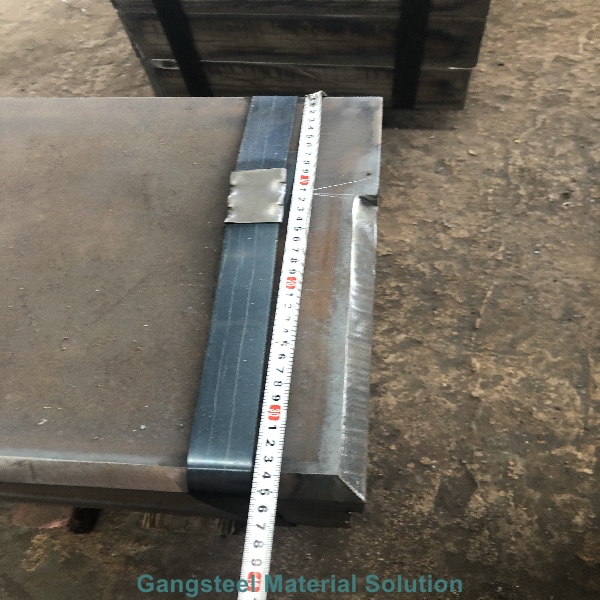
ASTM A516 GR 70 equivalent materials is such as ASME SA516 GR 70, EN 10028 P355GH, and BS1501 224-490 A & B, sh
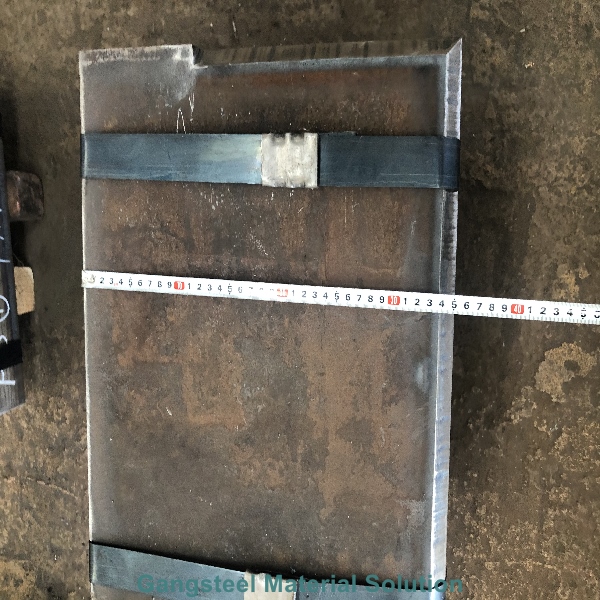
we supply high-quality A516 Gr 70 steel plate for pressure vessel applications and other standards like ASTM A2
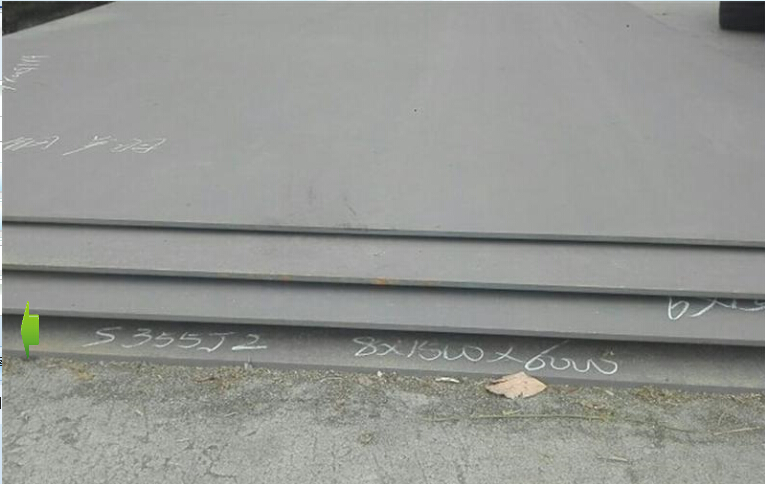
EN10028-2 P355GH for High-Strength Low-Alloy Columbium-Vanadium Structural Steel EN10025-2 S355J2 Structural St

We export A240 304L Stainless Coil 2B, NO.1 No.4 surface, the thickness 0.1mm to 3mm, 3mm to 22mm, Mother mill


