Product List
Gangsteel Material Solution
Email: admin@gangsteel.com
Sales: jack@gangsteel.com
Gangsteel, a prominent Chinese exporter specializing in high-quality cold-rolled stainless steel coils and sheets, provides an in-depth analysis of 302 versus 430 stainless steel.
Grade 302, an austenitic stainless steel from the 300 series (AISI 302 or UNS S30200), is valued for its high strength, excellent corrosion resistance, and non-magnetic properties, often used as a higher-carbon variant of 304 for applications requiring enhanced tensile strength. In contrast, 430 (AISI 430 or UNS S43000) is a ferritic stainless steel known for its affordability, magnetic characteristics, and suitability in mildly corrosive environments with good thermal performance. This comparison highlights their differences in composition, properties, and uses, aiding selection for industries like aerospace, automotive, appliances, and construction. As ferritic steel experts, Gangsteel offers premium products like our JIS G4305 SUS 430 stainless steel sheet, which exemplifies 430's reliability.
The austenitic structure of 302—face-centered cubic (FCC)—derives from chromium and nickel, providing superior ductility and resistance to harsh conditions, while 430's ferritic body-centered cubic (BCC) matrix relies on chromium alone, prioritizing economy and heat conductivity. Both grades share 16-19% chromium for passivation, but 302's nickel (8-10%) and higher carbon (up to 0.15%) boost strength and work-hardening. Gangsteel's exports, including the a240 Type_430 stainless steel sheet, meet ASTM standards for versatile global applications.
The alloying elements shape each grade's performance, with 302 incorporating more carbon for strength and nickel for austenite stability, unlike 430's minimalistic approach.
Based on ASTM A240 specifications:
|
Element |
302 (wt%) |
430 (wt%) |
|---|---|---|
|
Carbon (C) |
≤0.15 |
≤0.12 |
|
Chromium (Cr) |
17.0-19.0 |
16.0-18.0 |
|
Manganese (Mn) |
≤2.0 |
≤1.0 |
|
Nickel (Ni) |
8.0-10.0 |
≤0.75 (often minimal) |
|
Silicon (Si) |
≤1.0 |
≤1.0 |
|
Phosphorus (P) |
≤0.045 |
≤0.040 |
|
Sulfur (S) |
≤0.030 |
≤0.030 |
|
Iron (Fe) |
Balance |
Balance |
302's elevated carbon enhances hardness after cold working, while nickel improves corrosion resistance. 430's lower alloying keeps production costs down but limits ductility. For European standards, our EN10088 2 X6Cr17 stainless steel sheet reflects 430's composition under EN norms.
Mechanical characteristics influence fabrication and load-bearing, with 302 offering superior strength from its austenitic nature and higher carbon.
From ASTM A240 and typical values:
|
Property |
302 |
430 |
|---|---|---|
|
Yield Strength (0.2% offset) |
≥205 MPa (30 ksi) |
≥205 MPa (30 ksi) |
|
Tensile Strength |
≥515 MPa (75 ksi) |
≥450 MPa (65 ksi) |
|
Elongation (in 50 mm) |
≥40% |
≥22% |
|
Hardness (Rockwell B) |
≤92 HRB |
≤89 HRB |
|
Modulus of Elasticity |
193 GPa |
200 GPa |
|
Density |
8.00 g/cm³ |
7.70 g/cm³ |
302 achieves higher tensile strength (up to 860 MPa when cold-worked) due to work-hardening, with excellent ductility for forming. 430 provides moderate strength but lower elongation, making it prone to cracking in severe bends. Its ferritic structure ensures better thermal stability. Gangsteel's DIN 1.4016 stainless steel sheet delivers reliable mechanical properties for 430-based projects.
Both grades have international analogs for seamless substitution.
|
Standard/Region |
302 Equivalent |
430 Equivalent |
|---|---|---|
|
AISI/UNS (USA) |
302 / S30200 |
430 / S43000 |
|
EN/DIN (Europe) |
1.4310 / X10CrNi18-8 |
1.4016 / X6Cr17 |
|
JIS (Japan) |
SUS302 |
SUS430 |
|
GB (China) |
1Cr18Ni9 / 12Cr18Ni9 |
1Cr17 / 10Cr17 |
|
BS (UK) |
302S25 |
430S17 |
|
AFNOR (France) |
Z10CN18-09 |
Z8C17 |
|
ISO |
X10CrNi18-8 |
X6Cr17 |
|
GOST (Russia) |
12Х18Н9 |
12X17 |
302's equivalents focus on high-carbon austenitics, while 430's are basic ferritics. Our GB/T 10Cr17 1Cr17 stainless steel sheet serves as a Chinese equivalent for 430.
Corrosion traits differ markedly due to microstructures.
302 provides strong resistance to atmospheric, chemical, and mild acid corrosion, with good pitting resistance in chlorides (PREN ~19). Its nickel content prevents stress corrosion cracking, making it suitable for food and marine uses. However, higher carbon can lead to sensitization if not low-carbon variant (302L).
430 offers adequate protection in dry atmospheres and fresh water but is vulnerable to pitting in chlorides or acids, lacking nickel's enhancement. It's better for oxidation, resisting scaling up to 815°C intermittent versus 302's 870°C, but embrittles over time.
Opt for 302 in corrosive or wet environments; 430 in dry, oxidizing ones, as with our JIS G4305 SUS 430 stainless steel sheet.
Fabrication profiles vary by alloy type.
302 welds excellently via TIG/MIG, remaining non-magnetic and ductile; use low-carbon fillers (308L) to avoid carbide precipitation, especially with its higher carbon. It forms complex shapes easily and polishes well, though work-hardens rapidly, requiring annealing for multi-stage processes.
430 welds adequately but sensitizes in the heat-affected zone, necessitating post-weld annealing for corrosion restoration; preheating (150-200°C) prevents cracking. Less formable than 302, it's magnetic for easy handling but risks brittleness in cold work.
For demanding fabrication, 302; for simple, 430 like our a240 Type_430 stainless steel sheet.
302 suits high-stress, formable parts.
430 excels in cost-driven, mild uses, as in EN10088 2 X6Cr17 stainless steel sheet.
302 costs more (1600-2000 USD/MT) due to nickel and carbon control, available but pricier than 304. 430 is economical (1200-1400 USD/MT), widely supplied as nickel-free. Gangsteel's Chinese manufacturing ensures competitive pricing for 430 options like DIN 1.4016 stainless steel sheet.
Trends: 302 for specialized strength; 430 for volume economy.
Choose 302 for strength, corrosion, and formability in demanding settings; 430 for cost, thermal, and magnetic needs in mild conditions. Assess environment, load, and budget.
302 austenitic (non-magnetic, ductile); 430 ferritic (magnetic, thermal).
302 in chlorides/acids; 430 in dry oxidation.
302, less sensitization risk despite higher carbon.
302, high work-hardening.
Specialize in 430 equivalents like GB/T 10Cr17 1Cr17 stainless steel sheet; inquire for 302.
In summary, 302 delivers premium strength, 430 value—Gangsteel assists your selection.
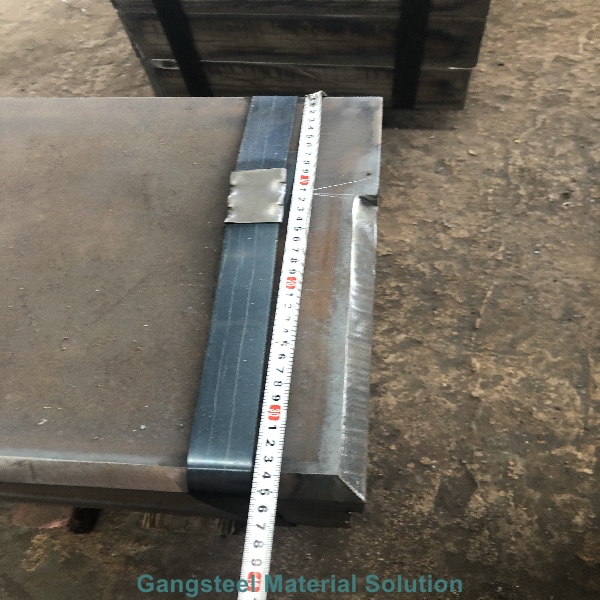
ASTM A516 GR 70 equivalent materials is such as ASME SA516 GR 70, EN 10028 P355GH, and BS1501 224-490 A & B, sh
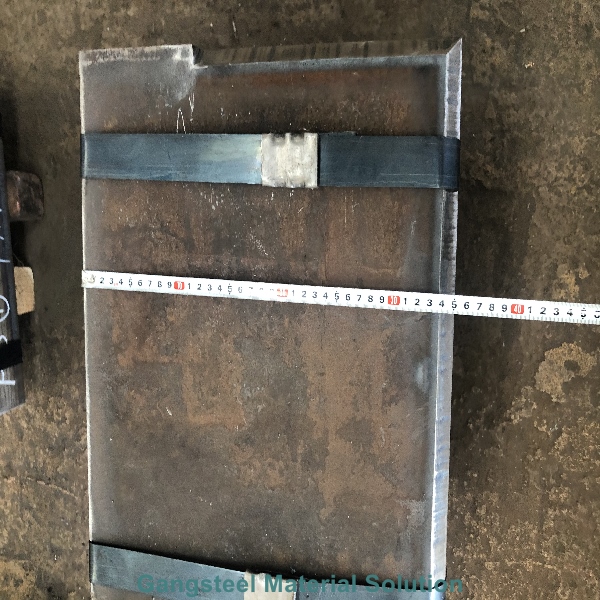
we supply high-quality A516 Gr 70 steel plate for pressure vessel applications and other standards like ASTM A2
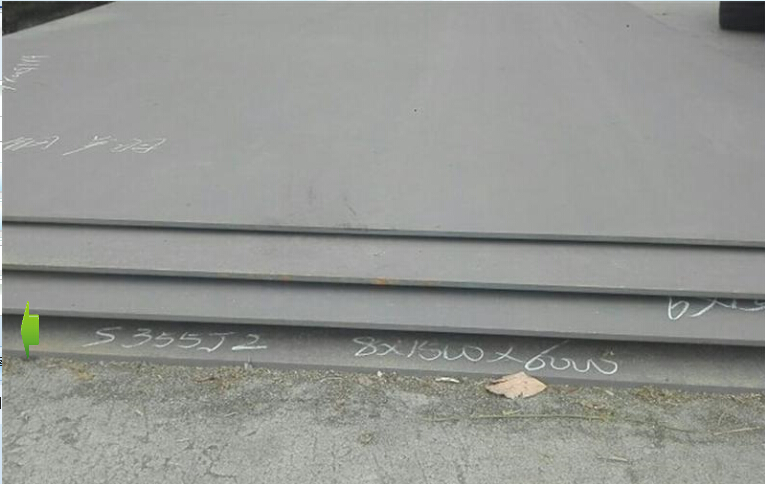
EN10028-2 P355GH for High-Strength Low-Alloy Columbium-Vanadium Structural Steel EN10025-2 S355J2 Structural St

We export A240 304L Stainless Coil 2B, NO.1 No.4 surface, the thickness 0.1mm to 3mm, 3mm to 22mm, Mother mill


